

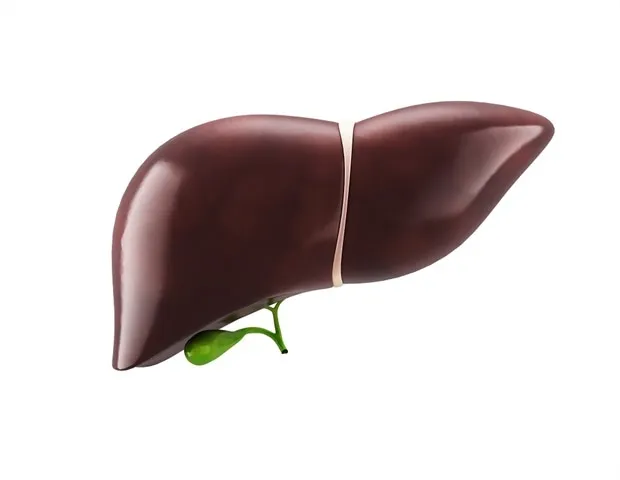
Engineers and physicians at UW Medicine and the University of Washington have developed unprecedented 3D reconstructions of human liver tissue at the cellular level. These detailed models capture the spatial microstructure across multiple liver lobes, highlighting the organ’s complex architecture.
Essential Liver Functions
The healthy human liver performs over 500 vital tasks, including detoxifying harmful substances, regulating metabolism, supporting digestion, storing nutrients, producing blood clotting proteins, and bolstering infection resistance.
Cirrhosis’ Transformative Effects
The reconstructions demonstrate how cirrhosis, characterized by extensive liver scarring, disrupts this intricate structure and impairs biological processes. Researchers call their innovative approach the Liver Map pipeline, detailed in a February 18 Science Advances publication (DOI: 10.1126/sciadv.adz2299).
Future applications could improve cirrhosis treatments to preserve or restore liver function and guide the engineering of replacement organs.
Challenges in Organ Bioprinting
Kelly Stevens, professor of bioengineering at the UW School of Medicine and UW College of Engineering, emphasizes the need for precise cellular blueprints. “Our field has skimmed over a fact that could prevent this dream from becoming reality: We don’t know what complex organs look like at a cellular level,” Stevens stated. “We don’t yet have the ‘blueprints’ of human organs to feed into bioprinters.”
She noted that organ structure, especially vascular topology, directly influences function. “If the maps aren’t right, the organs produced will not be functional.”
Organ bioprinting layers living cells, biomaterials, and biological factors to create functional tissues, incorporating vascular networks for blood flow and cell renewal.
Advanced Imaging Techniques
Recent advances in optics, imaging, computational analysis, and chemistry enable these 3D insights, surpassing traditional 2D microscopy. “Scientists are now equipped with an enhanced imaging toolkit that is better at elucidating tissue structure and its disease-associated alterations,” the study states.
Research Team and Methods
Lead scientists Wesley B. Fabyan, Chelsea L. Fortin, and Dorice L. Goune from the Department of Bioengineering and UW Medicine Institute for Stem Cell and Regenerative Medicine spearheaded the effort. Senior authors include Stevens, liver disease physician Rotonya M. Carr (professor of medicine and head of the Division of Gastroenterology), and surgeon Raymond S. W. Yeung (UW Medicine and Fred Hutch).
Samples came from patients undergoing liver cancer surgery or transplants, who consented to research use. Some specimens showed cirrhosis from causes like viral infections, metabolic disorders, medications, or alcohol abuse.
Key Findings on Architectural Changes
Cirrhosis triggers dysregulation of metabolite transport in sinusoidal zones, reduces specialized cells that detoxify ammonia, regresses central vein networks, disrupts arteries, and fragments bile transport ducts. These shifts alter the liver’s vascular and biliary systems.
The study “unveiled never-before-seen 3D human liver structures across multiple size scales and visualized how cirrhosis dysregulates the vascular and biliary architectures.”
Current Limitations
The technology cannot yet image the full depth of liver lobules, though ongoing improvements aim to address this.
Funding supported the work from the National Institutes of Health (including R01DK128551, T32 ES007032, TL1 TR002318, T32 GM095421), National Science Foundation (DGE-2140004), Howard Hughes Medical Institute (GT16560), NIH National Institute on Alcohol Abuse and Alcoholism (R01AA026302), and ARPA-H (D25AC00460-00).
