

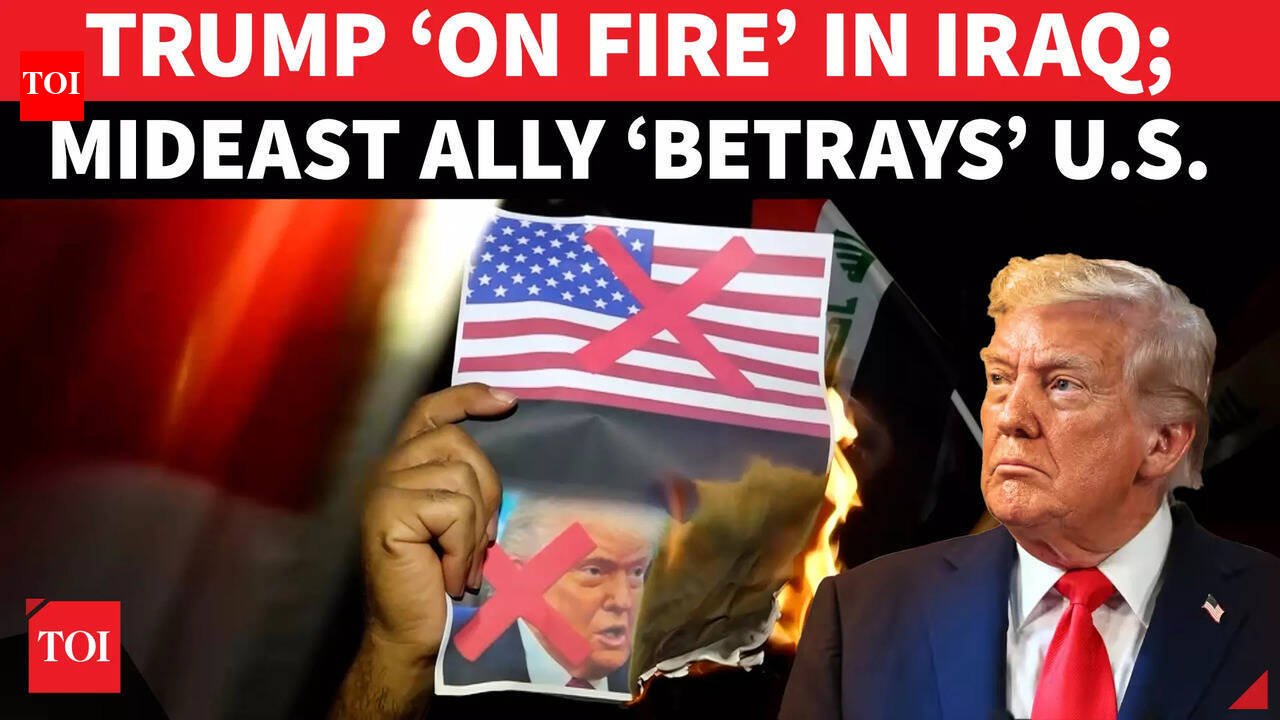
Mass Demonstrations Near Baghdad’s Green Zone Signal Rising Tensions
Tensions reached a boiling point in Iraq this week as hundreds of demonstrators gathered near the United States Embassy in Baghdad to protest against perceived foreign meddling in the nation’s internal politics. The unrest was triggered by recent warnings from Washington regarding the potential return of former Prime Minister Nouri al-Maliki to a position of power, along with threats to suspend critical financial aid.
Protesters expressed their defiance by burning images of President Donald Trump and chanting slogans that demanded an end to external pressure on Iraq’s sovereign decision-making. The demonstrations highlight a growing wave of nationalist sentiment among Iraqis who view recent American diplomatic maneuvers as an infringement on their right to self-governance.
The Conflict Over Political Autonomy and Financial Aid
The core of the current friction lies in the fragile political landscape of a nation still recovering from decades of conflict. The U.S. administration has signaled strong opposition to the political resurgence of Nouri al-Maliki, citing concerns over his past governance and alignment with regional rivals. To enforce this stance, Washington has suggested that the continued flow of U.S. economic and military assistance could be contingent upon the exclusion of certain figures from the Iraqi government.
For many Iraqis, these conditions are seen as a form of political blackmail. “We will not allow a foreign power to dictate who leads our country,” stated one organizer at the Baghdad rally. The sentiment reflects a broader desire within the Iraqi public to move away from the post-2003 era of heavy international oversight.
Iraq’s Delicate Diplomatic Balancing Act
The protests place the current Iraqi leadership in a precarious position. Baghdad is tasked with maintaining a complex equilibrium between its strategic partnership with the United States and its essential ties with regional neighbors, including Iran. While the U.S. remains a vital security partner, the threat of cutting aid risks alienating the very population the West seeks to stabilize.
As the situation develops, the backlash in Baghdad serves as a reminder of the volatile nature of Middle Eastern geopolitics. The demand from the streets is clear: a future for Iraq defined by its own citizens rather than by the interests of global powers. Whether the U.S. will soften its rhetoric or double down on its policy of conditional aid remains a defining question for the region’s stability in 2026.
