

Weekly Science Highlights: Advances in Brain Health, Dinosaur Diets, and Personalized Music
Recent studies reveal key insights into brain mechanisms behind dementia, potential cancer treatments via fecal transplants, and remarkable migrations of saltwater crocodiles across the Indian Ocean, covering thousands of miles. Further research explores how adolescent brain development shapes adult behaviors, prehistoric predator-prey dynamics, and innovative brain-computer interfaces for music selection.
Adolescent Brain Structures Influence Adult Procrastination
Developmental variations in brain morphology during adolescence appear to predict procrastination tendencies in adulthood, according to findings from researchers at the Chinese Academy of Sciences. The team analyzed MRI scans from 71 pairs of adolescent twins and followed up eight years later with interviews to evaluate procrastination levels. This twin study design helped isolate genetic factors.
Normative modeling of the scans identified deviations in specific regions, particularly the nucleus accumbens, among those who later showed higher procrastination. The researchers noted, ‘Employing normative modeling of brain morphology, we found that adolescent neurodevelopmental deviations, specifically within the nucleus accumbens (NAcc), predicted adult psychopathological procrastination.’
Baby Sauropods Served as Key Prey in Late Jurassic Ecosystems
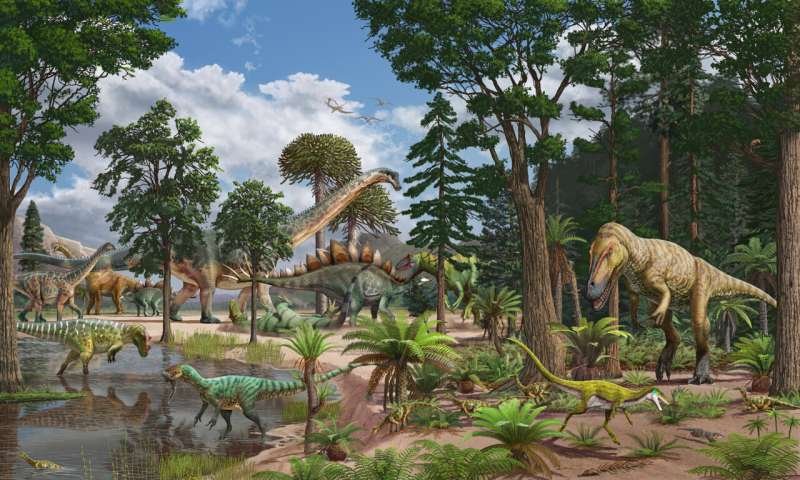
Predators in the Late Jurassic era frequently targeted young sauropods, providing a vital food source in ancient ecosystems, as evidenced by fossil analysis from the Morrison Formation in the United States. Scientists at University College London constructed a food web model for the region to compare it with other geological periods and assess evolutionary impacts.
Fossil records suggest sauropods laid large clutches of eggs in unprotected nests, leaving hatchlings vulnerable. Lead author Cassius Morrison explained, ‘Size alone would make it difficult for sauropods to look after their eggs without destroying them, and evidence suggests that much like baby turtles today, young sauropods were not looked after by their parents. Life was cheap in this ecosystem and the lives of predators such as the Allosaurus were likely fueled by the consumption of these baby sauropods.’
These defenseless juveniles likely sustained multiple carnivorous species, highlighting the harsh survival dynamics of the time.
Innovative Brain-Computer Interface Crafts Music Playlists from Emotional Responses
Japanese researchers have engineered an in-ear brain-computer interface that detects iological signals of musical enjoyment to curate personalized playlists in real time. Traditional streaming platforms use metadata such as genre and tempo to infer preferences, but this system employs electroencephalography (EEG) to capture brain markers of pleasure, including full-body chills.
Tests showed the device outperformed commercial alternatives, with users experiencing more ‘pleasure chills’ and higher enjoyment ratings when EEG data guided selections. Participants also reported reduced stress and enhanced sense of purpose, underscoring the value of music tailored to internal emotional states.
