

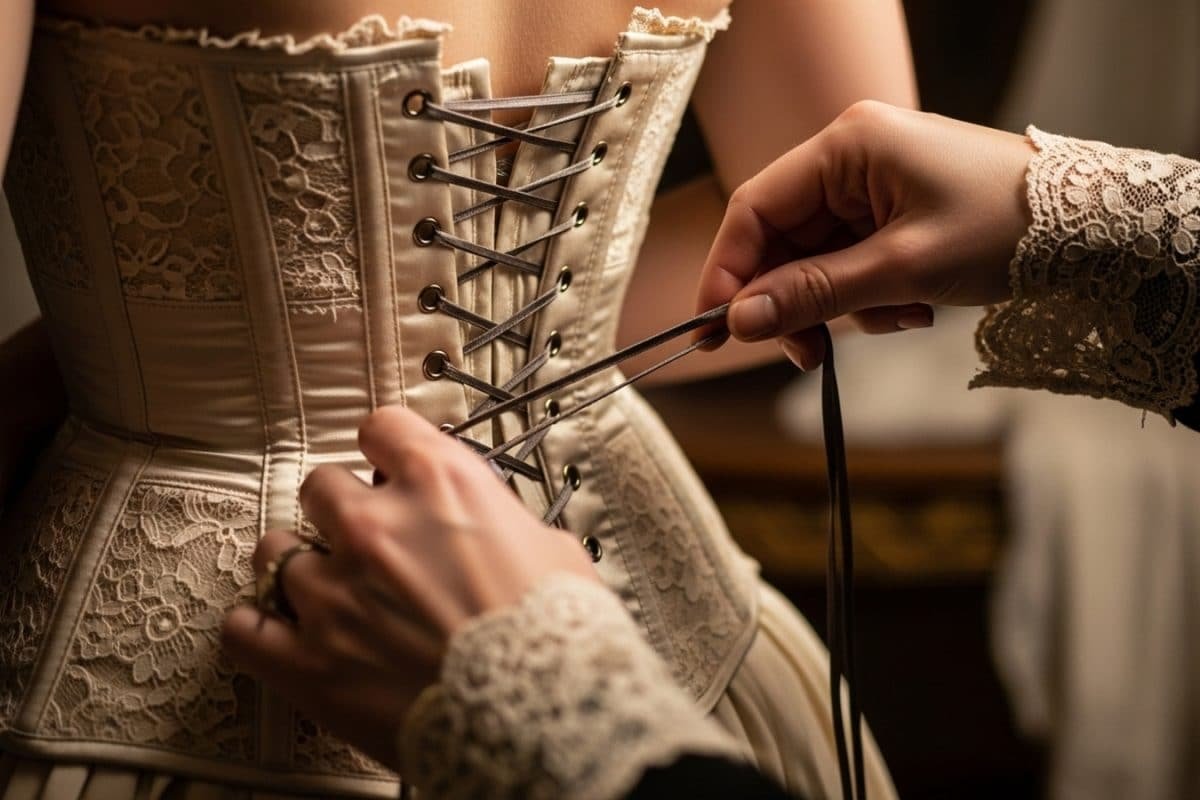
Corsets combined with ghagras represent a fresh fusion in contemporary fashion, blending elements from distant cultures with rich legacies. This trend surges across social media platforms and high-profile events, highlighting corsets as a prominent style revival. For centuries, these garments have embodied ideals of beauty, social standing, restriction, and defiance, reflecting evolving perceptions of the body and gender roles.
Origins and Symbolism of Corsets in Europe
Corsets trace their roots to 16th-century Europe, where they developed from reinforced bodices into structured pieces that molded the female form. During the Victorian period, they became essential for embodying propriety, with a narrow waist signaling moral uprightness, self-discipline, and elite status. This era emphasized how clothing could enforce societal norms on women’s posture and movement.
The Cultural Role of Ghagra-Cholis in South Asia
In parallel, the ghagra-choli ensemble in South Asia emerged as a marker of cultural heritage, tradition, and womanhood. Unlike the rigid Western corset, it offered more flexibility, yet elaborate versions—adorned with intricate embroidery, cholis, dupattas, and accessories—subtly guided how women navigated daily life. These outfits dictated graceful strides, seated positions, and overall demeanor, embedding cultural expectations into attire.
Challenges to Comfort and Health
By the 19th century, corsets grew more sculpted to achieve the desired hourglass shape, with tight-lacing practices shrinking waists to extremes and sparking health debates. Medical experts and activists highlighted risks like impaired respiration and organ displacement, fueling the dress reform movement that pushed for practical clothing over oppressive standards. In South Asia, ornate ghagras demanded endurance during extended rituals, often prioritizing aesthetics over ease of motion.
20th-Century Shifts Toward Liberation
The early 1900s brought transformative changes, as innovators like Coco Chanel championed looser designs that promoted mobility and functionality. The flapper movement flattened silhouettes, swapping constriction for casual freedom. In India, the push for independence inspired streamlined ghagras, gentle folds, and local weaves, turning fashion into a statement of autonomy and national pride.
Revival and Contemporary Fusion
Entering the late 20th century, corsets reemerged with renewed vigor. Designers such as Jean Paul Gaultier reimagined them through bold pieces for icons like Madonna, shifting the garment from hidden restraint to visible empowerment and artistic expression. In Indian design, creators like Sabyasachi Mukherjee and Manish Malhotra integrate corset elements into elegant blouses and wedding ensembles, blending sculpture with opulence.
Today, stars including Deepika Padukone, Kangana Ranaut, Ananya Panday, and Tara Sutaria embrace corset-influenced looks that convey poise and self-assurance. Modern ghagras evolve into lighter, more versatile forms, featuring cropped tops in place of heavy cholis, optional dupattas, and innovative details like slits and flowing layers. This progression underscores a move from obligation to personal choice, though traditions at events like weddings still influence selections.
Fashion’s interplay between limitation and liberation remains intricate. Ghagras and corsets, once tools of conformity, now invite deliberate styling that honors heritage while embracing individuality.
