

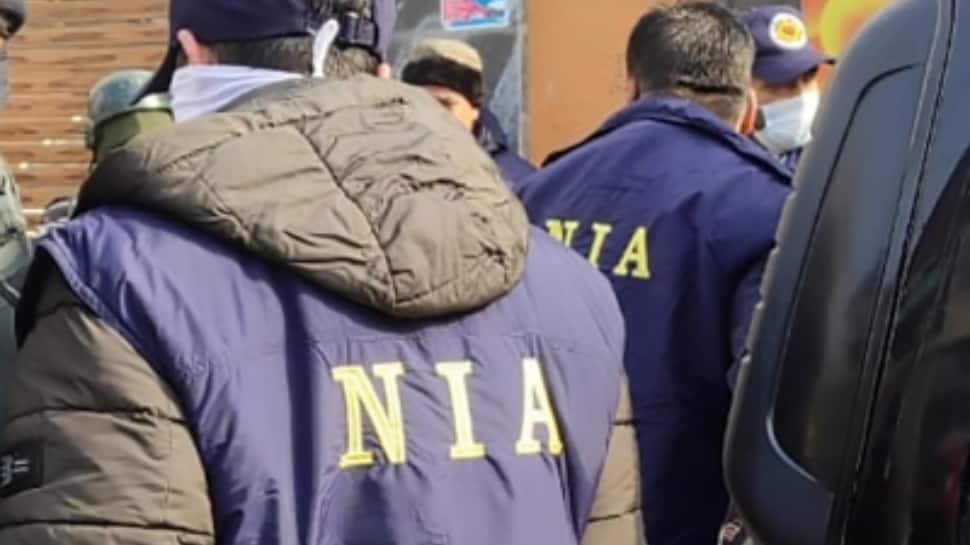
The National Investigation Agency (NIA) carried out simultaneous raids at five locations across three districts in the Kashmir Valley as part of an ongoing probe into terror networks and their support systems. The operations targeted Srinagar, Baramulla, and Bandipora districts to disrupt activities linked to terrorism.
Raid Locations and Targets
In Srinagar, investigators searched a residence in the Mustaabad area of Lawaypora. Additional raids occurred in Parimpora. In Bandipora, teams visited the home of a retired teacher, whose son remains in custody under the Unlawful Activities (Prevention) Act (UAPA). Baramulla saw three separate searches: the residence of a government employee in the Agriculture Department in Rafiabad, a teacher’s home in Edipora, Bomai, and the house of a former militant in Bomai.
Other sites included Rafiabad, Sopore, and additional areas in Bandipora. These actions aim to dismantle logistical support for terror groups operating in the region.
Seizures and Security Support
During the searches, teams recovered several incriminating items, including electronic devices, mobile phones, and pen drives containing sensitive data. NIA personnel received assistance from Jammu and Kashmir Police and the Central Reserve Police Force (CRPF) to ensure operational security.
Broader Anti-Terror Efforts
These raids build on recent NIA operations against terror modules, prompted by intelligence indicating plans for major attacks in Jammu and Kashmir. Other agencies, including the State Investigation Agency (SIA) and the Enforcement Directorate (ED), have joined security forces in extensive combing operations across forests, towns, and cities to monitor terrorists and their overground workers (OGWs).
Current assessments show about 136 active terrorists in the region, with 127 being Pakistani nationals and nine locals. Militants increasingly rely on encrypted messaging apps for coordination and funding to sustain hybrid terror operations.
Heightened Alerts and Operations
Intelligence points to preparations for Fedayeen-style attacks orchestrated by Pakistan’s ISI, involving 12 hardened operatives. In response, round-the-clock searches continue, particularly in higher altitudes across the Union Territory.
In the first month of 2026 alone, over 100 anti-terror operations took place, resulting in the destruction of six hideouts and three improvised explosive devices (IEDs). Reports also highlight the reactivation of approximately 82 terror launch pads along the Line of Control (LoC), with 120 to 150 Pakistan-trained militants poised for infiltration attempts.
Authorities have issued a high alert along the LoC and international borders to counter these threats and maintain vigilance against potential incursions.
