

New Research Explains Geological Paradox in Utah Mountains
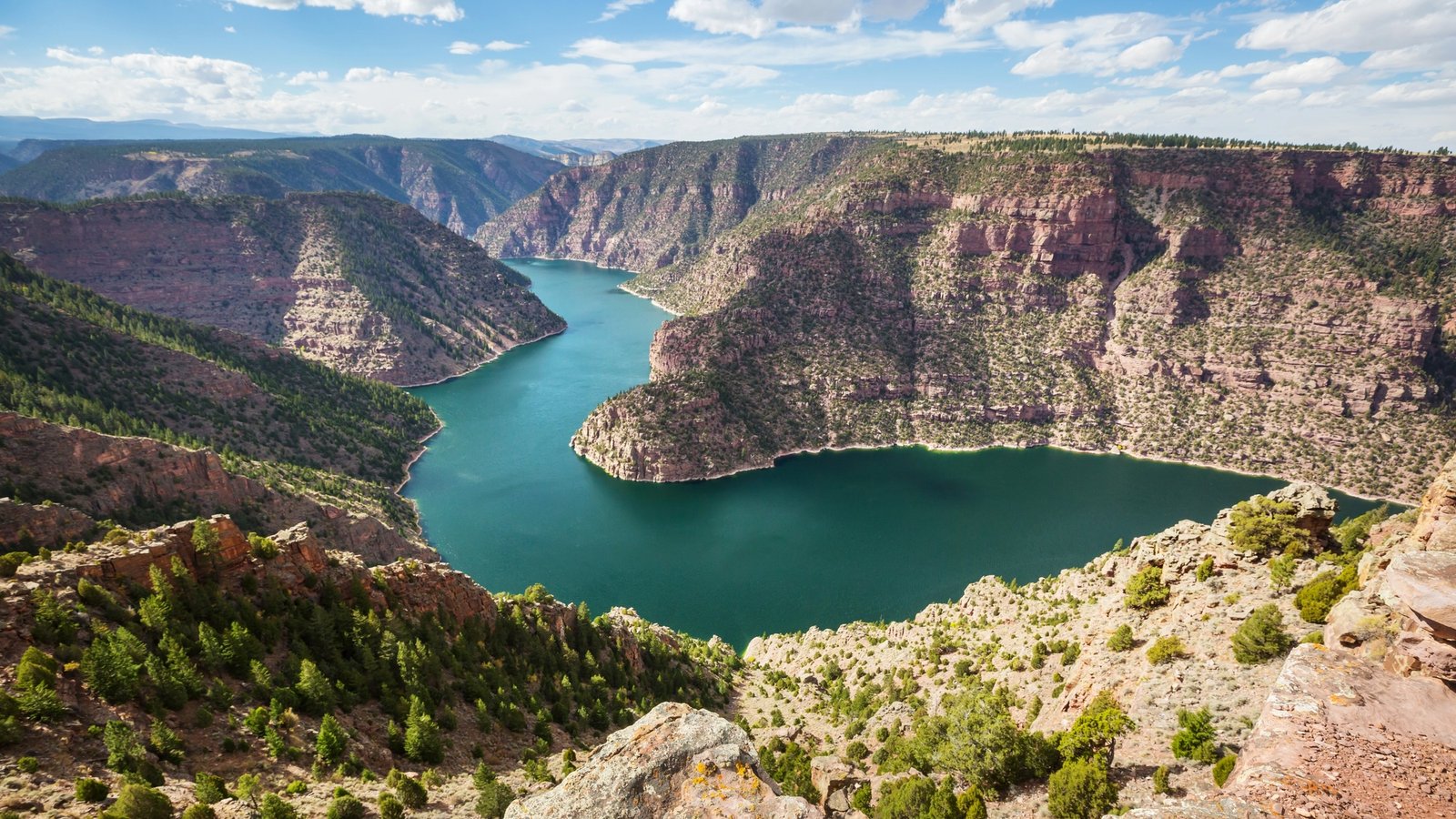
The Green River’s course through northeastern Utah’s Uinta Mountains has long baffled scientists. Flowing through a 2,300-foot-deep canyon in a range reaching elevations of 2.5 miles, the Colorado River tributary appears to defy geological logic given the 50-million-year-old mountains predate the river’s formation by tens of millions of years.
The Geological Conundrum
Researchers have puzzled for 150 years over how the river network established itself through this ancient rock formation. Water typically follows gravity’s path through softer substrates, yet the Green River carved through resistant bedrock at a time when the region showed no significant tectonic activity.
“The merging of the Green and Colorado Rivers millions of years ago redrew North America’s continental divide,” explained Adam Smith, a geologist at the University of Glasgow. “This watershed shift created new ecological boundaries that influenced wildlife evolution.”
Lithospheric Drip: The Missing Piece
New analysis of seismic imaging and geological modeling points to a phenomenon called lithospheric drip as the explanation. This process occurs when dense material accumulates at the base of Earth’s crust, eventually sinking into the mantle and pulling surface layers downward.
Seismic scans revealed a circular anomaly 125 miles beneath the Uinta Mountains—a 31-mile-wide cold spot believed to be remnants of a broken lithospheric drip. Geological models indicate this downward pull temporarily lowered the mountain range enough for the river to establish its path before the land rebounded.
Timeline Alignment
Researchers estimate the drip separated 2-5 million years ago, coinciding with when the Green River carved through the mountains to join the Colorado system. Measurements show the underlying crust beneath the Uinta range is significantly thinner than expected, supporting the drip theory.
“The evidence strongly contradicts previous explanations that the river predated the mountains or that sediment buildup enabled the connection,” Smith stated. The study’s calculations show surface elevation changes exceeding 1,300 feet—enough to enable the river’s path.
Broader Implications
This research not only solves a longstanding geological mystery but provides a new framework for analyzing similar anomalies worldwide. The lithospheric drip model could help explain other unexpected river paths and elevation changes in tectonically stable regions.
Further studies will examine whether this mechanism played a role in shaping other major North American watershed systems and their ecological development.
