

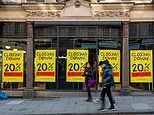
Small businesses across the UK endure pressures akin to those during the pandemic, driven by soaring energy costs, higher taxes, and rampant crime on high streets, according to a recent reports the Business and Trade Select Committee.
Unlike the coordinated government support in 2020, no comprehensive relief measures currently address these challenges. This comes amid broader warnings from industry leaders about escalating operational expenses affecting companies of all sizes.
Shops Closing at Alarming Rate
Figures from 2024 reveal an average of 38 high street shops closing daily. Small and medium-sized enterprises (SMEs), which comprise 99.8% of UK businesses and underpin local economies, bear the brunt.
Recent increases in employer national insurance contributions add £7 billion annually to retailers’ costs, while the hospitality sector has seen 69,000 job losses linked to these changes. Businesses also grapple with elevated electricity prices, retail crime costing £4.2 billion yearly, and persistent late payments.
MPs Call for Urgent Reforms
Liam Byrne, chair of the Business and Trade Committee, stated: “High streets do not die by accident. If the government is serious about growth, it must set out a more coherent and ambitious plan for the businesses that make up so much of the UK economy.”
Mr. Byrne emphasized the severity: “Many small businesses are now operating under pressures comparable to those experienced during the Covid pandemic but this time without an emergency support framework in place. SMEs are facing late payments, rising energy costs, increasing crime, a complex tax system and barriers to growth that are compounding rather than easing. These pressures are not isolated; together they pose a real risk to business viability, high streets and economic growth.”
The committee urges reforms such as stricter enforcement on late payments, adjustments to VAT and business rates, and targeted energy bill assistance.
Industry Leaders Echo Concerns
An advisory firm, Begbies Traynor, recently reported over 67,000 companies in critical financial distress. The Resolution Foundation think-tank warns of a potential “zombie apocalypse” of struggling firms.
Ashwin Prasad, UK boss of Tesco, addressed a Resolution Foundation conference, highlighting mounting costs: “Each time you add a new cost, money has to come from somewhere – in the past five years we’ve already seen all sorts of new costs for labour, costs for energy and costs for regulation.”
Mr. Prasad also raised alarms over economic inactivity, with nine million working-age adults—over one-fifth of the population—neither employed nor seeking work, often due to long-term illness. “We have been sleepwalking into a quiet epidemic that is keeping millions of people out of work. There has been a clear gradual change over the last decade or so. Far fewer people are in work than there could be.
“This means that instead of investing parts of national life that might stimulate investment and growth into the wider economy we are spending an ever increasing proportion on our national income on out of work benefits. We cannot afford to be a country that leaves the next generation to languish on the sidelines. A country that makes that kind of mistake is not going to be a country that finds ways to innovate, to grow its economy and improve its standing on the world stage.”
