

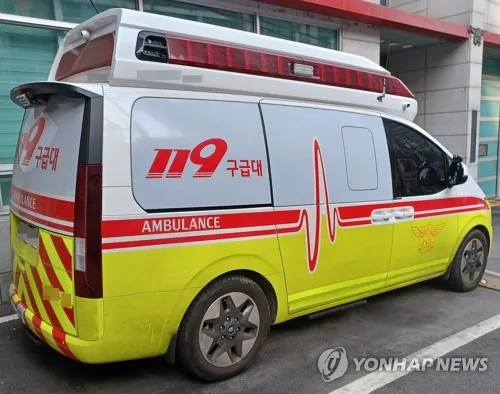
South Korea’s Ministry of Health and Welfare has introduced revised standards for ambulance interiors to address cramped patient compartments and enhance emergency transport efficiency. Officials announced the changes on February 14, focusing on expanding space and bolstering operational staff.
Key Upgrades to Patient Areas
The updates target core issues in ambulance design, including insufficient room height and protruding fixtures that hinder medical procedures. Analysis reveals these limitations compromise emergency medical technicians’ (EMTs) ability to provide timely care.
Increased Compartment Height
Patient compartment height now requires a minimum of 290 cm, measured from the driver’s partition to the inner door surface. This marks a significant jump from the previous 250 cm standard. The adjustment accounts for a 70 cm gap related to partition and canopy dimensions, enabling EMTs to maneuver freely around patients and essential equipment.
Sink and Fixture Adjustments
Sinks and counters, previously linked to multi-tank systems that encroached on space, undergo reconfiguration. New rules prioritize practical layouts, excluding non-essential elements to maximize usable area and reflect real-world operations.
Personnel and Operational Enhancements
Operators with five or more ambulances must employ full-time specialized staff. Smaller fleets can utilize one dedicated specialist alongside part-time drivers and EMTs, totaling five personnel per linkage base: one specialist, two full-time drivers, and two EMTs. These measures align staffing with ambulance features for optimal performance.
Implementation Timeline
The revisions take effect April 1, with single-tier height standards applied immediately due to operational necessities. Existing registered operators gain extensions—public and national services until April 2, 2027, and others until April 2, 2030. Already compliant vehicles continue under prior rules to ease the transition.
These changes minimize disruptions while ensuring safer, more effective emergency responses across the country.
