

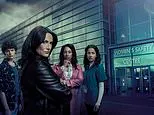
A Dystopian Premise Challenges Social Norms
In Channel 5’s new six-part series The Curfew, a strict law confines all men indoors from 7pm to 7am, enforced through electronic ankle tags and penalties of up to two years in prison. Women enjoy unrestricted movement at night. This setup prompts immediate questions about feasibility in modern society, echoing past widespread restrictions during the pandemic that gained public support through targeted messaging like ‘Keep Women Safe’ or ‘End Night Crime.’
Opening Episode Exposes Curfew Flaws
The drama launches amid rising tensions, as snatch squads patrol for violators. Yet the policy fails to curb violence: a woman’s body, head bashed in, appears dumped right outside the tagging center. Detective Pamela Green, portrayed by Sarah Parish, leads the investigation. ‘That level of rage,’ she snarls. ‘Only a man could have done that!’
Green dismisses female involvement, citing insufficient aggression among women and the brute force needed to move the body. However, scenes of rowdy women reveling in the empty town center at midnight raise alternative possibilities, such as a group effort overpowering the victim.
Key Cast and Suspects Emerge
Suspicions fall on figures like Anita Dobson as the dominant leader of a women’s hostel and Alexandra Burke in her major acting debut as Helen. Bobby Brazier plays James, while Mandip Gill portrays single mother Sarah, who confesses early—marking her as an unlikely culprit.
Sarah Parish delivers a compelling performance as the furious detective, her intensity captivating viewers.
Provocative Themes and Unexplored Angles
Whether serving as satire on gender dynamics or a stark commentary on misogyny and nighttime assaults remains open to interpretation. The series pushes boldly provocative territory rooted in biological distinctions: men confined, women free. Notably absent is any exploration of transgender implications, such as how transitioned individuals navigate the rules.
Overall, The Curfew strives intensely for shock value but risks overreaching in its dystopian vision.
