

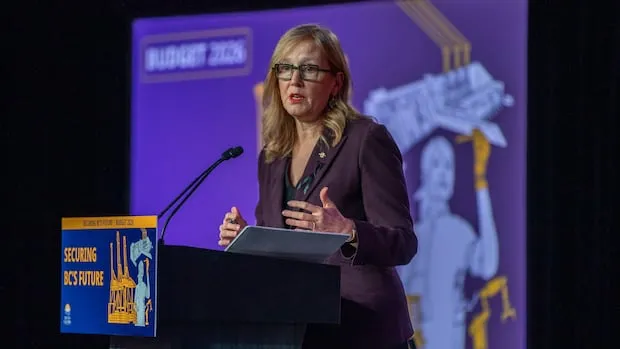
British Columbia’s 2026 budget delivers a mix of restrained measures, including 15,000 public sector job reductions, modest tax hikes, and deficits exceeding $10 billion for three consecutive years. Finance Minister Brenda Bailey presented the plan as a prudent step to enhance efficiency while safeguarding essential front-line services.
Key Budget Measures
The budget forecasts a public sector workforce reduction of 15,000 full-time positions over three years. Bailey emphasized in her speech that these changes target administrative efficiencies without compromising critical services. Additional steps include mild increases across various taxes and a projected $13 billion deficit this year.
Stakeholder Reactions
Marc Lee, senior economist at the Canadian Centre for Policy Alternatives, captured the general sentiment, stating, “A budget that managed to alienate everybody,” with a note of wry humor after reviewing the details.
Carson Binda, B.C. director for the Canadian Taxpayers Federation, criticized the approach: “This is absolutely a budget that’s bad news for B.C. taxpayers who are already struggling to make ends meet. This government needs to put down the taxpayer credit card, pick up a pair of scissors, and start finding real savings.”
Iglika Ivanova, co-executive director at B.C. Policy Solutions, highlighted concerns over public services: “We have an affordability crisis, we have a housing crisis … and we have this government who says, ‘Hold on, we’re gonna, just kind of tread water.’”
Brendon Ogmundson, chief economist for the B.C. Real Estate Association, expressed underwhelmment by linking to the 1992 song “Underwhelmed” on LinkedIn.
NDP’s Balanced Approach
The New Democratic Party has consistently framed its budgets as middle-of-the-road strategies. Bailey described the current plan as “prudent,” aiming to control deficits while maintaining core services. “This isn’t about rolling out new shiny programs … but we’re not making those cuts that people are calling for,” she noted.
Past ministers echoed this: Carole James called a 2018 budget with a mild surplus “focused and balanced,” while Selina Robinson in 2022 described investments amid a $5.5 billion deficit as fiscally responsible.
Fiscal Context and Outlook
The budget trims three percent of public sector jobs, freezes new $10-a-day childcare spots, delays long-term care facilities, and raises taxes without slashing ministry spending or major programs. Lee acknowledged the context: “We do have room to move. We can’t do these [deficits] every year forever. But the numbers are still reasonable relative to GDP.”
However, total debt is set to climb by $80 billion over the next three years, shifting from earlier mild surpluses or post-pandemic shortfalls. This approach now tests broader public support amid rising fiscal pressures.
