

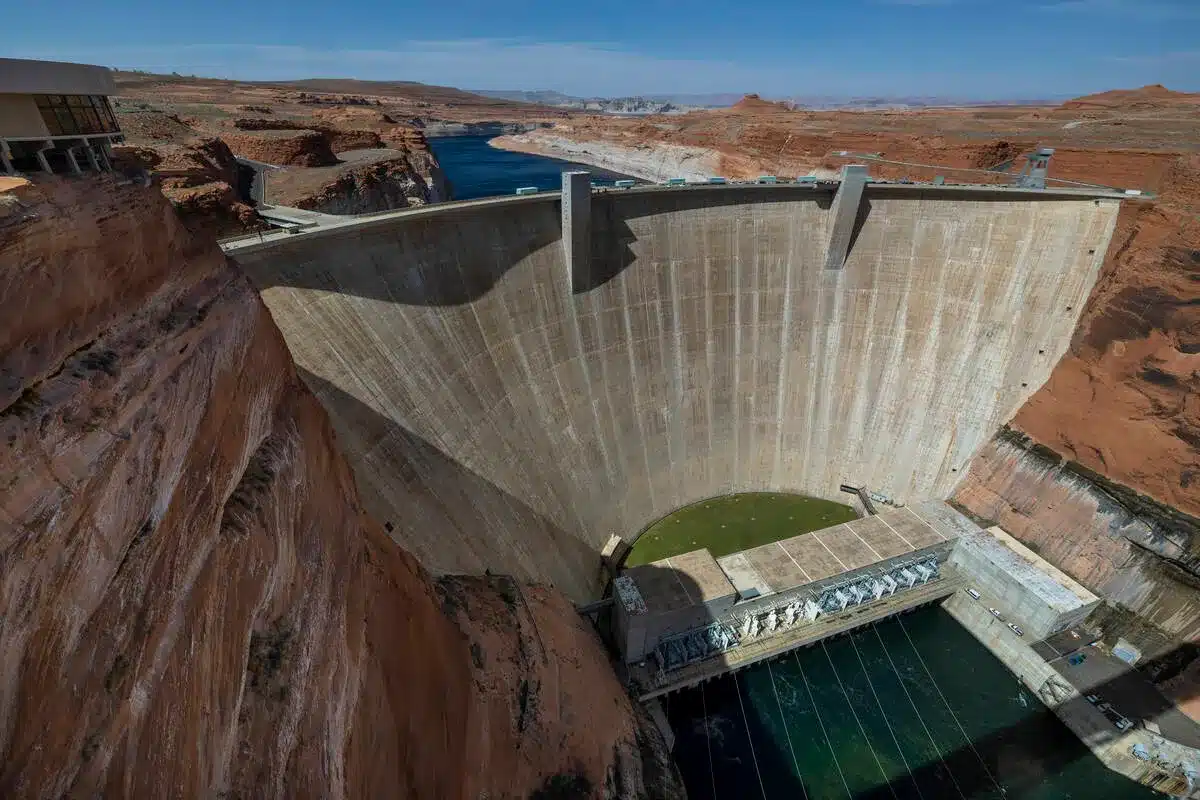
Floyd Dominy, Bureau of Reclamation commissioner in the 1960s, drove the construction of Glen Canyon Dam on the Colorado River. Completed in 1963, the 710-foot structure now confronts unprecedented climate pressures: shrinking snowpack, soaring temperatures, and critically low Lake Powell levels persisting year after year.
Design Oversights in a Variable River
Engineers designed the dam for stable water conditions, ignoring the Colorado River’s extreme fluctuations—massive floods and prolonged droughts. During the intense 1983 El Niño, floodwaters nearly overtopped the dam due to inadequate spillway capacity and operational errors. Temporary fixes like plywood barriers and cooler weather averted disaster.
Escalating Water Management Crisis
The seven Basin states—California, Arizona, Nevada, Utah, New Mexico, Colorado, and Wyoming—faced a November 11 deadline to devise a new management plan or risk federal intervention. That date passed without agreement, followed by a February 14 extension that also expired unmet. Tribal nations holding river claims remain sidelined from these talks.
States have over-allocated water based on inflated 1922 estimates from the Colorado River Compact, depleting 1980s-1990s reservoir surpluses in Lakes Mead and Powell. Both reservoirs now sit below 30% capacity, with declines accelerating. This century, river flows have dropped 20% below long-term averages, and scientists project further reductions amid global warming.
Low Water Exposes Critical Flaws
Current threats stem from insufficient water, not excess. In March 2023, Lake Powell neared the 3,490-foot minimum power pool elevation, risking turbine shutdowns from cavitation—explosive bubbles damaging penstocks 20 feet below.
Beyond that, river outlet works (ROWs) at lower elevations provide the only release path, but these bypass tubes suffer erosion and cavitation during prolonged low-reservoir use. A 2023 high-flow test confirmed damage, limiting safe outflows well below the 15,000 cubic feet per second maximum. Full reliance on ROWs could halt deliveries, endangering water for 25 million downstream users and vital agriculture.
At 3,370 feet—dead pool—water passes only during high inflows exceeding evaporation. No lower outlets exist, trapping 1.7 million acre-feet in the reservoir’s base. This stagnant pool would fluctuate dramatically, fostering algal blooms and oxygen depletion.
Urgent Calls for Infrastructure Fixes
Such failures would devastate populations, economies, and ecosystems reaching Mexico’s Gulf of California. Lower Basin states warned Interior Secretary Doug Burgum in a recent letter that omitting dam plumbing issues from post-2026 operations planning violates federal law. The letter states: “Addressing the infrastructure limitations may be the one long-term measure that would best achieve operation and management improvements to the Glen Canyon Dam.”
The Bureau has yet to respond formally. Modifications are essential, balancing legal obligations with ecosystem health in Glen and Grand Canyons. One viable solution: drill bypass tunnels through surrounding sandstone, as sketched by Dominy in 1997 on a napkin for Glen Canyon Institute founder Richard Ingebretsen. Equipped with valves, these would channel water and sediment at river level, preventing operational collapse.
The window for studies, design, and implementation narrows rapidly amid ongoing reservoir declines and strained federal resources. Basin stakeholders must prioritize sustainable reforms over disputes to secure the Colorado River’s future.
