

Housing affordability ranks among the top economic hurdles for families in Las Vegas and Nevada. With elevated home prices and borrowing costs, discussions intensify over barriers to homeownership. While investors in single-family homes often face scrutiny, this view overlooks deeper structural issues driving the shortage.
Many residents prefer single-family homes, yet higher interest rates, soaring prices, and scarce inventory hinder ownership for households at all life stages. Single-family rentals emerge to satisfy this demand, providing stable housing options in tight markets rather than supplanting ownership.
Investor Activity in the Market
Investor purchases account for about one in five homes bought in the Las Vegas area over the past 15 years, according to analysis from UNLV’s Lied Center for Real Estate. Activity surged post-COVID before recently declining. This presence boosts single-family rental availability but reduces inventory for owner-occupants—a key trade-off for policy considerations.
Public data on investors often draws from national sources like Redfin, categorizing buyers via LLCs or trusts for privacy and uniformity. Such methods yield reliable figures yet offer limited insight into ultimate home usage, urging caution in policy derived solely from ownership types.
Chronic Underbuilding Exposed
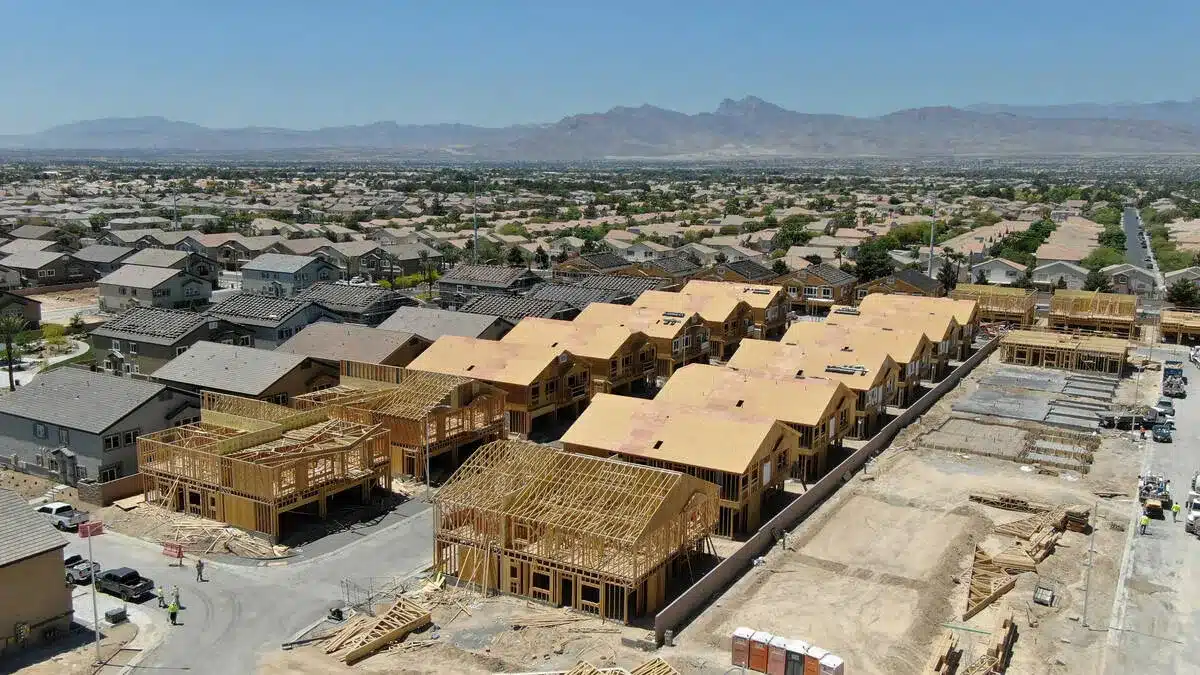
Clear metrics highlight housing supply and prices. A 2025 Lied Center study reveals Southern Nevada’s 15-year underbuilding trend, with residential construction dropping over 60 percent below historical norms since 2010 despite population growth. Matching past trends would add tens of thousands of homes today.
National Bureau of Economic Research studies echo this, pinpointing prolonged underbuilding and restrictive land-use rules as main price escalators.
Land Constraints Amplify Challenges
Nevada’s issues stand out due to land scarcity. Federal ownership covers roughly 80 percent of state land, with the Bureau of Land Management overseeing much of Southern Nevada. This setup restricts buildable areas, prolongs timelines, and inflates costs that impact renters and buyers alike.
Path to Greater Affordability
No single factor causes housing woes, nor one fix resolves them. Solutions demand tackling supply barriers: streamlining permitting, easing zoning, simplifying regulations, improving land access, and cutting production frictions. Prioritizing ownership demographics over total supply misses the core issue.
Single-family rentals and homeownership interconnect within a system influenced by policies, markets, and supply choices. Nevada achieves a more affordable market by expanding supply and dismantling obstacles, avoiding unclear regulations that risk unintended harms and deter business growth.
