

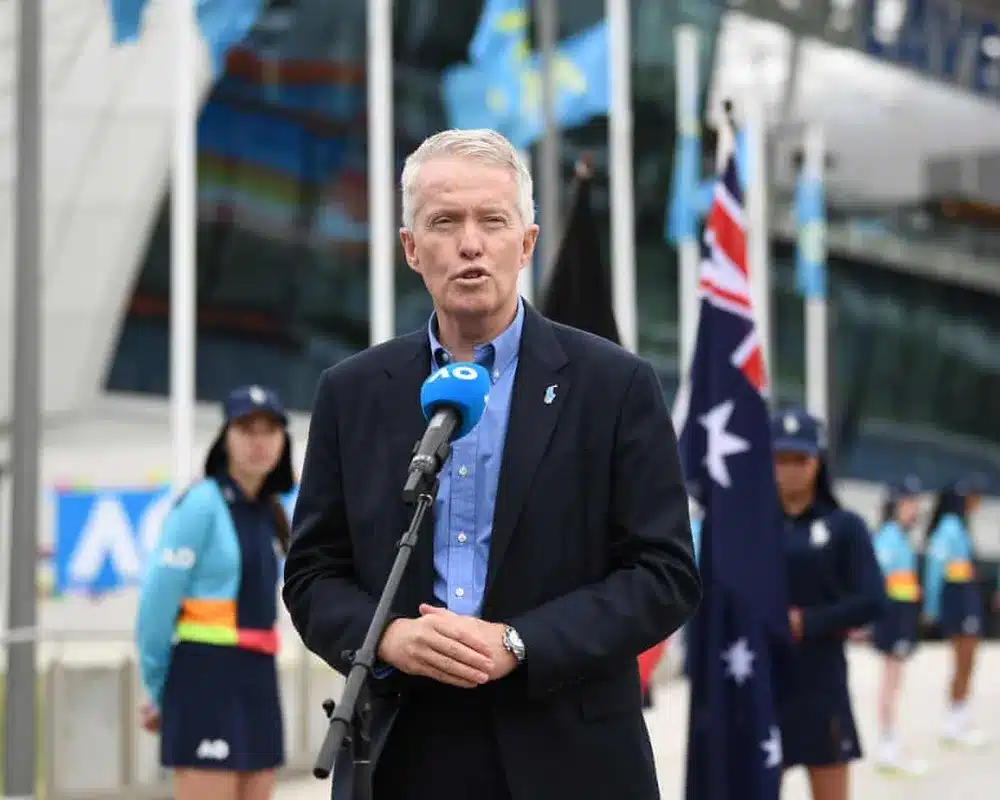
Craig Tiley joined Tennis Australia as director of tennis in 2005. Two decades later, after serving in two key roles, he departs with a complex yet powerful legacy. He has overseen the Australian Open since his 2006 appointment as tournament director, turning it into a premier event that captivates sports fans each January.
Australian Open’s Remarkable Expansion
As chief executive of Tennis Australia since 2013, Tiley’s dual responsibilities amplified his influence far beyond the grand slam’s massive success. He built an expansive operation and earned recognition as a skilled strategist. Attendance surged from 554,858 in 2007 to a record 1.4 million in 2026. Prize money grew substantially, and players consistently praise the event’s player-friendly enhancements.
Tiley prioritized entertainment alongside competition, incorporating music, food, and festivities. On-court action forms just one element of the multifaceted experience.
Bold Innovations Drive Growth
Tiley championed key upgrades, including state-of-the-art roofed stadiums funded by state government investments. He addressed fears of the event relocating to Sydney, China, or the Middle East to secure support. A Sunday start extended the tournament to 13 days, reducing late-night matches while boosting revenue through spread-out opening rounds.
Recent changes, such as branding it a three-week spectacle—including qualifying, exhibitions, and the popular One Point Slam—exemplify his vision. Critics note increasing commercialism and crowds, with some fans facing long queues while VIPs skip ahead.
Navigating Crises with Resilience
Tiley managed high-profile challenges, including the 2022 Novak Djokovic deportation amid pandemic restrictions. The unvaccinated world No. 1 spent time in hotel detention before removal, drawing global scrutiny. He cites overcoming COVID hurdles—like a $100 million loss in 2021 under strict quarantines—as a top achievement, alongside elevating the Australian Open and boosting participation.
Player Development Gaps Persist
Australian talent pipelines show weaknesses. U.S.-born Maya Joint leads WTA rankings at No. 29, with Kim Birrell at No. 80 as the sole top-100 homegrown player. Men’s side features Alex de Minaur at No. 6, but a drop to Alexei Popyrin at No. 45 highlights emerging talent shortages. Tensions around Davis Cup captain Lleyton Hewitt predate recent setbacks.
Succession and Future Horizons
Tiley recommends priorities like more seating, shade, space, and screens for his successor. Tennis Australia’s board favors combining CEO and tournament director roles. Leading candidates include chief tennis officer Tom Larner, events boss Stephen Farrow, and Tennis Queensland CEO Cam Pearson.
An executive search firm leads the process, with Tiley staying months to assist. He anticipates an internal tennis appointee. At 64, he heads to the United States Tennis Association, extending his reach across continents while leaving a strategic plan through 2030. His tenure elevated Australia’s premier tennis event amid navigating turbulent times.
