

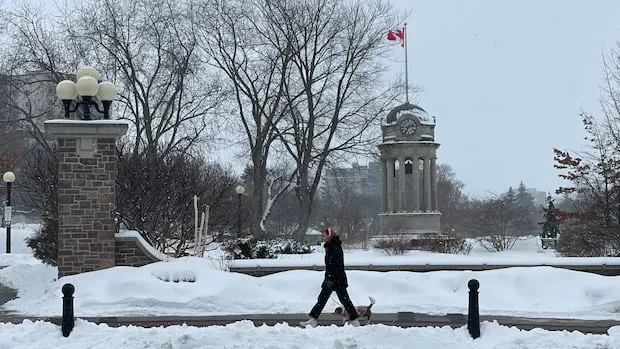
A frigid start to February, with temperatures plunging to –28 C in the first week, defined the month. Overall, February temperatures averaged one degree below normal, according to data from the E.D. Soulis Memorial Weather Station at the University of Waterloo.
Winter Summary
The meteorological winter—December, January, and February—clocked in two degrees below average in the Waterloo region, marking the coldest winter since 2014-15.
Snowfall and Precipitation
February brought less snow than typical, with 19.5 cm recorded compared to the 30 cm average. Precipitation totaled 33 mm, roughly half the usual 62.7 mm.
The snowfall season to date stands at 226.0 cm, tying for the highest end-of-February total on record. However, without substantial March accumulations, it may not claim the snowiest season overall.
Seasonal Context
Snow began falling on November 9. January saw twice the average snowfall, December averaged three degrees colder than normal—its second coldest in 20 years—and November delivered the region’s snowiest month since 1950.
Recent Weather Patterns
Several storm systems crossed southern Ontario in February, contributing to the snowy conditions despite below-normal precipitation totals.
Forecast and Flood Risks
Milder weather dominates through mid-next week, with Saturday highs possibly reaching 14 C alongside showers, a thunderstorm risk, and up to 15 mm of rain.
The Grand River Conservation Authority has issued a flood watch across the entire Grand River watershed due to melting snow, incoming rain, and potential ice jams. “Current forecasts indicate relatively light-intensity rainfall continuing through today and Friday, and into the weekend. While projected totals vary, most forecasts call for 20 to 30 mm of rain over the next few days,” the watch states. “The snowpack in the northern part of the watershed contains a significant amount of water content. Warm temperatures combined with expected rainfall will result in snowmelt and runoff.”
Officials urge extreme caution around waterways, citing high water levels and unstable ice that heighten safety risks.
March Outlook
Southern Ontario faces average to above-average temperatures in March. “It has been an interesting winter season. Many parts of Canada experienced cold and snow not seen in decades,” a report notes. “As March begins, we can expect larger swings in temperature and active weather, typical of the transition toward spring across much of the country.”
Environment Canada meteorologist Geoff Coulson warns against complacency: “For people who are not fans of winter, it looks like there’s still winter to get through before we get onto the other side.” He highlights Arctic air plunging in mid-March, with weather models signaling potential storm systems bringing freezing rain and snow.
