

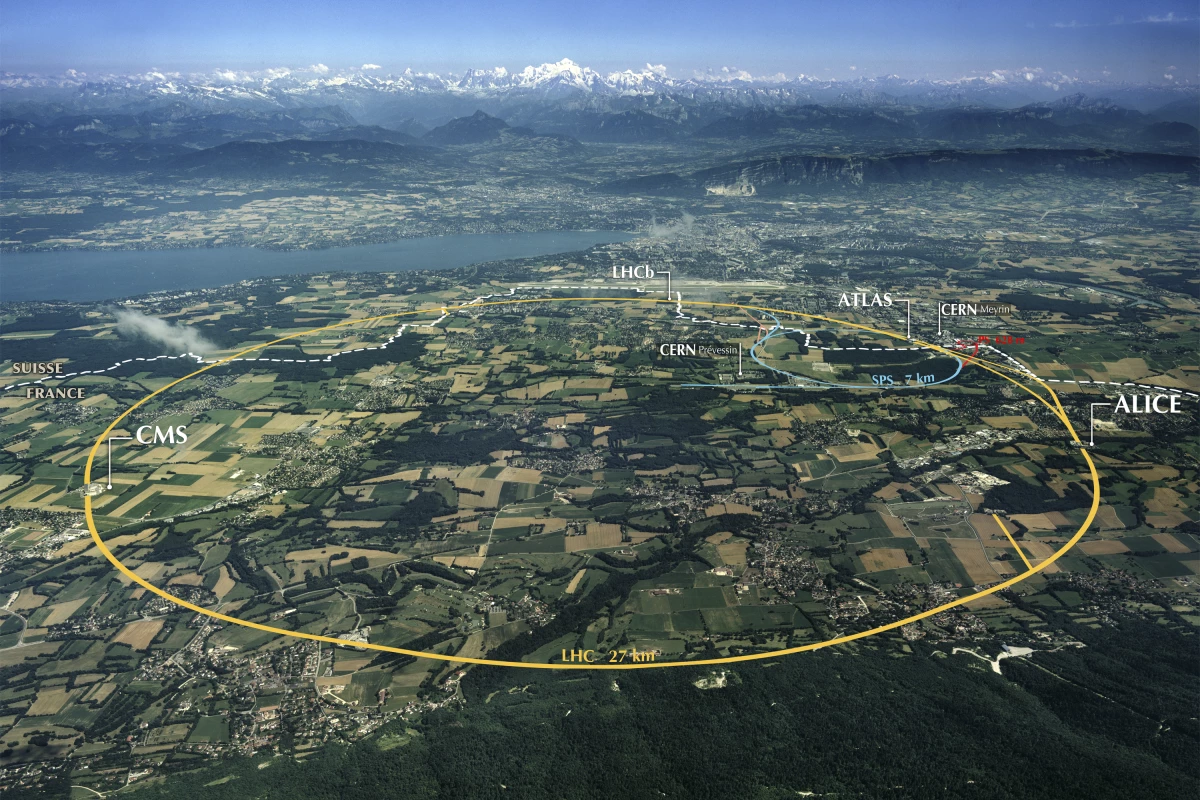
CERN’s Large Hadron Collider (LHC), the world’s largest particle accelerator with a 26.7-kilometer circumference, demands immense energy to collide subatomic particles at near-light speeds. This process consumes between 600 and 750 gigawatt-hours annually, generating substantial waste heat as a byproduct.
The LHC’s Power and Heat Challenges
Engineers at CERN have long managed this excess heat through evaporative cooling towers that release it into the atmosphere. Now, a sustainable initiative transforms this waste into a valuable resource, powering district heating for thousands of residences and businesses nearby.
Redirecting Heat from the LHCb Experiment
The project centers on the Large Hadron Collider beauty (LHCb) experiment at Point 8 along the accelerator ring, located near Ferney-Voltaire in France. A new heat exchanger captures thermal energy from the cooling system and channels it into a local district heating network.
This network serves the Zone d’Aménagement Concerté Ferney-Genève Innovation development area, providing efficient heating to several thousand homes and commercial properties. The system launched in December and has reached full operation, enhancing CERN’s environmental footprint while supporting community energy needs.
How the System Works
“Typically, hot water would pass through a cooling tower, releasing heat into the atmosphere so that the cooled water could be reinjected into the equipment,” states CERN energy coordinator Nicolas Bellegarde. “In the new setup, hot water initially passes through two 5-megawatt heat exchangers, which transfer thermal energy to the new heating network in Ferney-Voltaire.”
This collaboration with local authorities demonstrates how cutting-edge research facilities can contribute to greener urban infrastructure, reducing reliance on traditional energy sources for heating.
