

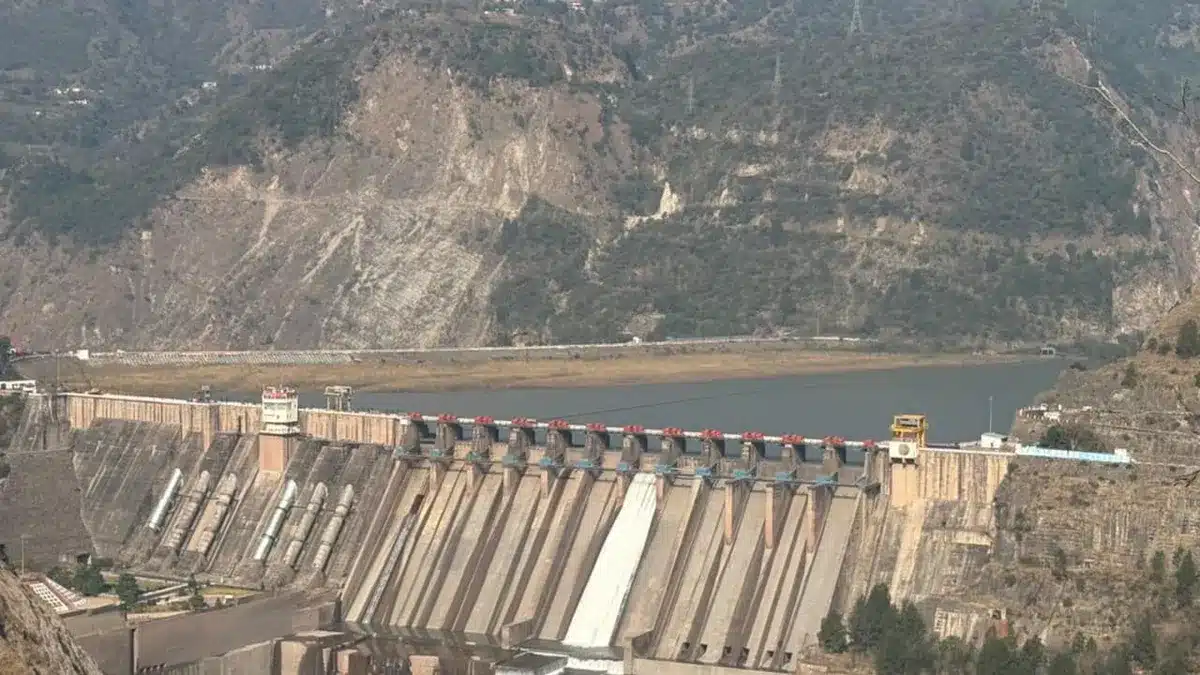
Desilting and dredging operations have commenced for the first time in the Chenab River since the suspension of the Indus Waters Treaty, targeting improved efficiency at the Salal Power Station in Jammu and Kashmir’s Reasi district.
Enhancing Salal Power Station Performance
The suspension of the treaty enables critical sediment management at the Salal Power Station on the Chenab River. Anish Gauraha, Executive Director of the Salal Power Station, states, “We are implementing an effective sediment management plan to boost operational efficiency.”
He adds, “It’s challenging to quantify the increase in power generation, but these efforts will reduce wear and tear. Dredging forms a core part of the plan, aiming to remove maximum silt and minimize damage. We are also developing flushing strategies to control sediment.”
Previously, treaty restrictions prevented draw-down flushing, desilting, and dredging. The Salal Concrete Dam features six under-sluice gates designed for sediment control, but a 1960 treaty provision and 1978 agreement required their permanent plugging, along with prohibiting silt excluder gate operations. This led to ongoing silt buildup in the reservoir.
Current initiatives focus on clearing accumulated silt and reactivating these gates. Gauraha confirms, “A tender has been issued to operationalize the under-sluice gates, with work in progress.”
Reservoir Capacity Recovery Underway
The power station’s original reservoir capacity stood at 284 million cubic meters (MCM), but silt reduced it to 9.91 MCM by the May 2025 bathymetric survey. Following treaty suspension and desilting start, capacity has risen to 14 MCM as of January 2026.
Officials report that a no-objection certificate (NOC) supports desilting at the Salal dam reservoir, where operations have begun. To date, 170,000 metric tons (MT) of sediment have been dredged, with 68,490 MT disposed of.
