

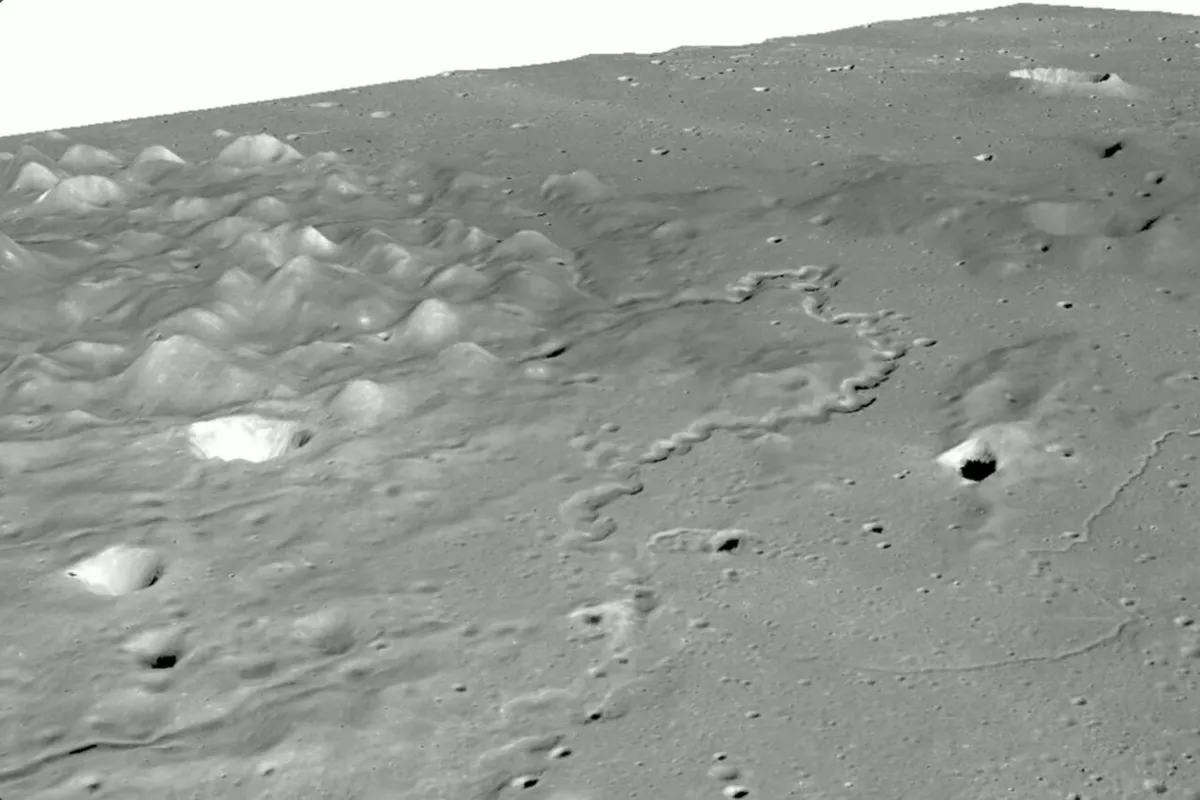
China competes with the United States to land astronauts on the Moon before the decade ends. Researchers highlight the Rimae Bode region as a prime landing site, calling it ideal lunar real estate. A study published in Nature Astronomy assesses this volcanic area on the Moon’s near side near the equator. The site ranks among 14 candidates selected from an initial 106 options.
Jun Huang, a professor at China University of Geosciences in Wuhan and the study’s corresponding author, describes the area where expansive volcanic plains border rugged mountain highlands. “It sits in this central, open location, offering a direct line of sight to Earth for easy communication and receiving plenty of sunlight,” Huang explains in an email.
These features suit crewed missions while providing key scientific benefits. The location avoids NASA’s planned south pole sites, which target water ice in shadowed craters. China prioritizes initial astronaut landings, mirroring NASA’s Apollo strategy.
Mapping Rimae Bode
Huang’s team reviewed imagery and data from multiple lunar spacecraft to identify flat zones in Rimae Bode. They prioritized sunlit spots visible from Earth with slopes under 8 degrees. The analysis identifies four landing sites, each roughly 5 miles (8 kilometers) from scientific “treasures,” including ancient volcanic ash, crater debris, and dark volcanic glass.
“This evaluation ensures astronauts can quickly access diverse samples to unravel the Moon’s deep history,” Huang states.
A Scientific Treasure Trove
Huang notes that China National Space Agency (CNSA) has not finalized crewed mission objectives, but the research underscores Rimae Bode’s value. “The region serves as a scientific treasure chest, revealing the Moon’s internal and external history,” he says.
Volcanic glass offers insights into the lunar mantle’s composition. The area features lava plains, volcanic rilles—narrow channels from ancient flows—and asteroid impact debris. These elements enable timelines of early solar system events that shaped the Moon.
Potential CNSA goals include mapping lunar interior structure, early bombardment history, crustal rock diversity, polar volatiles, and volcanic evolution.
Huang withholds details on further site evaluations but confirms ongoing plans. CNSA’s Chang’e 7 mission will probe south pole shadowed craters like Shackleton for water ice.
As both nations claim lunar resources, such studies highlight intensifying competition. The key question remains: who lands first?
