

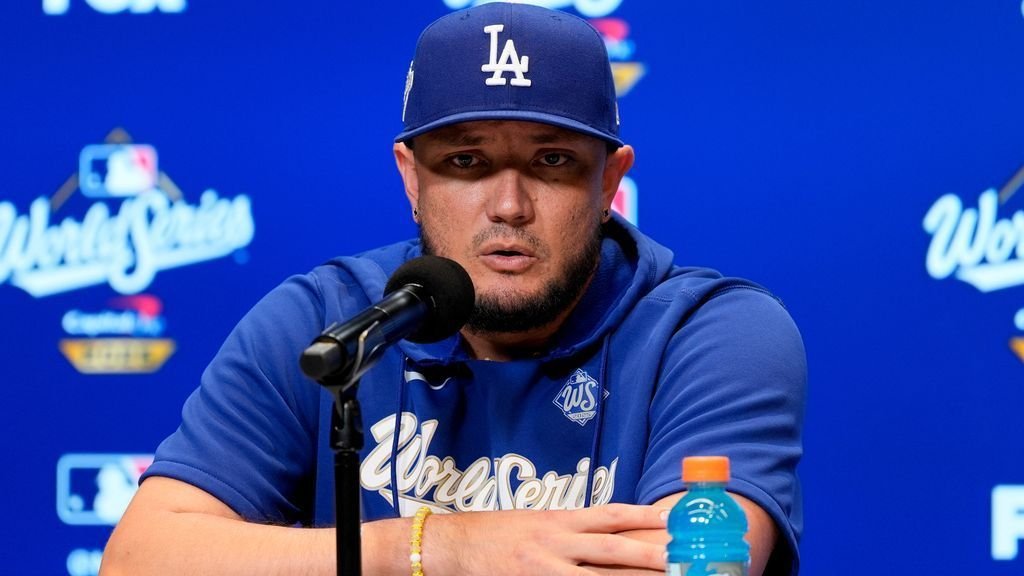
Los Angeles Dodgers infielder Miguel Rojas expressed deep disappointment after being barred from participating in the upcoming World Baseball Classic due to a new insurance provision that excludes players over 37 years old. Rojas, who turns 37 on February 24, aimed to represent Venezuela in what he described as his final season as a professional player.
Rojas’ Desire to Represent Venezuela
During the Dodgers’ annual fan event on Saturday, Rojas shared his frustration. “It’s really tough,” he said. “I didn’t know if I was going to be part of the team. I just wanted to be available. If something happened and I’m not part of the team in the first round, I can replace one of the players. I can be there for practice. I just wanted to be there and just wanted to be available for my country.”
This denial highlights growing concerns over insurance policies affecting player participation in the World Baseball Classic, a tournament that has gained significant prestige in recent years.
Broader Insurance Issues Impacting Latin American Stars
Insurance has become a major hurdle for several high-profile players. Venezuela’s potential starting second baseman Jose Altuve and Puerto Rico’s shortstop Francisco Lindor were also excluded because their contracts could not be insured. Puerto Rico’s national team faces additional losses, including third baseman Carlos Correa, catcher Victor Caratini, and pitchers Emilio Pagan and Jose Berrios.
The president of the Puerto Rico Baseball Federation, Dr. Jose Quiles, has publicly contemplated withdrawing the team from the tournament. Pool A, hosted by Puerto Rico from March 6-11 at Hiram Bithorn Stadium in San Juan, now risks significant roster disruptions.
Rojas questioned the disparity in application. “My only question is: Why is it just with our countries [in Latin America], like Venezuela, Puerto Rico, a couple Dominican players?” he said. “I don’t see that happening with the United States or happening with Japan. And I’m not trying to attack anybody, or attack what’s going on … but at the end of the day, it feels like it’s just happening with the players that want to represent their country from Latin America. So there’s a lot of things I would like to talk about with someone in control, with someone from MLB.”
Understanding the Insurance Policy
Major league contracts remain fully guaranteed, even for injuries sustained during the World Baseball Classic. However, insurance safeguards teams from financial risk. For instance, the New York Mets avoided paying Edwin Diaz in 2023 after he suffered a patellar tendon tear in his right knee while playing for Puerto Rico.
NFP, the company handling WBC insurance since 2006 under an agreement between Major League Baseball and the MLB Players’ Association, covers these policies, with the tournament footing the bill. Players with “chronic” injuries face steeper barriers to approval. Criteria for chronic classification include spending at least 60 days on the injured list in the prior season, missing two of the last three games due to injury, post-season surgery, multiple career surgeries, or an injured list placement on the last day of August.
Other categories, such as “intermediate” and “low risk,” improve approval chances, though contract size influences outcomes. Rojas’ one-year, $5.5 million deal is modest, and he avoided the injured list last season, but his age alone disqualified him under the new rule.
Potential Solutions and Timeline
Teams can assume the risk and allow uninsured participation, as the Detroit Tigers did for Venezuelan star Miguel Cabrera in the past. The Dodgers have not confirmed plans for Rojas, but urgency mounts with WBC rosters due Tuesday and announcements set for Thursday.
Rojas recently received a HIPAA form to permit deeper medical review by NFP, but it arrived too late to explore alternatives. The provision specifies that contracts become uninsurable upon turning 37, with partial coverage possible if the birthday falls later in the year—for example, covering only through June for a July birthday.
“It’s really hard to not have the opportunity to put my country on my chest and to represent them and help win a World Baseball Classic — and not have the opportunity to do it because I’m 37 years old,” Rojas said. “That’s not right. I don’t feel it’s right.”
