

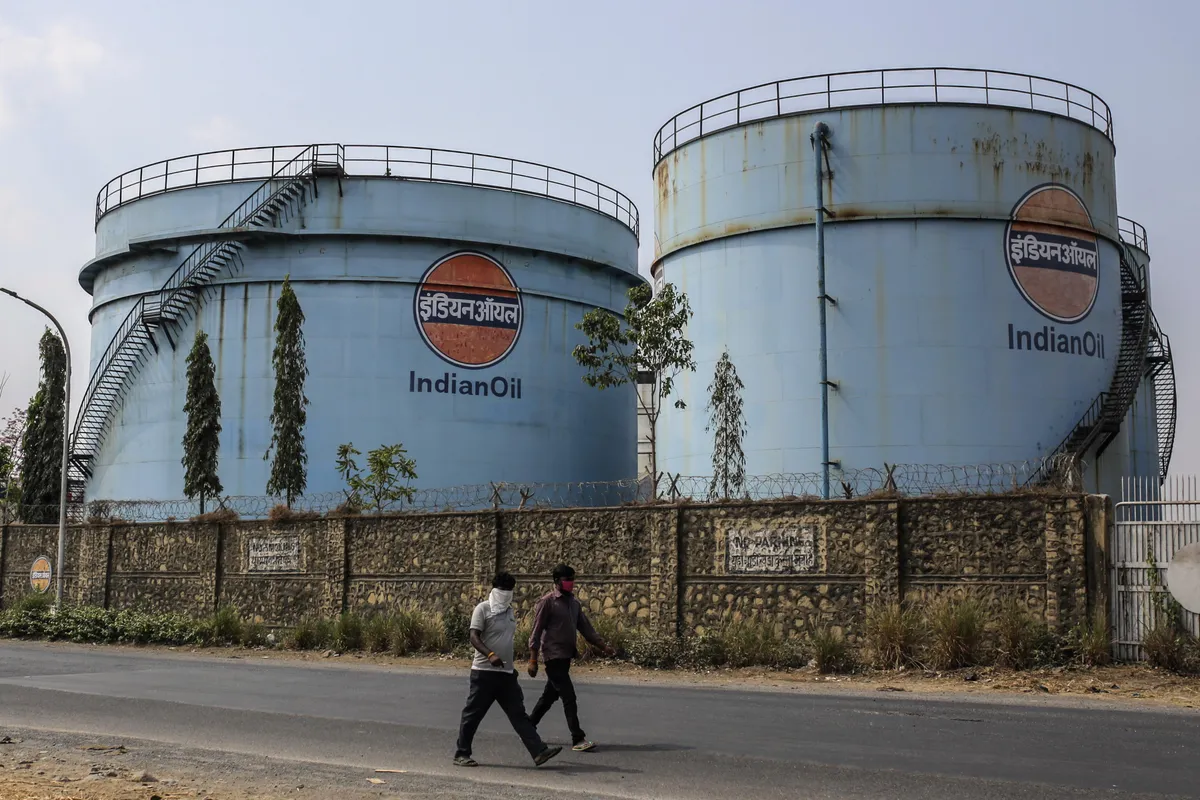
India directs oil and gas companies to submit details on exports, imports, and inventories to a government agency. This move aims to protect consumers from potential shortages as global prices surge due to the U.S.-Israeli conflict with Iran.
Government Directive Details
The Petroleum Planning and Analysis Cell (PPAC) will collect and analyze the data, as outlined in a government order issued late Wednesday. Companies must provide information regardless of contracts, agreements, commercial arrangements, or confidentiality obligations. No entity can withhold data by claiming it is commercially sensitive or proprietary.
Strategic Response to Supply Disruptions
India faces challenges from rising crude prices and supply disruptions but has refrained from banning refined fuel exports, unlike some nations. Gathering this data enables faster, targeted actions, such as export restrictions or adjusting flows to ensure energy security.
Prashant Vashisth, vice president at ICRA, a Moody’s affiliate, notes that the data collection supports quicker interventions. “India can use its excess refining capacity to prioritize fuel supply to friendly or strategically aligned countries after meeting local demand,” he said. Vashisth added, “Nowadays buyers are willing to pay a higher price. The question is of availability, which is beginning to outweigh prices.”
Any export curbs would primarily impact Reliance Industries, operator of the world’s largest refining complex, since other refiners have scaled back fuel exports.
Scope of Reporting Requirements
All entities in the oil and gas supply chain—including producers, importers, refiners, retailers, LNG importers, pipeline operators, and petrochemical plants—must share data with PPAC.
India’s Energy Landscape and Challenges
As the world’s fourth-largest refiner and third-largest oil importer and consumer, India relies on overseas purchases for over 90% of its oil needs. Officials maintain adequate crude and refined fuel stocks to meet domestic demand.
However, the nation, the second-largest LPG importer, grapples with its worst cooking gas crisis in decades. Shipments through the Strait of Hormuz have nearly stopped due to the conflict. India sources over 40% of its crude and 90% of its LPG from the Middle East.
Refiners have secured millions of barrels of Russian oil stored at sea following a U.S. sanctions waiver. Under emergency powers, refiners must maximize LPG production and reduce industrial sales to prevent shortages for 333 million households with LPG connections.
Last week, authorities urged consumers to avoid panic buying LPG cylinders and switch to piped natural gas where available.
