

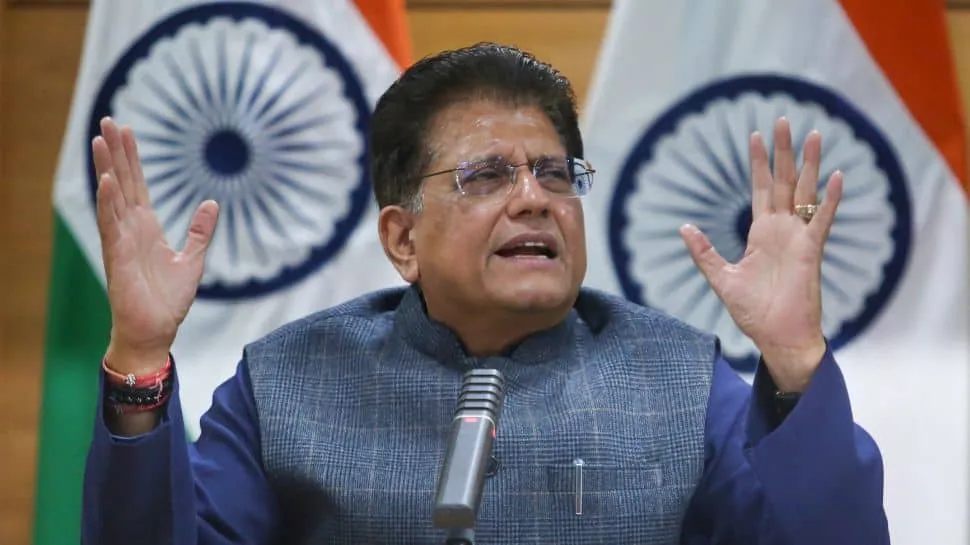
Union Commerce Minister Piyush Goyal emphasizes that the India-US interim trade agreement extends far beyond commerce, establishing a vital foundation for geopolitical realignment.
Comprehensive Partnership Across Key Sectors
The minister highlights how the agreement captures the partnership’s breadth, encompassing defense, technology, critical minerals, and strategic collaboration. Trade acts as the mechanism, but the core objective is strategic alignment in high-priority areas.
“Our partnership goes well beyond trade. We maintain a robust defense alliance and participate in two quadrilaterals. Both nations align on critical minerals and technology cooperation. This trade agreement reinforces US-India long-term strategic objectives,” Goyal stated.
Friendly Negotiations Yield Balanced Outcome
Goyal describes the negotiations as constructive dialogues marked by mutual respect. Both sides addressed domestic priorities to achieve equilibrium, fostering growth without rivalry.
“Negotiations involve friendly discussions. Each party safeguards its interests and sensitivities. The target is a fair, balanced result that delivers win-win benefits,” he noted.
The process, including the final 48 hours, produced an agreement that honors both nations and leverages their distinct strengths.
Alignment with India’s FTA Strategy
Goyal compares the deal to India’s free trade agreements with developed economies that complement rather than compete. It positions India as a high-tech strategic partner to the West, sharing mutual interests.
Key Tariff Adjustments in the Framework
The United States and India unveiled a framework for an interim agreement on reciprocal trade benefits, underscoring commitment to a full Bilateral Trade Agreement initiated by President Donald Trump and Prime Minister Narendra Modi on February 13, 2025.
India commits to eliminating or reducing tariffs on all US industrial goods and various agricultural products, such as dried distillers’ grains, red sorghum for animal feed, tree nuts, fresh and processed fruits, soybean oil, wine, spirits, and more.
In return, the US imposes an 18 percent tariff on selected Indian exports, including textiles and apparel, leather and footwear, plastics and rubber products, organic chemicals, home decor, artisanal goods, and certain machinery.
Following successful implementation, the US intends to remove tariffs on specific Indian items like generic pharmaceuticals, gems and diamonds, and aircraft parts. Additionally, tariffs on certain Indian aircraft and parts—previously applied for national security—will be lifted, as detailed in the joint statement.
