

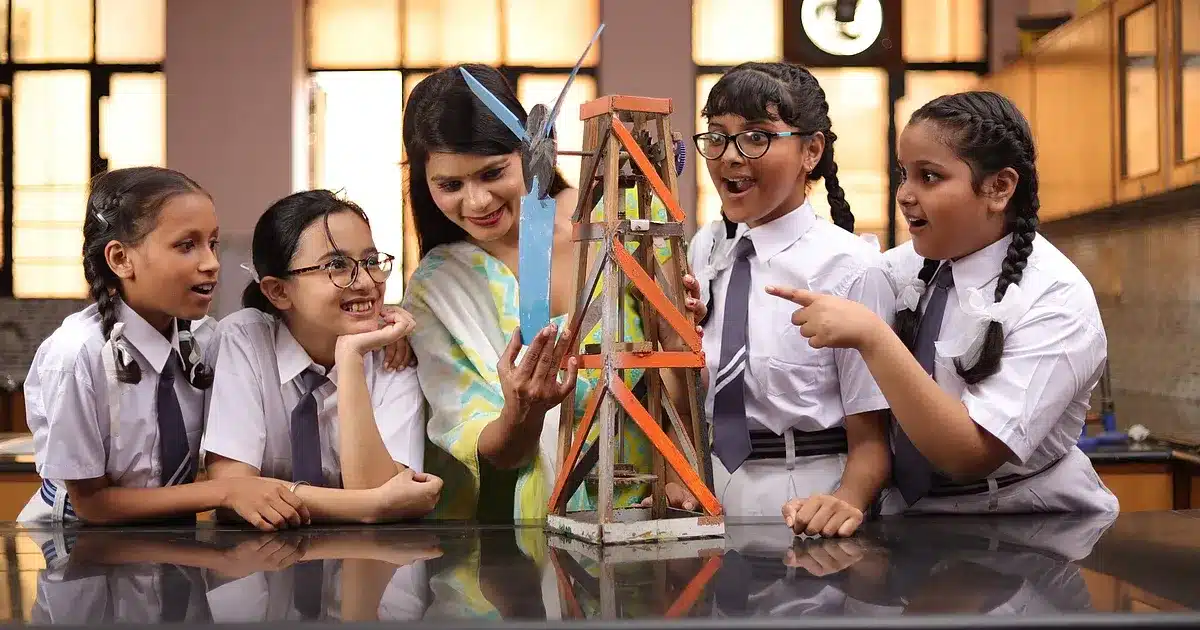
In a Rajasthan government school, the first robotics lab welcomed 32 students, with just five girls among them. Six months on, two of those girls led their teams in an internal challenge. One had initially avoided the hardware, believing circuits suited boys only. The shift stemmed from the supportive environment beyond mere facilities.
Widespread Investments in STEM Infrastructure
Schools across India rapidly establish robotics labs, AI classrooms, tinkering spaces, and innovation hubs. Programs like the Atal Innovation Mission and Atal Tinkering Labs equip thousands of schools with structured maker spaces. While access grows, equal participation hinges on more than infrastructure.
The Persistent Gender Participation Gap
Data from the All-India Survey on Higher Education (AISHE) shows women comprise nearly half of higher education enrollees. Yet, in engineering and technology, female enrolment plummets. The disparity intensifies in AI, robotics, and electronics.
At schools, patterns emerge early. Enrolment in innovation labs stays balanced when mandatory. However, in competitive or voluntary activities like robotics contests or coding clubs, girls’ involvement drops. Infrastructure opens doors, but culture dictates entry and retention.
Classroom Biases in Action
In a Madhya Pradesh Tier-2 CBSE school, the equipped robotics lab saw boys dominate hardware during open hours. Girls handled documentation and slides. Teachers acknowledged assigning hardware to boys and creative tasks to girls subconsciously.
After rotating roles—requiring all students to wire, code, assemble, and present—patterns changed within a term. Girls gained confidence with tools. One who started with design only later competed at state level.
Structured inclusion counters biases.
Influences on Girls’ STEM Engagement
Global studies, including those from UNESCO, highlight classroom climate, teacher expectations, and representation as key to girls’ STEM participation. Equal technical demands and celebrating problem-solving boost retention.
Girls thrive in real-life projects, like smart irrigation for farms or safety alerts. Contextual relevance eases intimidation and fosters ownership.
Introducing robotics and AI via storytelling and problem-solving, rather than jargon, significantly cuts initial reluctance.
Role Models Drive Change
In a Haryana school, a female engineering alumna’s mentoring spiked participation. Her visibility reshaped perceptions more than equipment.
Girls-only introductory workshops build confidence for equitable mixed teams later.
Evidence from Structured Programs
Schools integrating labs into curricula, rather than optional clubs, see 20–30% rises in sustained female participation over two years, with mentoring.
Optional setups without frameworks show stagnant ratios.
Success requires teacher training, rotational tasks, contextual designs, visible role models, and ongoing mentoring.
A Bengaluru Class 8 girl, once wary of soldering, now trains peers and eyes engineering—a mindset shift from hands-on exposure.
Toward Sustainable Inclusion
Innovation labs catalyze change by disrupting stereotypes and offering entry to male-dominated tools. Yet, without deliberate pedagogy, they replicate inequities.
As India advances its education reforms, focus must shift to inclusive cultures in labs. Machines provide access; mindsets ensure equity.
