

Recent federal investments totaling $229 million aim to bolster support for Inuit children and families across Inuit Nunangat, addressing tuberculosis, food security, and child services. While these funds alleviate immediate pressures, many northern residents advocate for systemic program changes rather than temporary financial patches.
Inuit Child First Initiative Receives Renewal Funding
Indigenous Services Canada Minister Mandy Gull-Masty unveiled $115 million to extend the Inuit Child First Initiative, a short-term program ensuring Inuit children access vital services during the development of a dedicated framework. This marks another one-year renewal since its 2018 launch, falling short of the permanent model Inuit leaders seek through ongoing federal collaborations.
Statistics Canada data reveals over three-quarters of Inuit children in Inuit Nunangat faced food insecurity in 2022. In Nunavut, families previously relied on monthly food vouchers under the initiative, discontinued last year in favor of targeted relief over universal aid.
Jeneca Fanjoy, operations director at Qupanuaq in Nunavut’s Qikiqtaaluk region, highlights how recent shifts to individual applications and stricter criteria have reduced accessibility. “Many families used to see six-month approvals or multi-year hamlet-wide programs. Now the majority of families are seeing one-month approvals or denials,” she states. The organization assists locals with applications amid these hurdles.
Minister Gull-Masty acknowledges the extension as a bridge measure while long-term plans evolve. “I want to be extremely respectful of what Inuit communities, organizations, and families are looking to achieve,” she notes. Upcoming changes aim to eliminate barriers, though nearly 7,000 funding requests remain unprocessed, per federal figures shared with Inuit representatives. Nationwide, the program handled about 12,000 requests worth $167 million in 2024, with two-thirds from northern areas.
Nunavut NDP MP Lori Idlout expresses frustration over delays. “While she’s taking her time learning about [the possible changes], she’s doing it at the cost of keeping children in poverty,” Idlout says.
Nutrition North Subsidy Gets $30 Million Boost
The announcement allocates $30 million to the Nutrition North Canada program, currently under review by former Nunavut Tunngavik Inc. president Aluki Kotierk, with results expected this year. Idlout criticizes the lack of interim updates: “I’ve been telling them for years that Nutrition North is not working.”
Fanjoy calls for enhanced family purchasing power, such as universal basic income, to tackle rising costs of essentials.
Five-Year Push to Eliminate Tuberculosis
An additional $27 million over five years supports Inuit-led initiatives for tuberculosis prevention, screening, diagnosis, and treatment, building on a 2018 pledge with Inuit Tapiriit Kanatami to eradicate the disease in Inuit Nunangat by 2030. Prior $44 million in funding was due to lapse soon.
Public Health Agency of Canada data shows tuberculosis rates among Inuit in 2023 exceeded the national average by over 37 times. Nunavik reports one of the world’s highest incidences, with a record number of cases in 2025.
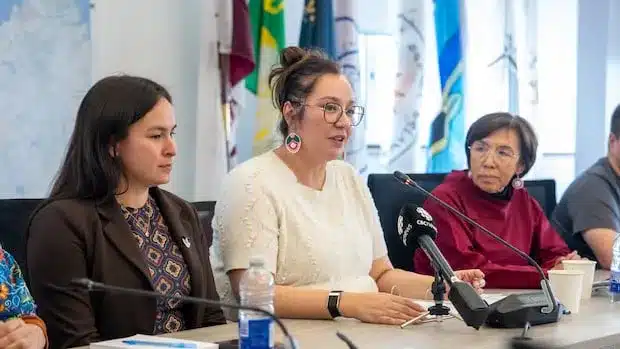
Following the Kuujjuaq announcement at the Kativik Regional Government meeting, Chairperson Maggie Emudluk welcomes the support. “We have a very fragile population,” she says. “Tuberculosis should not exist in a country like Canada in this day and age.”
Gull-Masty emphasizes a holistic approach: “Nutrition also plays a part in ensuring that you’re able to reduce tuberculosis, but a huge part of the need is also housing. So this is something that we’re going to continue working [on] with my other colleagues.”
These measures come amid two percent budget reductions for Indigenous Services Canada and Crown-Indigenous Relations and Northern Affairs Canada in the fall 2025 federal budget.
