

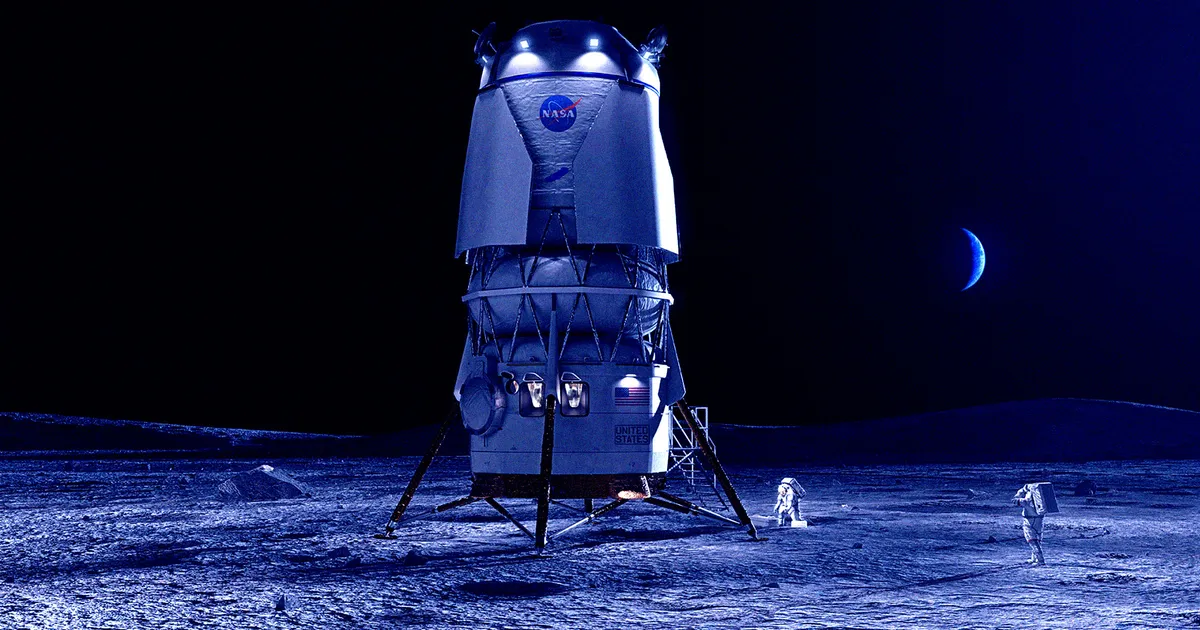
Late last month, NASA Administrator Jared Isaacman announced significant adjustments to the Artemis program during a livestreamed press conference. The agency plans to shift the third mission from a crewed lunar landing to testing Human Landing System spacecraft from SpaceX and Blue Origin next year.
Artemis Mission Adjustments
“We need to chunk it into achievable objectives,” Isaacman stated, emphasizing the push for greater reliability and standardization across multiple missions rather than advancing directly from a crewed lunar orbit to a landing.
Critical Gaps in Emergency Rescue
NASA’s Office of Inspector General highlights ongoing risks in human landing systems. Despite measures to prevent disasters, the agency currently lacks the ability to rescue a stranded crew from the lunar surface during a life-threatening emergency.
Historical records underscore this vulnerability. On July 18, 1969, speechwriter William Safire prepared a contingency address for President Richard Nixon in case of a lunar disaster. “Fate has ordained that the men who went to the Moon to explore in peace will stay on the Moon to rest in peace,” the draft read. “These brave men, Neil Armstrong and Edwin Aldrin, know that there is no hope for their recovery.” Astronauts Armstrong and Aldrin ultimately returned safely, but the episode reveals the absence of rescue options at the time.
Risk Reduction Shortfalls
Gaps persist in NASA’s methodology for mitigating lander hazards. Concerns linger over manual control features in SpaceX and Blue Origin designs, essential for human-rating certification and crew survival.
Ambitious 2028 Lunar Landings
NASA aims to conduct two lunar landing missions in 2028 using one or both landers, contingent on readiness. Acting Associate Administrator for Exploration Systems Development Lori Glaze acknowledged delays by partners but noted active mitigation, including enhanced collaboration and lessons learned to curb further setbacks.
SpaceX Starship Challenges
SpaceX’s 171-foot Starship requires extensive refueling. A fleet of at least ten Starship tankers must deliver propellant to a low Earth orbit depot, 200 days before the lunar mission. The lander would then launch from Kennedy Space Center, rendezvous, refuel, and head to the Moon. SpaceX has not yet achieved a successful orbital launch and landing for Starship.
Blue Origin’s Blue Moon
Blue Origin plans a similar propellant depot approach. Both companies face unproven orbital refueling.
Lunar Landing Risks
Prior to crewed missions, NASA will test landers in lunar orbit. Surface landings demand strict tilt tolerance of eight degrees to prevent tipping. Starship, equivalent to a 14-story building, and the 53-foot Blue Moon lander both risk instability.
For context, Apollo’s tallest lunar module stood 23 feet, while Intuitive Machines’ 14-foot lander tipped over during its February 2024 landing attempt.
Elevator Dependency
Starship relies on an elevator for crew descent. No alternative exists for lunar surface re-entry if the elevator fails, posing severe risks.
