

New Facility Simulates Hypersonic Flight Challenges
As spacecraft slam into Earth’s atmosphere at 17,000 mph, they encounter one of spaceflight’s most dangerous phases. Molecules violently separate into superheated plasma exceeding tens of thousands of degrees – hotter than the sun’s surface. This extreme environment presents life-threatening risks, as tragically demonstrated during the 2003 Columbia disaster when plasma breached the shuttle’s thermal protection system, killing all seven crew members including astronaut Kalpana Chawla.
Recreating Atmospheric Reentry on Earth
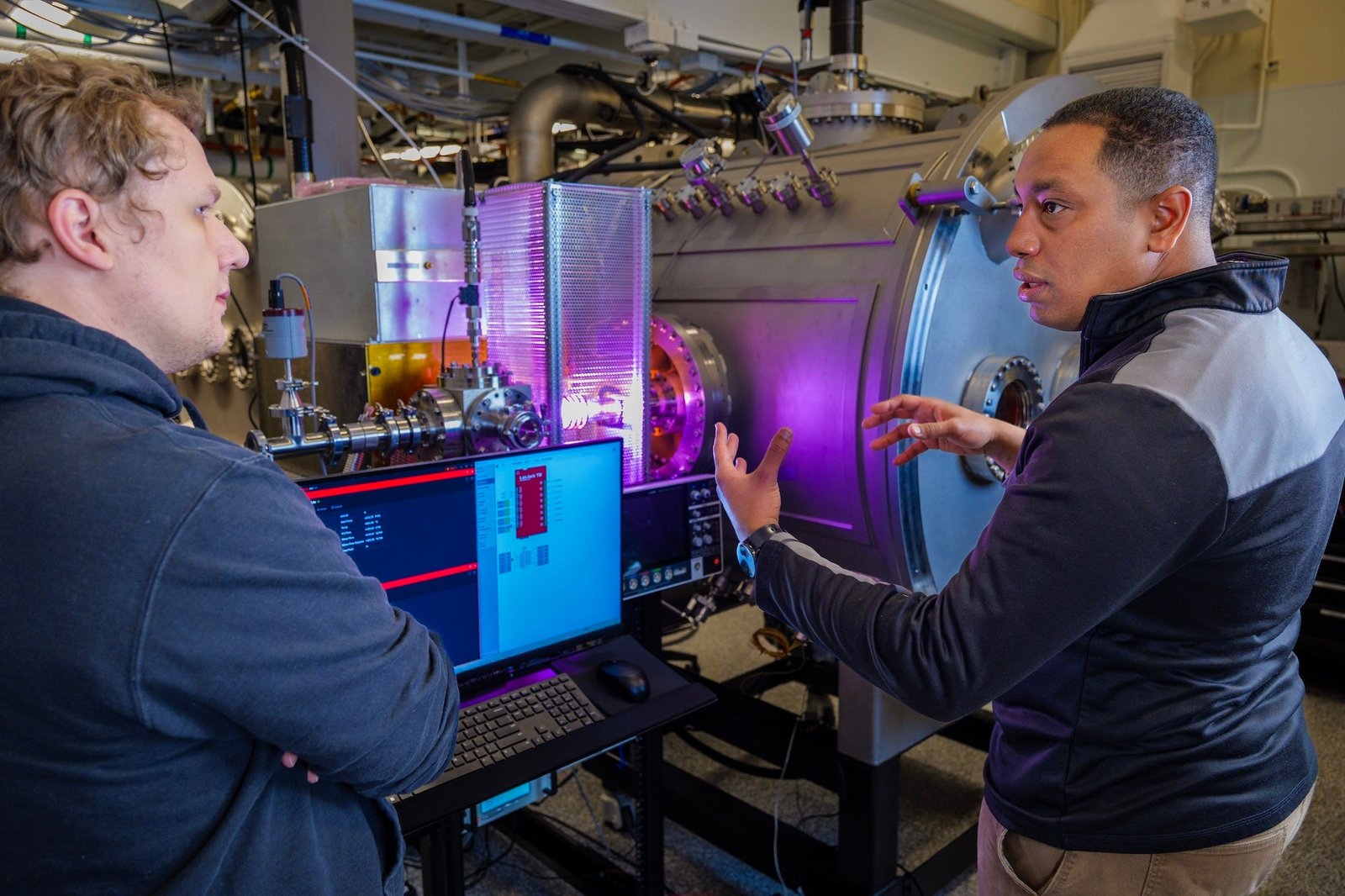
Aerospace researchers have developed a revolutionary testing facility to replicate these deadly conditions. The newly operational inductively coupled plasma tunnel generates plasma streams reaching 9,000°F at velocities up to several thousand mph. “There’s not another chamber exactly like this worldwide,” stated the project lead researcher.
How the Plasma Tunnel Works
The system combines two critical components: extreme speed simulation through a vacuum system moving 20,000 cubic meters of air hourly, and intense heat generation via radio waves that transform argon gas into plasma. Researchers can introduce various atmospheric compositions, including Mars’ carbon dioxide-rich environment, to test spacecraft performance under different planetary conditions.
Inside the windowless laboratory, a quartz nozzle containing lavender-hued plasma feeds into a reinforced steel chamber glowing orange from the heat. Scientists use a mechanical arm to expose experimental materials and sensors to the plasma stream, observing how they withstand the simulated reentry environment.
Advancing Hypersonic Technology
The facility currently collaborates with aerospace companies to test next-generation heat-resistant materials. One particularly ambitious research avenue explores using powerful magnets to manipulate plasma flows around hypersonic vehicles. Since traditional control surfaces burn away during reentry, magnetic maneuvering could potentially enable limited trajectory adjustments.
“Increasing humankind’s understanding of our world and others remains profoundly inspiring,” remarked the lead researcher, recalling how a childhood demonstration of thermal protection tiles sparked his career path. As commercial space tourism advances, such innovations may prove vital for ensuring safer atmospheric reentries for future space missions.
