

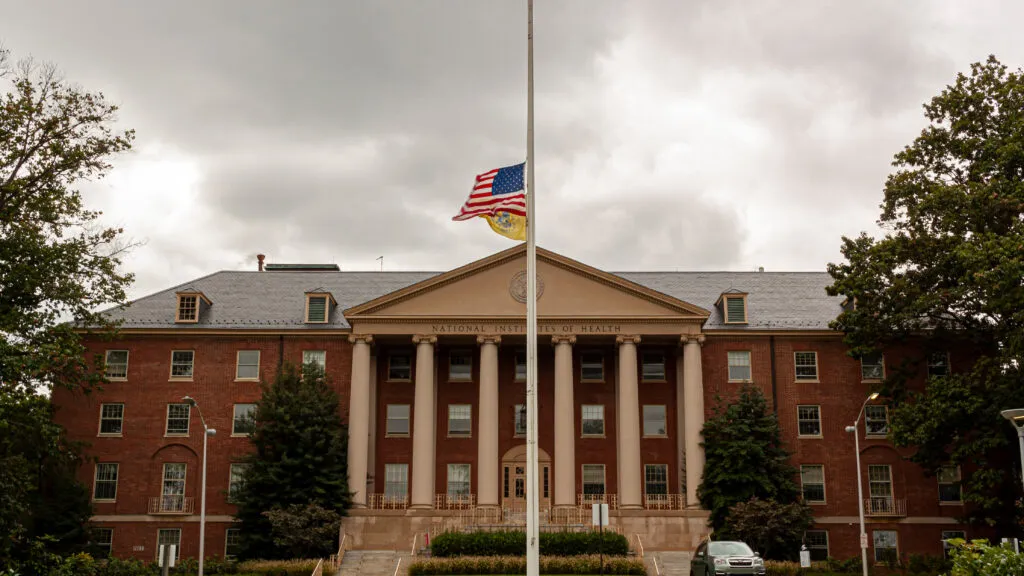
A National Institutes of Health program officer placed on administrative leave maintains that scientists must actively engage in public discourse to protect research integrity amid growing political pressures.
Declining Public Trust Fuels Concerns
Public confidence in the political system remains alarmingly low, with only 4% of Americans viewing it as functioning well in 2023. Trust in government to act rightly most of the time has plummeted to a record low of 17% in 2025, halving since 2000. This disillusionment, echoed in personal stories like that of a whistleblower’s Trump-supporting mother who sees transparency in his approach, underscores broader challenges for science, which depends on public backing.
Historically, bipartisan support shielded science from overt politics for decades. However, recent events signal direct threats, prompting calls for scientists to abandon apolitical stances.
Inside NIH: Witnessed Harms Prompt Action
Jenna Norton, Ph.D., M.P.H., a health equity and public health scientist serving as an NIH program officer, observed clinical trials terminated prematurely without regard for participant safety, court orders disregarded for political goals, and key staff dismissed on fabricated performance claims.
Initial internal protests yielded no change, leading Norton and hundreds of colleagues to issue the Bethesda Declaration in June 2025. This open letter, inspired by NIH Director Jay Bhattacharya’s Great Barrington Declaration, highlighted these issues publicly, leveraging civil servants’ free speech rights upheld in Pickering v. Board of Education.
Norton continued raising alarms until November 13, 2025, when the Trump administration placed her on administrative leave, described officially as “not disciplinary” with no further explanation from NIH or the Department of Health and Human Services.
Allegations of Retaliation
An unnamed HHS official labeled Norton a “radical leftist” for critiquing the administration during work hours, as reported in The New York Times. Bhattacharya, violating NIH rules on personnel comments, stated Norton faced two investigations—claims she denies, citing consistent top performance ratings and service awards.
On February 2, Norton filed a whistleblower complaint with the Office of Special Counsel, accusing HHS and NIH of unlawful retaliation and seeking reinstatement.
She expresses no regret, echoing a fellow signer’s sentiment: “You can get another job; you can’t get another soul.”
Critique of Cautious Approaches
Norton challenges Science magazine Editor-in-Chief Holden Thorp’s essay advocating discreet advocacy. While Thorp deems conditions improved by restored funding, Norton argues this metric ignores ongoing harms: discriminatory grant screenings excluding racial, ethnic, and gender minorities (ruled unlawful yet persisting), 74,000 participants impacted by trial shutdowns, vulnerable early-career researchers, and risks to foreign-born staff comprising a quarter of the U.S. research workforce.
Despite 2026 funding levels matching prior years, the administration delays releases and pursues anti-science policies. Norton faults behind-the-scenes tactics for eroding trust through perceived inauthenticity, noting scientists’ public confidence fell from 87% in 2020 to 73% in 2023 before a slight 2024 rebound to 76%.
Path Forward: Authenticity, Engagement, Unity
To rebuild trust, Norton urges authentic leadership upholding truth, accountability, open debate, and public good—even at political cost. Silence risks complicity in authoritarian trends, ceding free speech protections vital for the public.
The Bethesda Declaration accommodated anonymous signers for at-risk individuals like green card holders or single parents. Colleague Elizabeth Ginexi notes many NIH staff remain silent not from indifference but fear, emphasizing the need for secure insiders to inform public voices.
Norton calls for public conversations to shift opinions, defending evidence-based policies like diversity initiatives or mRNA vaccines. Collective action—elevating speakers, safeguarding vulnerables, and amplifying messages—builds resilience.
Norton, a mother of three, organizes and signs the Bethesda Declaration in her personal capacity while on leave.
