

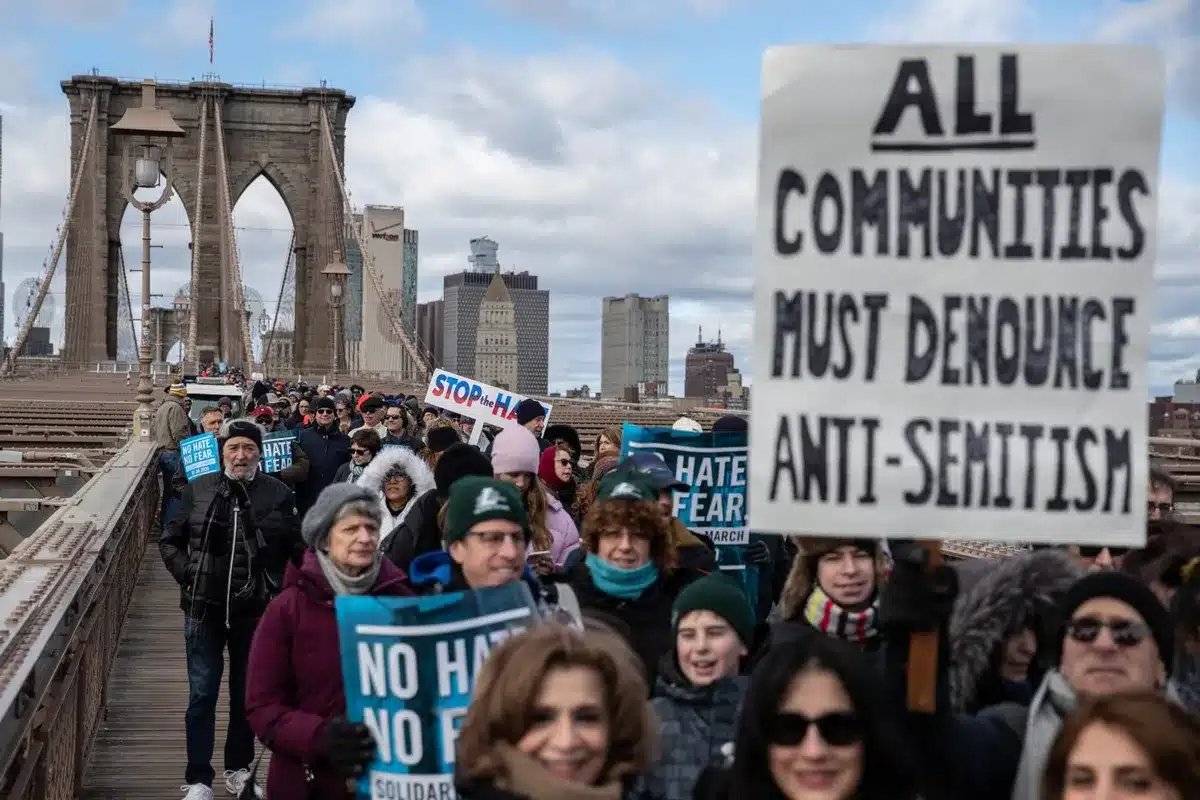
In New York City, Jewish residents encounter more hate crimes than any other group, prompting calls from community leaders to shape the understanding of antisemitism. Officials note that anti-Israel rhetoric often precedes violence against Jews, raising questions about how city policies address these incidents.
Hate Crimes Target Jewish New Yorkers Disproportionately
New York hosts the largest Jewish population outside Israel, representing about 11% of the city’s residents. Yet, Jews account for nearly 60% of all hate crime victims. Data shows a sharp increase in anti-Jewish incidents following the events of October 7, 2023, correlating with heightened anti-Israel sentiment.
Perpetrators frequently link attacks explicitly to Israel, regardless of victims’ personal views on the matter. reports incidents reveal patterns where children bully Jewish peers with slurs tied to the conflict, and extremists target Jews without regard for their politics.
Debate Over Antisemitism Definitions Intensifies
City leaders recently rescinded an executive order adopting the International Holocaust Remembrance Alliance (IHRA) working definition of antisemitism. This definition identifies both traditional conspiracy theories and modern rhetoric that crosses into antisemitism, including certain anti-Israel expressions that delegitimize or dehumanize Jews.
The IHRA approach aims to distinguish legitimate political speech from patterns leading to violence, without suppressing criticism. Discussions now focus on alternatives like the Nexus Document, which explicitly avoids labeling Israel criticism as antisemitic. Critics argue this overlooks real-world attacks driven by such rhetoric.
Mayor’s Office Tackles Rising Threats
The Mayor’s Office to Combat Antisemitism coordinates efforts across 35 city agencies. Previous initiatives trained public safety personnel using the IHRA definition to recognize and respond to incidents effectively. Community advocates stress that protecting Jews requires aligning policies with their experiences of targeted hate.
Historical parallels draw from the civil rights era, where affected groups defined discrimination to shape effective responses. Jewish New Yorkers seek similar recognition today as antisemitism surges nationwide.
