

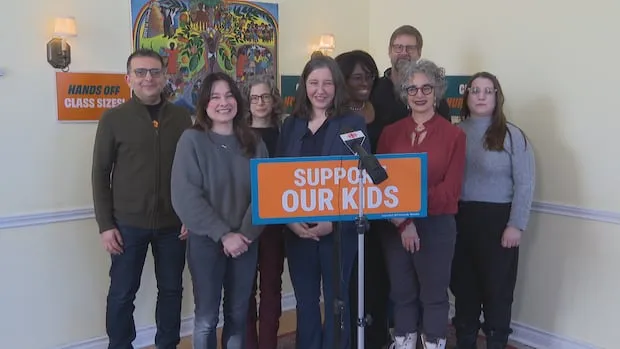
Growing Opposition to Lifted Class Size Limits
Parents across Toronto are mobilizing to urge provincial officials to reverse a decision eliminating classroom size limits for intermediate grades. The controversial move affecting grades 4 through 8 has drawn sharp criticism from educators and families alike.
Policy Shift Sparks Outcry
Recent administrative changes have removed previous classroom enrollment restrictions established by elected school trustees. MPP Jessica Bell, representing University-Rosedale, confirmed the elimination of the 32-student maximum per classroom that trustees had approved last March for the 2025-2026 academic year.
“Students returning this September will encounter excessively large classes throughout our city’s schools,” Bell stated during a recent press briefing. While provincial regulations maintain an average class size limit of 24.5 students across grades 4-8, no individual classroom maximum exists under current rules.
Educational Impacts Highlighted
Bell emphasized that larger class sizes directly affect student achievement: “When classrooms become overcrowded, children receive diminished individual attention. We see increased behavioral challenges and diminished outcomes in fundamental subjects like mathematics and literacy.”
The legislator argued that local trustees implemented the 32-student cap specifically to mitigate these educational impacts, describing it as a necessary measure to protect learning environments.
School Board Defends Alignment with Provincial Standards
Education officials maintain that reversing the classroom size limitation brings Toronto schools in line with practices across Ontario. “This decision confirms our commitment to operate within provincial guidelines and collective agreements,” the school board stated in an official communication. “Classroom staffing will continue following enrollment-based formulas without anticipated size increases.”
Parent Experiences Reflect Systemic Strain
Tonia Krauser, mother to Grade 5 and Grade 8 students, described concerning conditions at her older child’s school. “In French class, they’ve combined two groups – students are learning while sitting on window ledges, desks, and sometimes the floor,” she reported.
The frustrated parent revealed many families are considering alternatives: “We’re exploring private schools like numerous others, primarily for their smaller classes. As a public school graduate, I never imagined contemplating this option for my children.”
Provincial Oversight Expands
This development follows last year’s provincial appointment of an overseer for Toronto’s school system, part of a broader trend that now places seven Ontario school boards under provincial supervision. The ongoing debate highlights tensions between local educational autonomy and centralized administration.
