

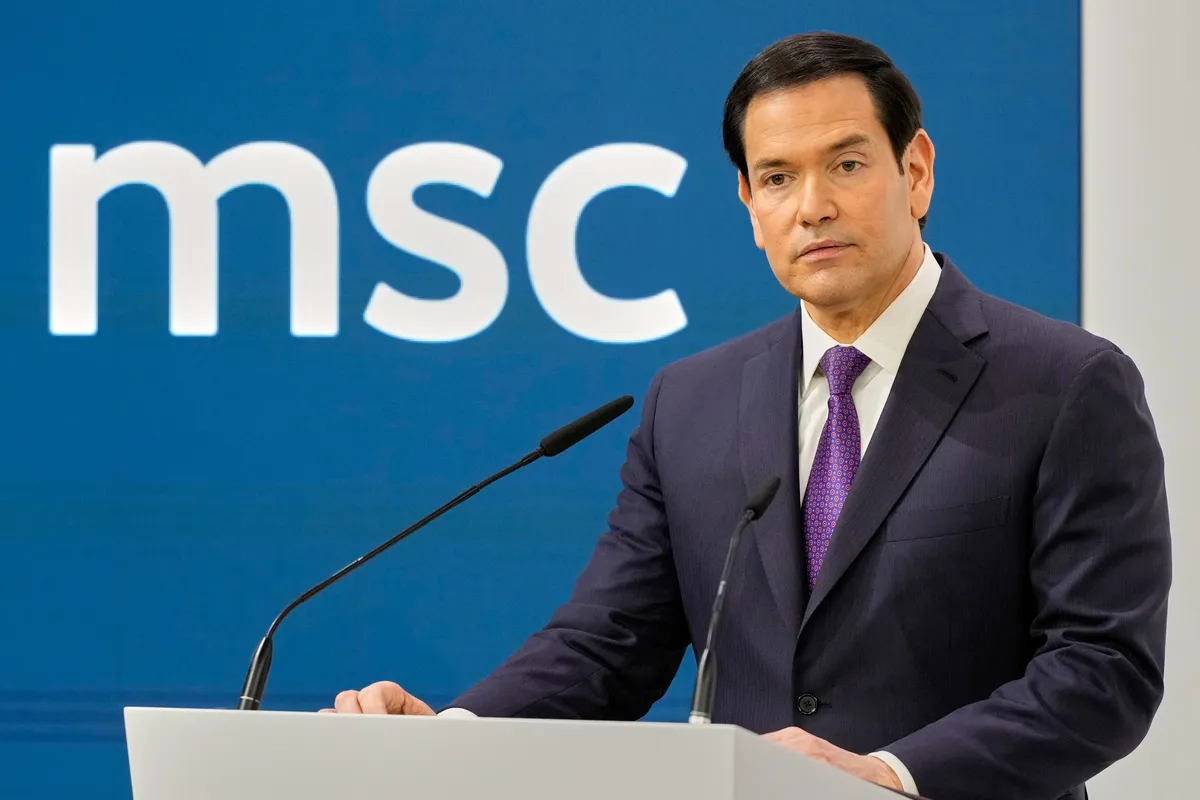
Secretary of State Marco Rubio delivered a compelling address at the Munich Security Conference on Valentine’s Day, highlighting the profound bonds between the United States and Europe while expressing concerns over threats to their shared heritage. He called on allies to reaffirm core values and strengthen the transatlantic partnership.
Reaffirming Transatlantic Unity
Rubio emphasized the enduring connection across the Atlantic, stating, “In a time of headlines heralding the end of the trans-Atlantic era, let it be known and clear to all that this is neither our goal nor our wish — because for us Americans, our home may be in the Western Hemisphere, but we will always be a child of Europe.” His remarks received strong applause from the audience.
Roots of Alliance Divisions
The secretary traced current challenges within the Western alliance to post-Soviet misconceptions, including the belief that the collapse of communism would lead every nation to become a liberal democracy. He criticized the notion that trade and commerce could replace nationhood, or that a global order might supersede national interests in a borderless world. These ideas, Rubio argued, have left the West struggling to defend itself and maintain societal cohesion, cultural continuity, and prospects for future generations.
America’s Commitment to Renewal
Under President Donald Trump, the United States pledges to lead a renewal effort, guided by a vision of a future as proud, sovereign, and vibrant as the civilization’s past. Rubio affirmed that America stands ready to pursue this path alone if needed but prefers to advance it alongside European partners. He stressed connections that extend beyond economics and military ties to spiritual and cultural dimensions, adding, “We want Europe to be strong.”
Key Challenges Facing the West
Rubio pointed to deindustrialization as a self-imposed economic shift that increased dependency on foreign supplies and heightened vulnerability to disruptions. He also highlighted mass migrations as forces transforming and destabilizing societies across the West. These issues stem not only from flawed policies but from a deeper sense of hopelessness and complacency.
Vision for a New Western Century
Urging a bold path forward, Rubio challenged allies to defend a civilization proud of its history, confident in its future, and determined to control its economic and political destiny. He envisioned an alliance that races toward new frontiers, unleashing ingenuity and creativity. “The only fear we have is the fear of the shame of not leaving our nations prouder, stronger, and wealthier for our children,” he declared.
Rubio concluded by celebrating past transatlantic achievements while embracing opportunities ahead: “We should be proud of what we achieved together in the last century, but now we must confront and embrace the opportunities of a new one — because yesterday is over, the future is inevitable, and our destiny together awaits.” His speech countered earlier criticisms of U.S. policy voiced by figures like Gov. Gavin Newsom and Rep. Alexandria Ocasio-Cortez, presenting a case for unity and resolve.
