

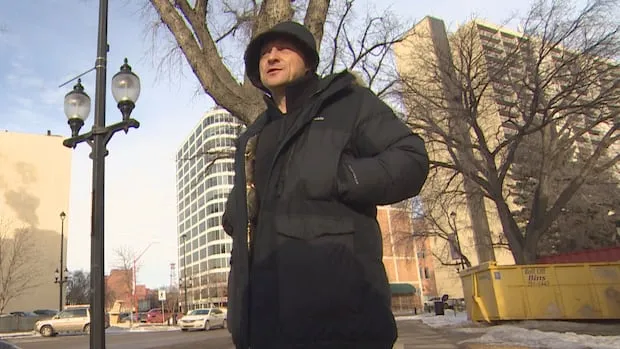
Andrii Starynchuk relocated from Kyiv, Ukraine, to Saskatoon on Good Friday three years ago with his family. They chose Canada prior to Russia’s invasion in February 2022. The outgoing bartender at a local restaurant notes he needed significant English improvement to thrive here and continues adjusting to Saskatchewan’s prolonged winters. “Here, winter, it’s beautiful,” he shared. “It’s just [a] fairytale. But it’s long.”
Rapid Population Expansion
Starynchuk’s family joined a massive influx that stresses housing, education, and services. The city’s growth rate doubled to 3.9 percent over the past three years, per a municipal administration report. This propelled Saskatoon’s population to between 313,255 and 319,428 as of Canada Day last year, with a midpoint of 316,342. From the 2021 census count of 266,141, the city added over 50,000 residents—a nearly 19 percent rise in five years. Last year alone saw gains of 4,629 to 10,902 people.
Housing Shortage Intensifies
Homebuilders struggle to match demand, exacerbating shortages. Starynchuk hunts for a home purchase but finds prices steep versus Kyiv. “I’m always checking, checking, checking, checking so I prefer to be prepared, always, you know,” he explained. “This is not easy. This is not easy and apartments and houses, what you have, it’s really pricey.”
Average home sale prices climbed from $359,702 in 2023 to $417,918 last year, data from the Canada Mortgage and Housing Corporation shows. Saskatoon now exceeds Winnipeg’s $409,105 average, despite Winnipeg’s larger size, while Regina averaged $354,723—widening the provincial gap.
Forecasts predict Saskatoon overtaking Edmonton’s prices in three years, reaching $468,000 to $495,000 against Edmonton’s $410,000 to $490,000 for its 1.2 million residents.
“Saskatoon experiences some of the strongest population growth in the country, driven primarily by people choosing Saskatchewan for its affordability,” stated Tyler Hudy, spokesman for the Saskatchewan Realtors Association. “At the same time, our housing market remains tight. Saskatoon recorded its second-strongest year on record in 2025, with inventory levels roughly 50 percent below the 10-year average and just over two months of supply.”
City Plans for Growth
Municipal reports indicate readiness to handle demand. Vacant land supports 9,975 dwelling units for 23,940 more residents. Developers plan to service land for 3,737 units over three years, aligning with two percent growth. Hudy highlights construction timelines as a key challenge.
A 2.5 percent growth rate could push the population beyond 340,000 in two years. However, federal immigration reductions signal the end of the boom: Saskatchewan’s population dipped slightly in the third quarter of last year, with immigrants dropping over 40 percent from the prior year’s same period.
