

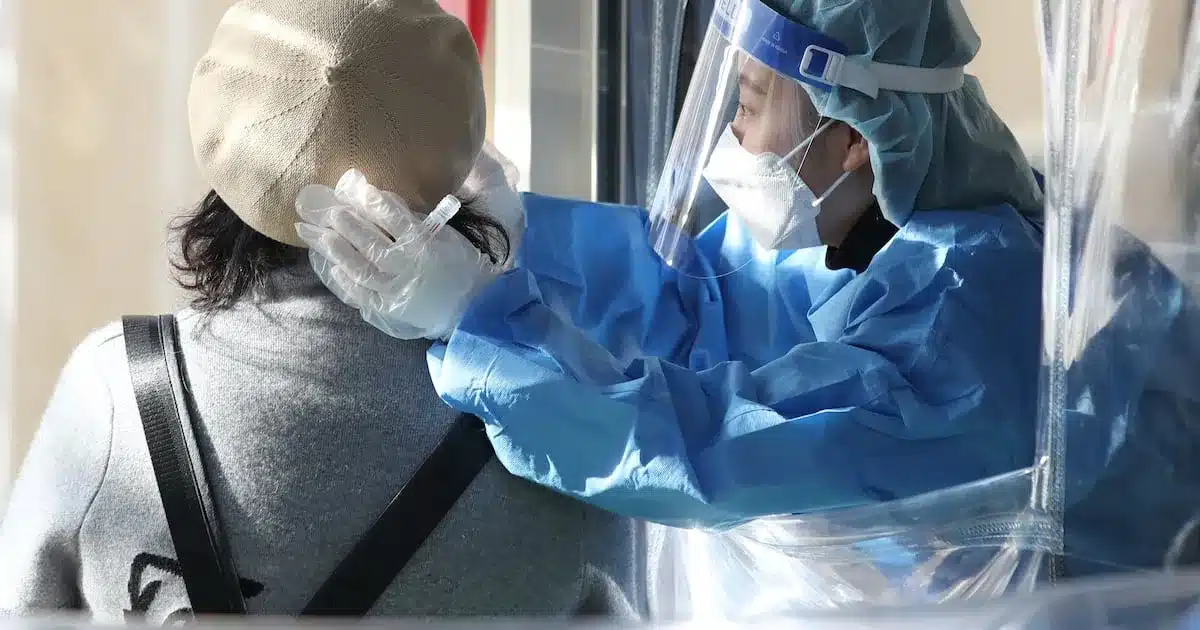
South Korea’s Board of Audit and Inspection criticizes pandemic authorities for inadequate assessments of COVID-19 damages across key sectors, urging comprehensive improvements.
Audit Report Key Findings
The Board of Audit and Inspection released a detailed analysis of COVID-19 response efforts, evaluating five critical areas: pandemic scale measurement, vaccine distribution, medical surge capacity, societal impacts, and civil servant operations. Officials acknowledge the findings and commit to thorough implementation for enhanced future preparedness.
Analysis reveals that while initial pandemic responses achieved some successes, full damage evaluations remain incomplete. Current health frameworks inadequately incorporate pandemic-induced losses into causal analyses, limiting effective recovery measures.
Vaccine Diplomacy and Presidential Office Challenges
No clear metrics exist for breakthrough infections or collaboration scales in vaccine diplomacy efforts from the presidential office and civil servant deployments. Direct reporting confirms heightened activity without proportional impact quantification.
Government Initiatives for Damage Compensation
The Korea Disease Control and Prevention Agency pursues a “government-public new deal” to address pandemic damages, targeting compensation for businesses amid rising costs. In July, task forces formed across ministries, including health, private sector, digital affairs, and the presidential office, to streamline assessments.
Civil servant-related damages prompted a dedicated law for evaluation and operations, capturing scale through comprehensive metrics. Economic and academic surveys highlight needs for full damage estimates, infrastructure recovery, and corporate relief programs.
Enhanced Systems and Social Measures
Three ministries lead development of a centralized damage cooperation information system within three months, incorporating sentiment analysis from diverse sources. Construction sector damages integrate into regular budgets and corporate aid, while social frameworks clarify pandemic damage baselines.
Legally, a pandemic damage change law advances, introducing a “one-company damage index” for self-assessment without cohort expansions. Broader academic impacts drive social new deals, linking compensation to single safety nets for civil servant employment and post-career transitions.
Current efforts emphasize precise management of existing roles, expanding related systems for oversight. Plans extend to outbound nationals’ results, fostering double employment through new deals, with the private sector aiming for vaccine surge completions by May.
Official Statements
A senior health ministry official states, “Nationwide cooperation and support enabled overcoming COVID-19 and returning to normalcy. Related agencies will collaborate to implement the audit’s recommendations.”
Korea Disease Control and Prevention Agency head Im Sung-kwan notes, “This audit objectively assesses COVID-19 damage scales. Reflections will normalize causal analyses, minimizing future social and economic fallout.”
Ministry of Food and Drug Safety head Oh Yoo-kyung adds, “In an unprecedented pandemic context, measured steps ensure strengthened future damage response capabilities.”
