

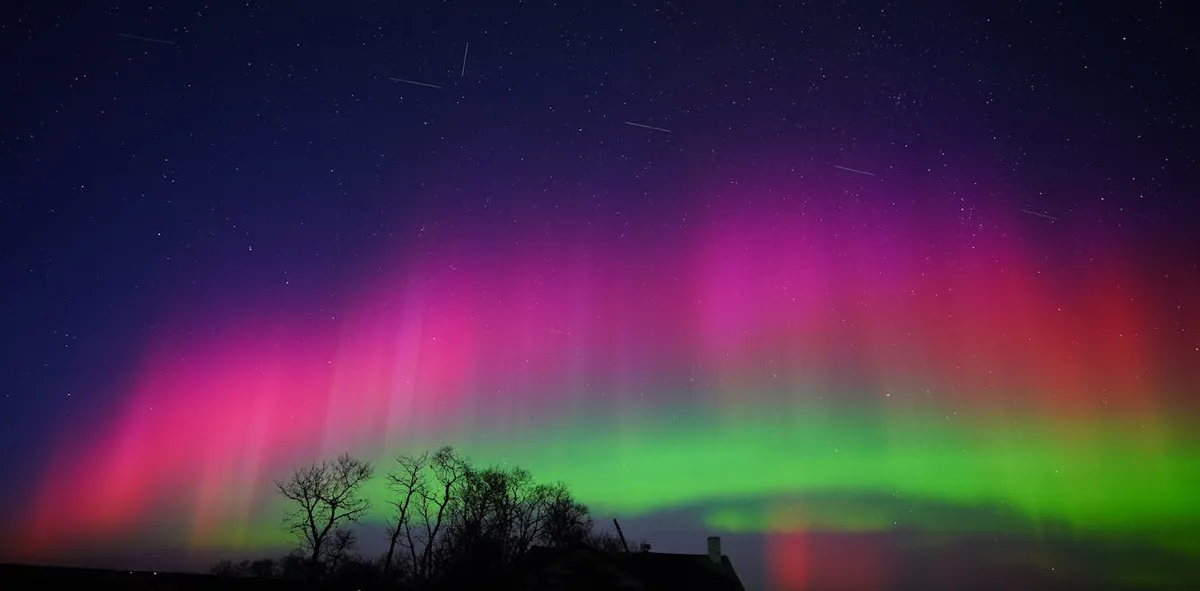
Over 10,000 Starlink satellites now orbit Earth, appearing as slow-moving trails across dark skies everywhere and interfering with telescope observations. SpaceX has filed with the U.S. Federal Communications Commission to launch one million more satellites, designed as orbital data centers to support AI computing power.
Earlier projections for 65,000 satellites across major constellations estimated that one in 15 visible points in the night sky would be a satellite rather than a star. A million satellites would intensify this issue, displaying more satellites than the under 4,500 stars visible to the naked eye in pristine conditions—for extended periods throughout the night and year, affecting locations worldwide.
Simulations Forecast Overwhelmed Skies
Researchers developed updated models based on astrophysicist Jonathan McDowell’s orbital data, aligning with details from SpaceX’s filing. These higher-orbit satellites remain visible longer. Brightness estimates draw from observed Starlink satellites, adjusted for anticipated size and power increases in future versions.
Simulations from 50 degrees north latitude at midnight on the summer solstice reveal tens of thousands of sunlit satellites, many bright enough for naked-eye detection. Gray all-sky views show satellites—blue for faint, yellow for bright—dominating the scene compared to a 42,000-satellite scenario. Stars become completely overshadowed globally under these conditions, excluding other constellations proposed to the International Telecommunication Union.
Challenges of Orbital Data Centers
Terrestrial data centers draw scrutiny for massive water and electricity demands. SpaceX positions orbital versions as an environmental improvement, yet this view neglects impacts from frequent launches, operations, and re-entries.
Satellites re-enter daily, polluting the atmosphere and sometimes scattering debris that poses risks to people and property on the ground. Denser orbits amplify collision probabilities. Waste heat dissipation proves difficult in space, requiring radiative cooling amid intense solar radiation. Early Starlink tests with darkened surfaces caused overheating and equipment failure.
Impacts on Astronomy and Dark Skies
SpaceX applies coatings to reduce Starlink brightness, offering partial relief for astronomical research despite larger satellite designs. The new million-satellite plan omits any reference to FCC-mandated coordination for preserving dark and quiet skies, following years of joint efforts with astronomers.
Regulatory Gaps and Finite Orbital Resources
SpaceX’s filing provides scant specifics on orbits, satellite dimensions, de-orbit casualty risks—capped vaguely at 0.01% per satellite—or undeveloped technologies essential for feasibility. The FCC accepted it promptly and set a four-week comment window, spurring quick submissions from astronomers and dark-sky supporters.
Orbital space remains a limited shared resource. Existing international guidelines fall short. No single entity should degrade orbits, atmospheres, or night skies for the global population.
