

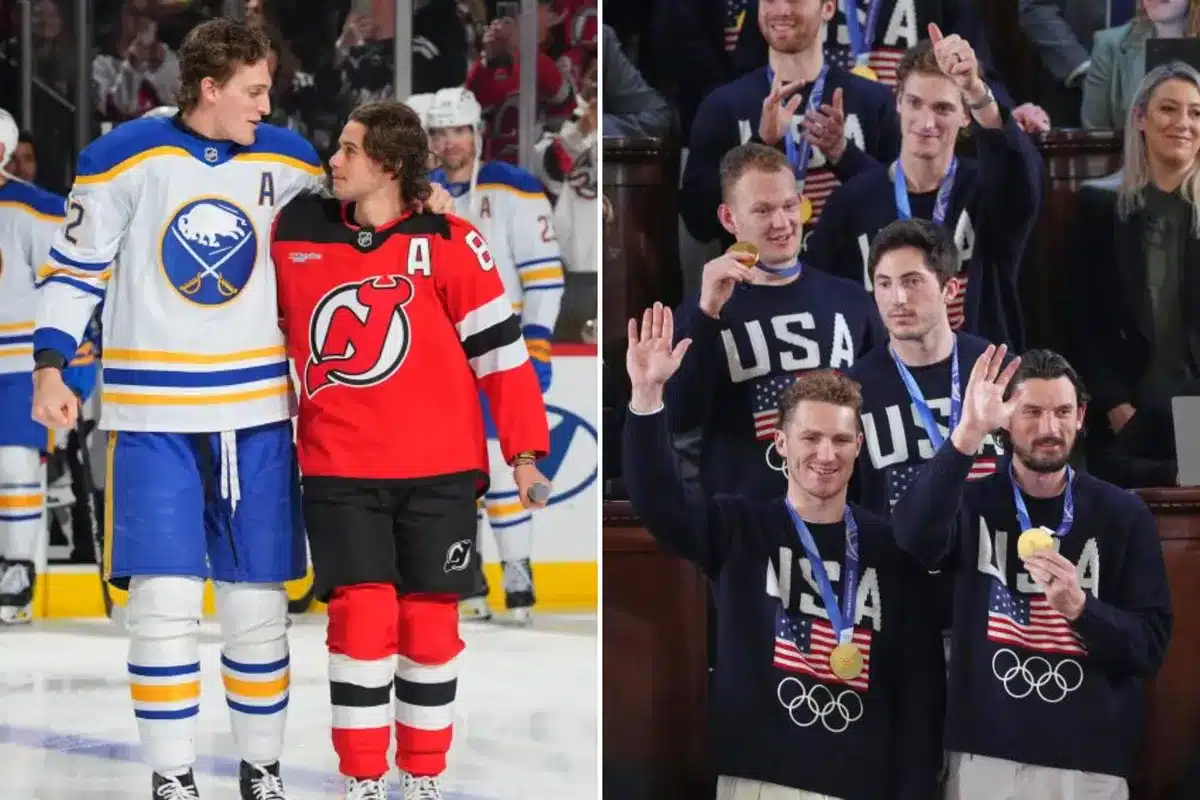
Jack Hughes, star forward for the New Jersey Devils, returned to his home rink in Newark on Wednesday night. The athlete, missing a few teeth from recent play, warmly embraced his former Team USA teammate and now opponent, Buffalo Sabres’ Tage Thompson. Hughes voiced his national pride and thanked the fans, who responded with a roaring ovation.
Contrasting Public and Media Reactions
This warm reception contrasts sharply with criticism from some sports commentators. Jerry Brewer, a columnist for The Athletic, suggested that Team USA’s post-victory celebration—including a call from President Trump—alienated parts of the audience. Critics portrayed the players as insensitive for accepting the presidential congratulations after their Olympic success.
Specific Points of Contention
Objections centered on the players’ reactions during the call. Many laughed at Trump’s lighthearted remark about facing impeachment if he failed to invite the gold-medal-winning women’s team to the State of the Union address. Others voiced support for the women athletes. Attending the address itself drew ire, with a USA Today column stating the players “utterly failed to meet the cultural moment.” ESPN host Pete Rosenberg labeled them “sad little pawns.”
Jessica Valenti, in her Abortion, Every Day newsletter, argued that players with daughters undermined their credibility by not challenging Trump during the call. Toronto Star columnist Damien Cox advised Toronto Maple Leafs star Auston Matthews, a California native, to skip the White House visit and acknowledge Canadian sentiments.
Ongoing Scrutiny and Player Responses
As players reintegrate with their NHL teams, some reporters question their involvement. Three athletes have expressed mild regret over their responses to the president’s joke. Critics demand public disavowals and commitments to progressive standards in the sport.
Broader Cultural Context
Observers link this backlash to early 2020s cancel culture trends, where social media pressure stifled diverse views and led to account suspensions for perceived infractions. Such demands for conformity alienated moderates and contributed to political shifts, including President Trump’s reelection. Team USA players, focused on national representation, simply accepted an invitation from their country’s leader without endorsing specific politics.
