

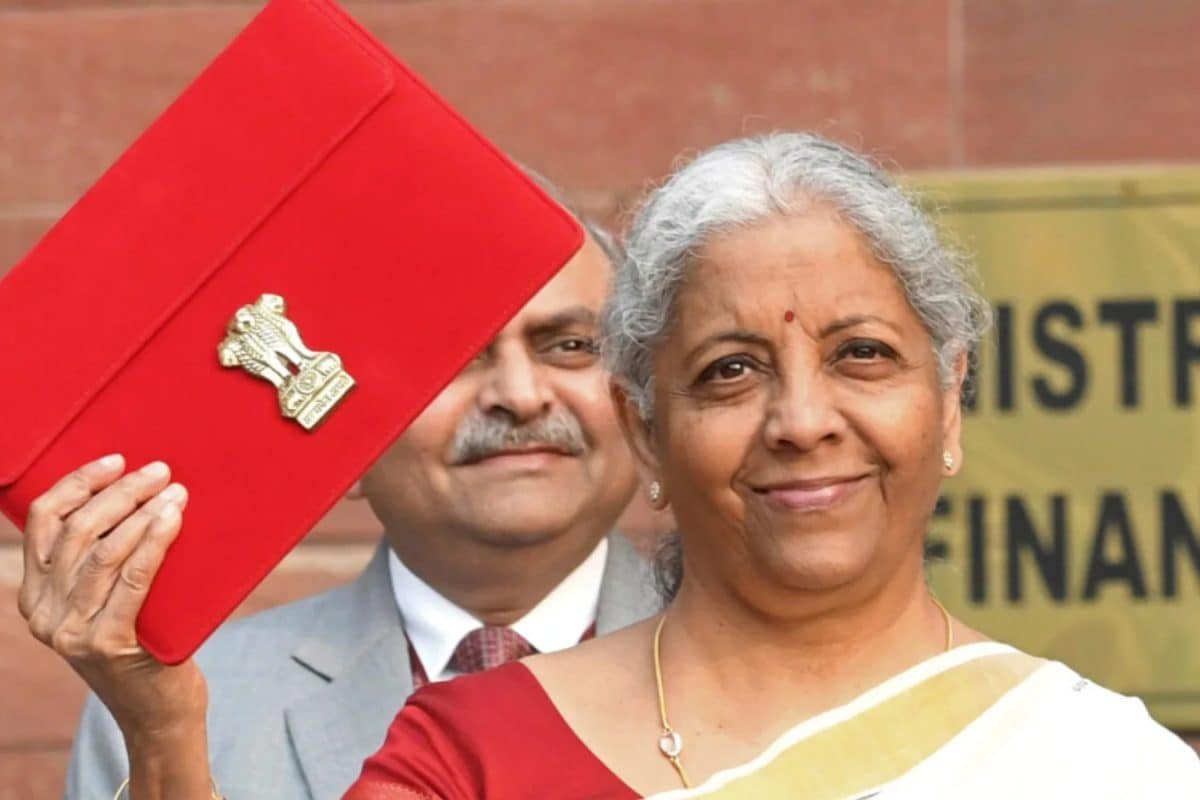
Finance Minister Nirmala Sitharaman presented the Union Budget 2026-27, emphasizing advancements in manufacturing, infrastructure, and job creation. The plan introduces a streamlined tax and customs framework, positioning government initiatives as a key driver of economic modernization.
The budget centers on three core responsibilities: boosting growth through improved productivity and competitiveness, enhancing human capabilities, and promoting inclusive development aligned with the principle of collective progress for all.
In her ninth consecutive budget address, Sitharaman outlined a comprehensive approach to maintain economic momentum despite international challenges. This includes expanding electronics and semiconductor production, mitigating risks in infrastructure developments, preparing youth for cutting-edge technologies, and simplifying processes for taxpayers and importers.
Boost for Manufacturing Sector
The budget allocates significant resources to strengthen India’s manufacturing base. Funding for electronics components production rises to Rs 40,000 crore. New programs target rare earth magnets, chemical parks, container production, and capital goods to cut import reliance and fortify local supply chains.
The textiles industry receives a comprehensive package focused on employment, encompassing fibers, industrial clusters, workforce training, and sustainable practices.
Infrastructure Development Surge
Infrastructure receives enhanced capital expenditure, now set at Rs 12.2 lakh crore for FY27, an increase from Rs 11.2 lakh crore this year. Key measures include a risk guarantee fund to attract private investment, new freight corridors, national waterways, specialized real estate investment trusts for repurposing central public sector assets, and viability gap funding for seaplane services.
Fiscal prudence remains a priority, with the fiscal deficit projected at 4.3% of GDP for 2026-27, down from 4.4% this year. Urban expansion in Tier-II and Tier-III cities gains momentum through City Economic Regions supported by performance-based funding. Sitharaman highlighted in her speech, ‘We shall continue to focus on developing infrastructure in cities with over 5 lakh population (Tier II and Tier III), which have expanded to become growth centres.’
Focus on Skills and Employment
The services sector emerges as a vital source of jobs. A dedicated committee will align education with employment and enterprise demands, factoring in emerging technologies. Support for content and creative industries includes animation, visual effects, gaming, and comics labs in 15,000 secondary schools and 500 colleges, plus expanded capacity in design and hospitality.
Tourism-related training, from guides to digital heritage preservation, aims to transform cultural assets into job opportunities and export potential. Sitharaman proposed, ‘I propose to support the Indian Institute of Creative Technologies, Mumbai in setting up AVGC Content Creator Labs in 15,000 secondary schools and 500 colleges.’ AVGC refers to animation, visual effects, gaming, and comics.
Advancements in AI and Semiconductors
Artificial intelligence integrates across sectors to amplify impact. Initiatives promote AI adoption in governance, agriculture, education, and training, such as advisory tools for farmers and curriculum enhancements.
The semiconductor push under India Semiconductor Mission 2.0 emphasizes local equipment production, materials, research facilities, and skill development, fostering a robust domestic chip industry.
Taxation and Compliance Reforms
A revamped Income Tax Act takes effect from April 1, 2026, featuring simplified rules and updated forms. Relief measures for individuals include extending return revision deadlines to March 31 from December 31, phased filing schedules, and streamlined Form 15G/15H submissions via depositories.
Individuals filing ITR-1 and ITR-2 can submit until July 31, while non-audit businesses and trusts have until August 31. Sitharaman stated, ‘I propose to extend time available for revising returns from 31st December to up to 31st March with the payment of a nominal fee. I also propose to stagger the timeline for filing of tax returns. Individuals with ITR 1 and ITR 2 returns will continue to file till 31st July and non-audit business cases or trusts are proposed to be allowed time till 31st August.’
TDS guidelines clarify manpower services, introducing a structured approach for reduced or zero certificates. TCS rates drop to 2% for overseas tours, education, and medical expenses under the liberalized remittance scheme. Efforts to reduce litigation involve combined assessments and penalties, lower pre-deposit thresholds, and broader immunity options.
For non-resident property sales, TDS will use the resident buyer’s PAN-based challan, eliminating the need for TAN, as noted by Sitharaman.
Customs Duty Adjustments
Customs reforms prioritize local manufacturing, energy shifts, and daily ease. Exemptions extend to capital goods for lithium-ion batteries, critical minerals, nuclear projects, and aircraft production. Duties on personal imports fall from 20% to 10%. Seventeen cancer drugs and more rare-disease therapies gain duty-free status.
Procedural updates emphasize trust-based, technology-enabled clearances, quicker cargo handling, and reduced costs for exporters and MSMEs.
Increase in Securities Transaction Tax
The securities transaction tax on futures rises from 0.02% to 0.05%, and on options from 0.10% to 0.15%. This adjustment triggered market volatility, with the BSE Sensex falling over 2,300 points from its peak and the NSE Nifty closing at 24,571.75.
Prime Minister Narendra Modi commented, ‘The Union Budget reflects the aspirations of 140 crore Indians. It strengthens the reform journey and charts a clear roadmap for Viksit Bharat.’
