

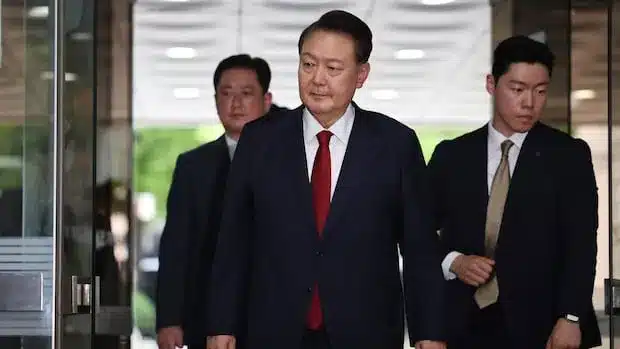
Former South Korean President Yoon Suk Yeol received a life sentence in prison following his short-lived declaration of martial law, marking the end of the nation’s most significant political crisis in decades.
Court Ruling and Charges
On December 3, 2024, Yoon declared martial law in a bid to counter the opposition-controlled National Assembly, deploying troops to encircle the legislature. Judge Jee Kui-youn convicted him of rebellion, citing the illegal mobilization of military and police forces aimed at seizing the liberal-led assembly, arresting politicians, and securing unchecked authority for an extended period.
Yoon plans to appeal the decision. A special prosecutor sought the death penalty, arguing the actions endangered democracy and warranted maximum punishment. However, analysts anticipated a life term, as the operation caused no fatalities. South Korea maintains a de facto moratorium on executions, with no death row inmates put to death since 1997 amid growing abolition efforts.
Scene Outside the Courthouse
As Yoon entered the Seoul Central District Court, police monitored hundreds of his supporters rallying nearby. Chants intensified as his prison transport passed. Critics assembled close by, calling for the death penalty.
Additional Convictions
The court also sentenced several ex-military and police leaders involved in the decree. Former Defense Minister Kim Yong Hyun drew a 30-year term for orchestrating the plan and deploying forces.
Yoon, a conservative leader, justified the measure as essential to block what he called “anti-state” liberal forces from hindering his policies through their parliamentary majority.
Timeline of Events
The decree endured roughly six hours before lawmakers breached the military perimeter, achieved a quorum, and unanimously revoked it. Parliament impeached Yoon on December 14, 2024, suspending him from office. The Constitutional Court removed him formally in April 2025.
Under arrest since last July amid various trials, Yoon faces the rebellion charge as the gravest. Last month, he received five years for resisting arrest, falsifying the proclamation, and bypassing a required full Cabinet meeting.
Two Cabinet members faced convictions elsewhere: Prime Minister Han Duck-soo got 23 years for pushing the decree through a Cabinet meeting, altering records, and lying under oath. Han has appealed.
