

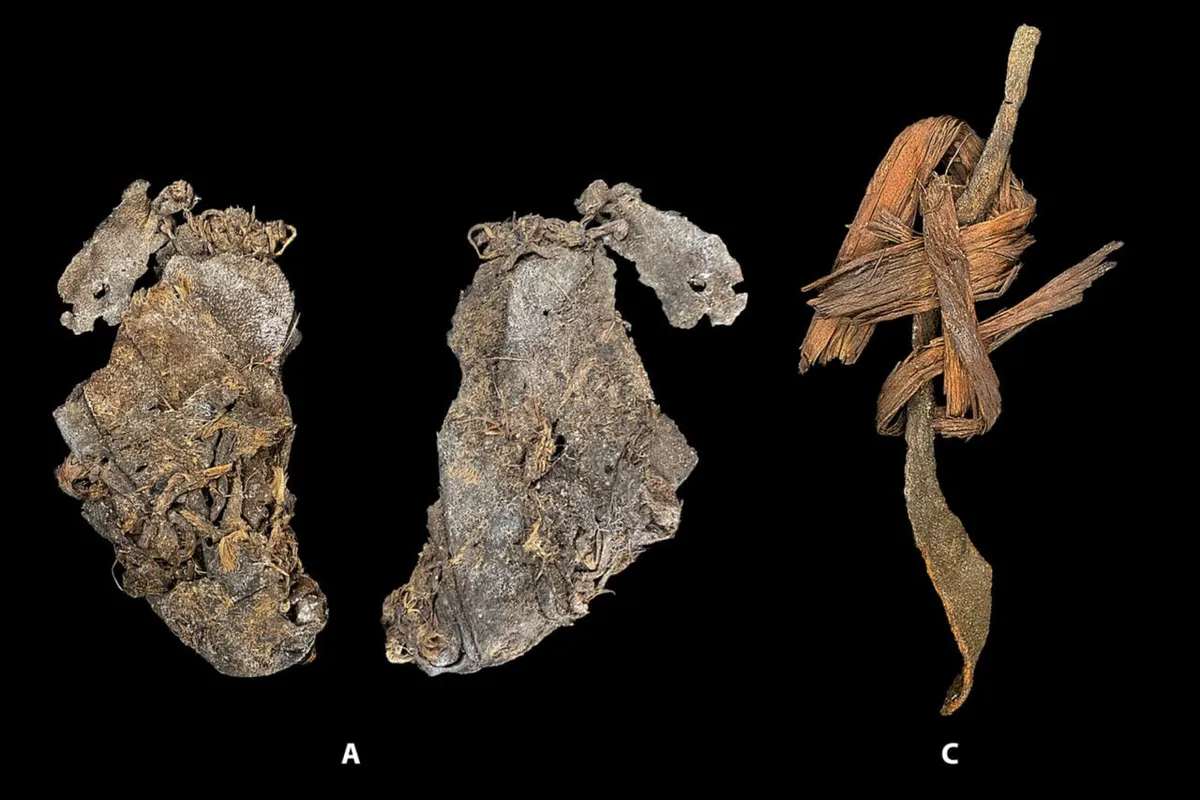
In 1958, an amateur archaeologist discovered fibers, wood, hides, and other materials in Cougar Mountain Cave, Oregon. The collection remained in private hands until the 1980s before transferring to the Favell Museum. Recent radiocarbon dating of 55 artifacts uncovered two sewn animal hide fragments at least 12,000 years old, marking them as the world’s oldest known sewn clothing. Researchers suggest these pieces likely served as fragments of garments or footwear.
Adapting to Ice Age Conditions
Several items, including the sewn hides, date to the Younger Dryas, a sudden cooling period that mimicked Ice Age harshness. Early Indigenous peoples crafted these using advanced techniques to shield against extreme cold.
“They were accomplished and serious sewists during the Ice Age,” stated Richard Rosencrance, lead author of the study and a doctoral researcher at the University of Nevada, Reno. The hides feature cordage stitching one piece to another, with nearby stone tools and bone needles indicating sewing tools.
Exceptional Preservation of Fragile Artifacts
These perishable items, often just inches wide, survived remarkably well. Braided cords and knotted bark from sagebrush and juniper likely formed baskets or portable shelters, showcasing overlooked sophistication in ancient technologies.
“Being able to glimpse these items, confirm raw materials from plants and animals, proves rare,” Rosencrance noted. “This chronicles nearly 12,000 years of shared technological knowledge.”
