

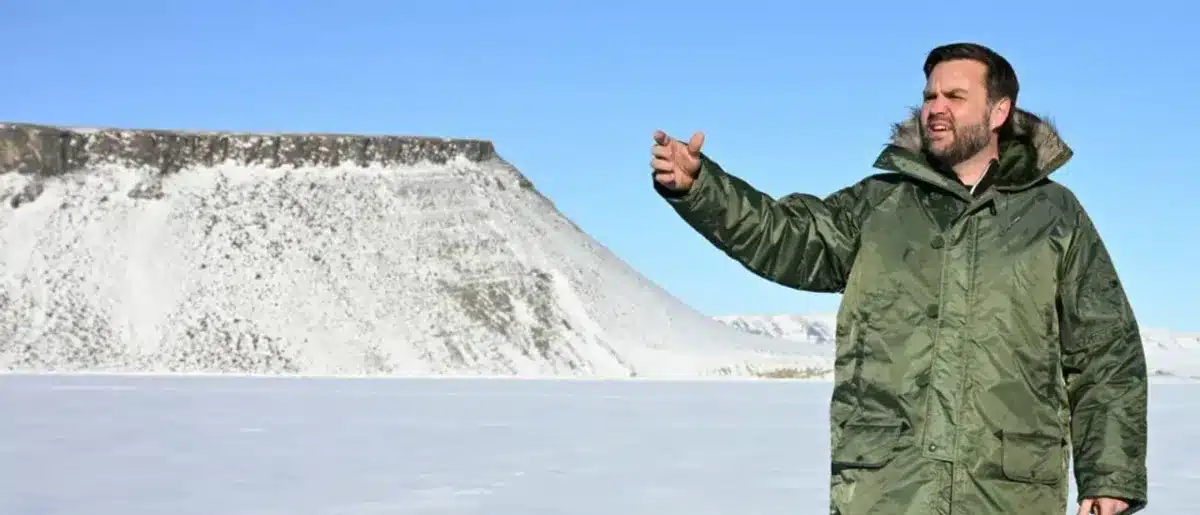
Greenland holds significant strategic importance due to its position as the world’s largest island in North America, located northeast of the continental United States and between the US and Russia. This placement makes it vital for defense and trade routes.
Historical US Involvement
During World War II, US forces occupied Greenland, constructed much of its infrastructure, and maintained a presence until the Cold War’s end. At that time, Americans comprised about 25% of the island’s population, which now totals around 57,000 residents including Greenlanders, Danes, and others. The US continues to operate a base in northern Greenland equipped with an early warning radar system.
Defense Initiatives and Security Gaps
Greenland factors into major defense projects aimed at protecting the US homeland from long-range missile threats, similar in concept to advanced missile defense systems. In 2019, President Trump informed Denmark’s Prime Minister that Greenland lacked adequate security and urged greater investment. The Danish Prime Minister pledged $200 million for Greenland’s defense, but Denmark failed to follow through.
Former US Ambassador to Denmark Carla Sands noted that visits to Greenland revealed minimal security: approximately 30 Danish Joint Arctic Command officers and two dog sledge teams patrolling an area one-third the size of the continental US. Denmark maintains only basic awareness of threats in the surrounding GIUK gap waters and airspace, critical for global trade and defense.
Challenges with Allies and Resources
Allied commitments can shift, as seen with the US base at Diego Garcia in the Chagos Islands. UK leaders have proposed transferring sovereignty to Mauritius, which faces Chinese influence, potentially jeopardizing the facility.
Securing Greenland’s vast territory requires resources only available to major powers like the US or a China-Russia partnership. Denmark has prioritized welfare transfers over infrastructure, extracting more value than it invests. With a constrained economy and high social spending, Denmark struggles to develop or defend the island.
Denmark has also discouraged Greenland’s independence efforts by promoting fears of US involvement and enacting laws to restrict exploitation of vast oil and gas reserves—estimated at three times Norway’s gas and over twice its oil—for climate and UN Sustainable Development Goals. Yet, energy development offers a path to self-sufficiency, mirroring Norway’s prosperity from its offshore resources.
NATO Limitations and Mutual Benefits
European and Canadian NATO allies lack the capacity to secure Greenland, struggling even to meet Article 3 defense obligations for their own territories. The US requires Greenland for national security, while Greenland benefits from US-led development.
Recent discussions bring all parties together to explore future options, ensuring regional stability.
