

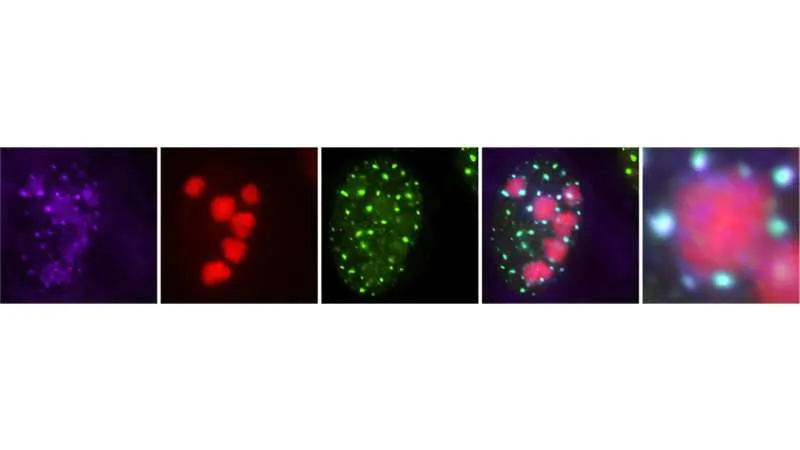
Herpes simplex virus type 1 (HSV-1) significantly reshapes the host cell’s nuclear architecture during infection. The virus creates replication compartments and shifts chromatin to the nuclear edge.
Virus Targets Nuclear Speckles
A collaborative study by researchers from the University of Jyväskylä in Finland and Bar-Ilan University in Israel demonstrates that HSV-1 also disrupts nuclear speckles. These structures play a vital role in messenger RNA (mRNA) processing for both host cells and viruses.
“Nuclear speckles are dynamic, membraneless nuclear bodies that primarily function as sites for the storage, assembly, and modification of factors involved in gene expression. Both cellular and viral messenger RNAs are processed in nuclear speckles. The disassembly of nuclear speckles severely limits the export of viral messenger RNAs from the nucleus,” states Research Director Maija Vihinen-Ranta from the University of Jyväskylä.
Critical Hubs for Viral Replication
Nuclear speckles serve as key intermediate sites for modifying viral mRNAs. They facilitate essential processing steps and enable nuclear export, allowing the infection to advance. Disrupted speckles prevent normal viral function and stall disease progression.
Path to New Antiviral Strategies
“A better understanding of how viruses interact with host cells and exploit their cellular machinery can help us develop new ways to treat and prevent viral diseases,” Vihinen-Ranta adds.
The findings stem from joint efforts with Professor Shav-Tal’s team at Bar-Ilan University and appear in the Proceedings of the National Academy of Sciences.
