

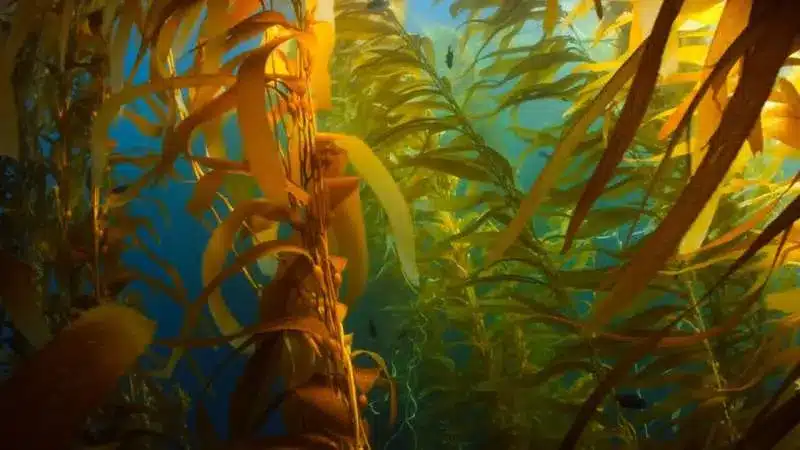
California’s kelp forests have shown only limited recovery since the marine heat wave of 2013–2017, despite dedicated restoration efforts by scientists, fishermen, coastal tribes, volunteer divers, and conservationists.
This decline extends far beyond the region, mirroring the global surge in mega-wildfires on land. Oceans absorb 90% of heat from human-generated fossil fuel emissions, driving widespread kelp loss.
The Vast Importance of Kelp Forests
These underwater ecosystems span 2.8 million square miles—larger than the Amazon rainforest—and generate approximately $500 billion annually. Benefits include edible species, thickeners for ice cream and cosmetics, and protection against storms and coastal erosion, as detailed in a 2023 study in Nature Communications.
Photosynthesizing kelp algae produce more oxygen and sequester more carbon dioxide than the Amazon basin. Alongside coral reefs, kelp forests form one of Earth’s most complex and productive ecosystems.
Divers exploring sites like Monterey Bay or Catalina Island encounter vibrant life: orange garibaldi fish, wolf eels, leopard sharks, harbor seals, and colorful nudibranch snails. These shifting habitats reveal both wonder and warnings in warming seas.
Shifting Threats: From Overfishing to Heat Waves
Historically, overfishing, predator loss like sea otters, pollution, and harvesting stressed kelp. Today, marine heat waves pose the greatest danger.
A 2026 study involving the National Oceanic and Atmospheric Administration and 30 global institutions reveals that oceans absorbed record heat in 2025. This triggered unprecedented heat waves, raising regional temperatures by 5–10 degrees Fahrenheit and disrupting conditions for these macroalgae, which evolved over 32 million years ago.
Devastating Impacts on Life and Economies
Kelp loss threatens salmon, cod, abalone, whales, and over 1,000 dependent species. Coastal communities suffer too: Fort Bragg, California, lost 95% of its kelp, closing recreational abalone diving and costing $25 million yearly. Similar declines of 80% or more strike Tasmania, Norway, Mexico, and southern Maine.
Resilience and Restoration Successes
Kelp stands out as one of Earth’s fastest-growing organisms—the ‘bamboo of the sea’—capable of 2 feet of growth per day. In the Azores, Chile, and Argentina, citizen-led marine parks safeguard wild kelp. South Korea’s fisheries agency invests $29 million annually, restoring 50,000 acres for food security.
Without swift fossil fuel reductions, efforts shift to triage: protecting remnants through research, habitat restoration, and initiatives like the proposed ‘Help Our Kelp’ legislation. These steps aim to preserve and expand these vital forests, benefiting coastal communities and wildlife across temperate oceans.
