

Pakistan’s Defence Minister Khawaja Mohammad Asif states that his nation has exhausted its patience, declaring an “open war” with Afghanistan after a series of cross-border strikes sparked by an Afghan attack.
Minister’s Strong Accusations
In a statement released Friday, Asif expressed hope for peace in Afghanistan following the NATO withdrawal, expecting the Taliban to prioritize Afghan welfare and regional stability. Instead, he claims the Taliban transformed the country into an Indian outpost, assembled global militants, and began exporting terrorism.
“Our patience has now run out. Now it is open war between us,” Asif declared.
He further accused the Taliban of violating basic human rights, including women’s rights protected under Islam, while offering no specific details. Asif highlighted Pakistan’s efforts to foster stability directly and via allies, noting that armed forces delivered a decisive response to recent aggressions.
No response has emerged from Afghan officials regarding these remarks.
Recent Cross-Border Strikes
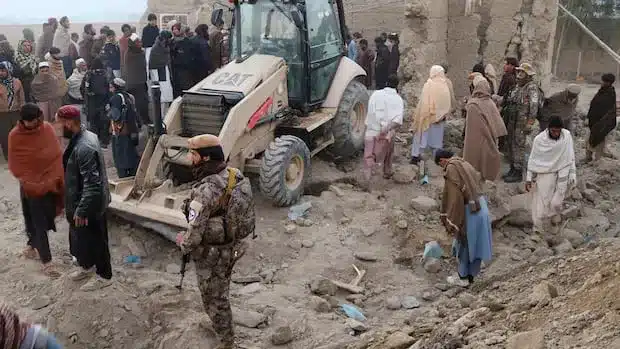
Pakistan conducted airstrikes on Afghan border regions Sunday, killing at least 18 people according to the Red Crescent. Afghanistan retaliated Thursday with a cross-border assault on Pakistan.
Early Friday, Pakistan launched further airstrikes in Kabul and two other provinces, including Kandahar and Paktia. Explosions echoed in Kabul, though exact strike locations and casualty figures remain unclear. Afghan spokesperson Zabihullah Mujahid confirmed the additional strikes in those areas.
Pakistan routinely blames neighboring India for supporting groups like the Baloch Liberation Army and Pakistani Taliban, claims India rejects. This surge in violence undermines prospects for a Qatar-brokered ceasefire, which Asif did not reference.
Refugee Hosting and Migrant Expulsions
Asif emphasized Pakistan’s longstanding support, having sheltered roughly five million Afghan refugees over five decades, with millions still relying on livelihoods there.
In October 2023, Pakistan initiated a major operation to deport undocumented migrants, encouraging voluntary departures to evade arrests and forced removals. Iran launched a similar effort concurrently.
Millions have since returned to Afghanistan, including long-term residents born and established in Pakistan. United Nations refugee agency data shows 2.9 million returns last year, with nearly 80,000 this year alone.
