

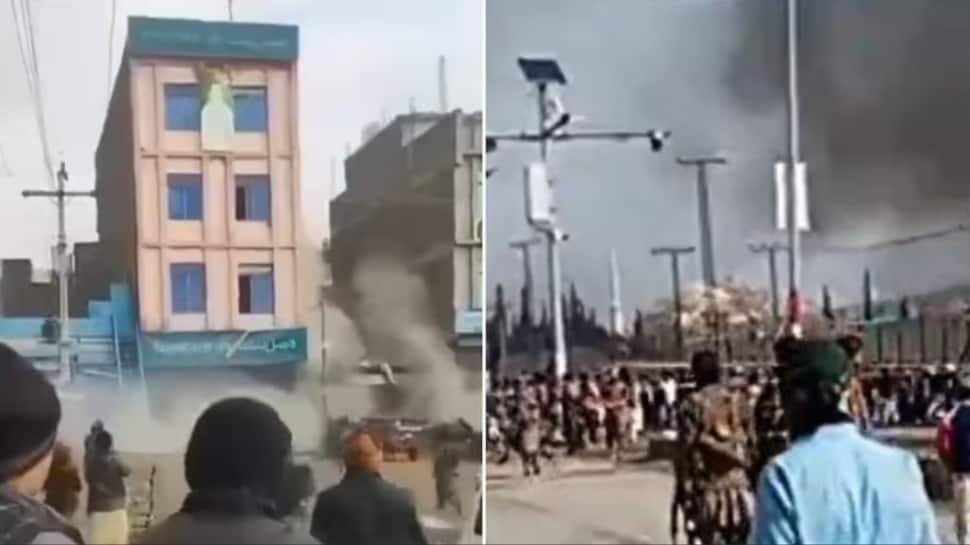
The Baloch Liberation Army (BLA) initiated “Operation Herof 2.0” on Saturday, January 31, 2026, launching coordinated assaults on more than 12 sites throughout Balochistan province. These strikes targeted military installations, ISI facilities, and civil administration offices in key districts including Quetta, Gwadar, Nushki, and Mastung, intensifying the group’s campaign for independence and sending shockwaves through Islamabad and military command in Rawalpindi.
Key Incidents in the Coordinated Offensive
One of the boldest actions occurred in Quetta’s Hazar Ganji neighborhood, where BLA militants seized the Faysal Bank branch. Fighters reportedly looted millions in cash and seized weapons before demolishing the structure with mortar shells and rockets. Local resident Rubina Ali from Kali Deeba recounted the terror: “The explosion was so powerful I thought the house would fall on us.”
In Quetta’s city center, office worker Ayaz Ahmed described the aftermath: blasts that rattled buildings, blanketed streets in dust, and sent civilians scrambling for safety. Similar attacks unfolded across the province, overwhelming security forces.
Overruns and Disruptions
Militants captured police stations in Sariab, Eastern Bypass, and Mastung, torching police vehicles in the process. In Mastung, rebels seized the local jail, enabling several prisoners to escape. In Nushki, the Counter-Terrorism Department (CTD) headquarters fell under militant control, according to BLA claims.
BLA spokesperson Jeeyand Baloch described these events as the continuation of the “Black Storm” campaign, originally launched as Operation Herof 1.0 in August 2024. The group positioned the assaults as a strategic escalation in their independence struggle.
BLA Leadership’s Defiant Stance
Following the operations, BLA Commander-in-Chief Bashir Zeb Baloch, who has directed the group since 2018, issued a video message vowing to intensify attacks. Under his leadership, the BLA has shifted toward sophisticated urban warfare tactics. Zeb Baloch declared the strikes aimed at forcing the Pakistani state to withdraw from what he termed its “occupation” of Balochistan.
Casualties and Government Response
Reports on the death toll vary amid ongoing clashes. Pakistan’s Inter-Services Public Relations (ISPR) stated that security forces repelled the assaults, eliminating 58 to 60 militants while losing 10 personnel. In Quetta alone, four policemen died. At least 11 civilians, including women and children, perished in the crossfire.
As tensions persist, authorities imposed an internet blackout in affected districts and halted train services province-wide for security reasons. Officials report that clearance operations continue into Sunday morning to track down remaining militants, with the situation evolving rapidly.
