

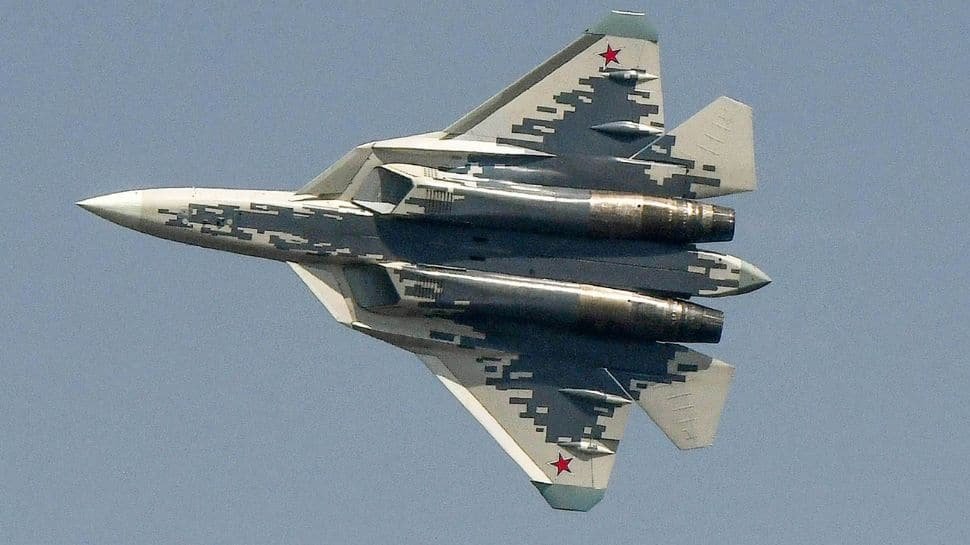
Negotiations between India and Russia for the licensed production of the Su-57 fifth-generation fighter jet have progressed to an advanced deep technical phase, aimed at bolstering the Indian Air Force’s capabilities. The discussions focus on utilizing existing Su-30 manufacturing facilities in India to incorporate maximum local components and enhance industry participation, fostering long-term strategic partnerships.
Key Developments in Aerospace Collaboration
United Aircraft Corporation CEO Vadim Badekha disclosed that the technical talks for this significant Su-57 joint production agreement have advanced considerably. He made the announcement during interactions with journalists at the Wings India air show held at Hyderabad’s Begumpet airport earlier this week.
“Such contracts, given our experience, determine the trajectory of our cooperation for several decades to come,” Badekha stated, underscoring how these agreements pave the way for enduring collaboration. This initiative aligns with recent pacts for SJ-100 airliner production and Il-114 sales, indicating expanding synergy in the aerospace sector.
The current efforts build upon earlier discussions for producing Su-30 aircraft locally using Indian systems.
Government and Diplomatic Confirmations
In July of the previous year, Defence Secretary Rajesh Kumar Singh affirmed that procurement negotiations for the Su-57 continue, noting, “These are sensitive talks, media will know at tangible stages like Acceptance of Necessity, RFP, or final contract.”
Earlier, in November of the previous year, Russian Ambassador to India Denis Alipov emphasized intensive efforts on licensed production of the Su-57E variant to support India’s fifth-generation fighter program. He highlighted Russia’s advantages in technology transfer and localization, aligning with India’s ‘Make in India’ initiative and goals for self-reliance.
Strategic Context and IAF Needs
The Ministry of Defence has considered the Su-57 since early 2025, especially following the May 2025 ‘Operation Sindoor,’ amid the Indian Air Force’s pressing shortage of fighter aircraft. Currently, the IAF maintains approximately 30 squadrons, short of the sanctioned 42 required to address two-front threats from China and Pakistan.
Meanwhile, Hindustan Aeronautics Limited (HAL) prepares to deliver indigenous Tejas Mk1A fighters to the IAF shortly, after successful missile firing trials on the Light Combat Aircraft. However, procurement delays have intensified the overall fighter jet shortfall.
