

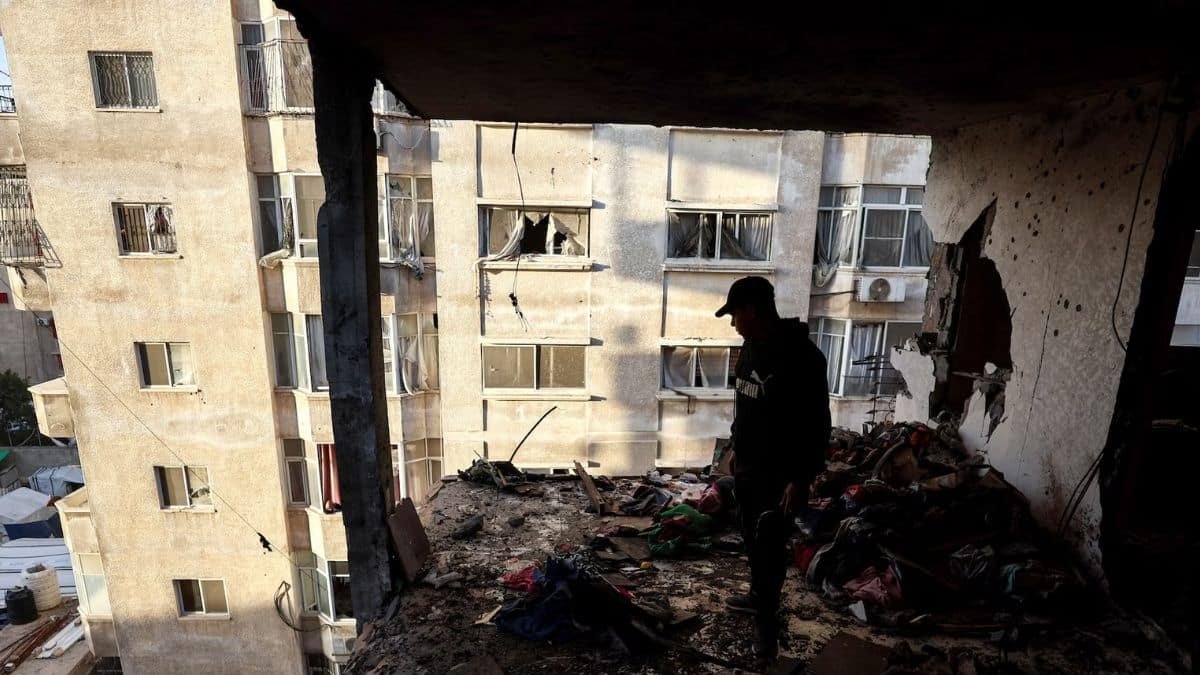
Israeli forces launched airstrikes across multiple locations in the Gaza Strip on Saturday, resulting in at least 26 deaths according to local health authorities. This marks the deadliest incident in recent weeks, occurring as the ceasefire with Hamas prepares to advance into its next stage.
Details of the Airstrikes and Casualties
Zaher al-Waheidi, a spokesperson for the Gaza health ministry, reported that the strikes claimed at least 26 lives. The Israeli military stated that the operations targeted commanders affiliated with Hamas and the Palestinian Islamic Jihad militant group.
The military linked the airstrikes to an earlier event on Friday, where militants surfaced from a tunnel in Rafah, a southern Gaza area under Israeli control. Officials described this emergence as a clear breach of the ceasefire terms.
Accusations from Both Sides
Hamas issued a statement condemning the bombardment as a blatant violation of the ceasefire agreement. Despite the truce, sporadic violence has persisted in Gaza since its implementation, with mutual allegations of non-compliance from both parties.
The Gaza Ministry of Health reports that Israeli actions have resulted in over 500 deaths in the region since the ceasefire began. These figures do not differentiate between civilians and fighters.
Context of the Ceasefire Agreement
The strikes coincide with preparations to reopen the Rafah border crossing between Gaza and Egypt, a delayed provision in the U.S.-brokered ceasefire deal finalized in October. This reopening would allow thousands of Palestinians displaced by the two-year conflict to return to their homes for the first time.
Under the agreement, Hamas released the remaining hostages held in Gaza in exchange for nearly 2,000 Palestinian prisoners. Israeli troops withdrew to a specified boundary within Gaza, retaining control over approximately half the territory.
On Monday, Israeli forces retrieved the body of the final Israeli captive from Gaza, clearing a major hurdle for progressing the ceasefire process.
