

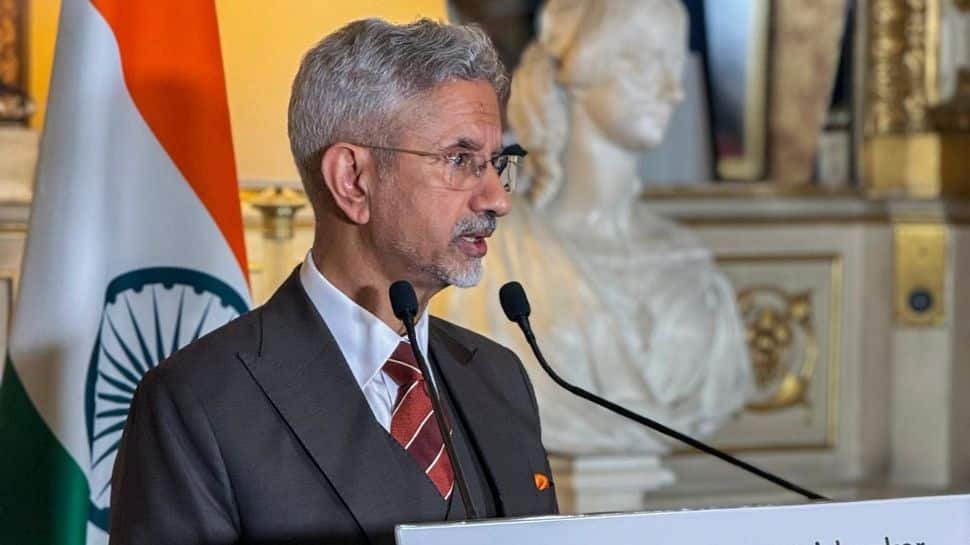
External Affairs Minister S. Jaishankar emphasized the Middle East’s role in reflecting broader global disruptions during his address at the opening of the 2nd India-Arab Foreign Ministers’ Meeting on Saturday. He pointed out that these regional changes directly influence India as a nearby nation and carry profound consequences for relations with Arab countries.
Transformative Global Changes
Jaishankar welcomed the delegates and underscored the profound shifts reshaping the world through political, economic, technological, and demographic forces. “Nowhere is this more evident than in West Asia and the Middle East, where the landscape has dramatically shifted over the past year,” he stated. “This impacts us all, especially India as a proximate neighbor, and holds significant implications for our ties with Arab nations.”
The minister highlighted the Middle East’s central position in international dynamics, particularly amid the ongoing Gaza crisis. Recent years have seen several high-impact events in the region with worldwide repercussions. The Gaza issue has captured global attention, from the October 2025 Sharm el-Sheikh Peace Summit, which many attendees joined, to UN Security Council Resolution 2803 in November 2025. “Advancing a comprehensive peace plan for Gaza is now a shared global priority, with nations issuing individual and collective policy commitments,” Jaishankar added.
Addressing Regional Instabilities
Jaishankar also discussed other pressing challenges in the region. Sudan’s intense conflict continues to cause widespread devastation, while Yemen poses risks to maritime routes where Indian personnel are deployed. Lebanon’s volatility affects Indian troops serving in the UNIFIL mission, Libya requires renewed national dialogue, and Syria’s path forward remains essential for overall stability.
Terrorism as a Common Threat
Terrorism stands out as a shared concern connecting the Middle East and India. “Cross-border terrorism is unacceptable, as it undermines international norms,” Jaishankar declared. “Targeted societies have the right to self-defense, and we must bolster global cooperation against this scourge. Zero tolerance for terrorism should be a universal principle.”
Evolving Strategic Partnerships
India’s historical connections with League of Arab States (LAS) members have deepened into robust strategic collaborations. These ties, built on centuries of exchanges in trade, migration, and culture, now extend to energy security, commerce, expatriate communities—India’s largest overseas workforce—technology, infrastructure, food supplies, and public health.
The forum serves as a key mechanism to advance bilateral engagements, Jaishankar noted. The 2026-28 agenda covers energy, environmental protection, agriculture, tourism, human resource development, culture, and education, alongside emerging fields such as digital technology, space exploration, startups, and innovation. Priorities also include counter-terrorism efforts, parliamentary dialogues, and the recently established India-Arab Chamber of Commerce, Industry, and Agriculture.
As India advances its technology-focused and people-oriented development, Jaishankar suggested that exchanging successful strategies would yield mutual benefits. He looked forward to fruitful discussions yielding concrete results and then invited the League of Arab States’ co-chair, Khalifa bin Shaheen Al Marad, to deliver his remarks.
Prior to the meeting, Prime Minister Narendra Modi held discussions with the Arab foreign ministers’ delegation, the league’s Secretary General, and other delegation heads, according to official records from the Prime Minister’s Office.
