

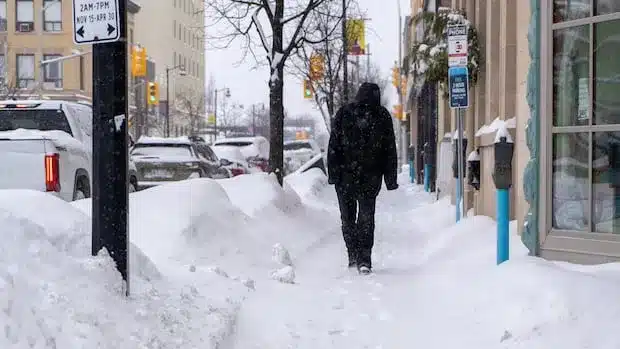
More than a dozen communities in northern Ontario are under extreme cold warnings, with wind chills expected to reach between -40°C and -50°C from Monday night through Tuesday morning.
Environment and Climate Change Canada has issued yellow-level warnings, classifying the impact as moderate with high forecast confidence. “A period of very cold wind chills is expected,” the warnings state. “The coldest wind chill values are expected for areas close to James Bay and Hudson Bay.”
Affected Communities
The warnings cover the following areas:
- Attawapiskat
- Fort Albany
- Fort Hope — Lansdowne House — Ogoki
- Fort Severn
- Fraserdale — Pledger Lake
- Kapuskasing — Hearst — Smooth Rock Falls
- Kirkland Lake — Englehart
- Little Abitibi — Kesagami Lake
- Manitouwadge — Hornepayne
- Moosonee
- Nakina — Aroland — Pagwa
- Peawanuck
- Timmins — Cochrane — Iroquois Falls
- Webequie
Coldest Conditions Ahead
Communities such as Attawapiskat, Fort Albany, Moosonee, Peawanuck, and Webequie will experience the most severe cold, with wind chills ranging from -45°C to -50°C. Other regions can anticipate values near -40°C. Similar conditions affect parts of northern Manitoba and southwestern Quebec.
Health Risks and Precautions
Residents should monitor for cold-related symptoms, including shortness of breath, chest pain, muscle pain, weakness, numbness, and discoloration in fingers and toes. “Frostbite can develop within minutes on exposed skin, especially with wind chill,” the warnings note.
Those most vulnerable include young children, older adults, individuals with chronic illnesses, outdoor workers or exercisers, and people without adequate shelter. Nicole Chantal Pauluzzo, who nearly lost two fingers to frostbite during a January cold spell in Thunder Bay, highlights the real dangers of extreme cold.
Officials recommend checking on elderly family members, friends, and neighbors, while bringing pets indoors. “Watch for colour changes on fingers and toes, pain, numbness, a tingling sensation, or swelling. If present, move indoors and begin warming,” the guidance advises.
