

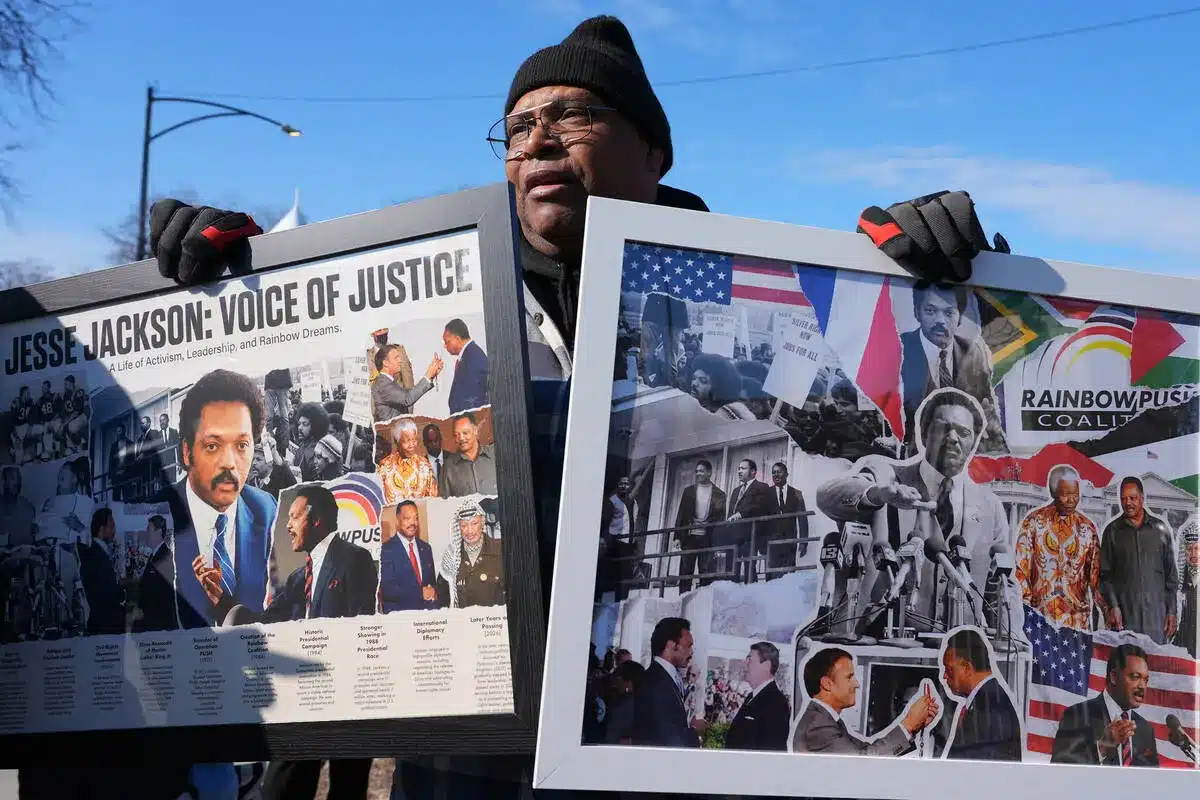
After covering Rev. Jesse Jackson for over five decades, the sight of thousands patiently queuing in Chicago last month to honor the civil rights leader underscores his profound influence. Jackson mastered the art of challenging authority while persuading influential figures to include marginalized voices at the decision-making table.
Black Expo: A Platform for Economic Empowerment
One enduring memory from those years centers on Black Expo, an annual event organized by Jackson’s Operation Breadbasket in the late 1960s and early 1970s. This convention highlighted Black-owned businesses alongside music, arts, and cultural showcases. Chicago hosted the expos until 1976, with similar events in cities like New York, Philadelphia, Washington, and Atlanta.
The 1971 Chicago edition remains vivid. Young reporters noted a front-page photo in the Tribune showing Mayor Richard J. Daley clasping hands with Jackson in a symbolic “grip-and-grin.” Closer inspection revealed Jackson hooking his thumb with Daley’s in the iconic “Black Power” handshake. As a seasoned politician, Daley seized the photo opportunity, signaling potential bridges across Chicago’s deep racial divides.
Turbulent Times and a New Approach
This moment unfolded amid intense racial strife. Just five years prior, Rev. Martin Luther King Jr. faced violence during a South Side march, hit by a rock. King’s 1968 assassination sparked riots that claimed 11 lives and devastated parts of the West Side. The Black Power movement gained traction, rejecting nonviolence, while groups like the Black Panthers and Weather Underground operated in the city. In 1969, police killed Panthers including deputy chair Fred Hampton in a controversial raid.
Amid this chaos, Jackson introduced “green power”—focusing on economic and educational investments benefiting all. Hailing from South Carolina, he emphasized collaboration among locals, businesses, churches, and communities, transcending racial, class, and political barriers. His rallying cry, “Keep hope alive,” offered reassurance when 1960s unrest lingered.
Success and Lasting Influence
Black Expo tested this vision, celebrating Black entrepreneurs akin to sports and music icons. The 1971 five-day event at the International Amphitheatre themed “Save the children” effectively urged dollar investments. Echoing Booker T. Washington’s self-reliance or a milder take on Elijah Muhammad’s ideas, it proved commercially viable. The 1972 expo drew massive crowds and publicity, blending politics, corporate exhibits, and stars like the Jackson 5, Isaac Hayes, Big Bird, and Roosevelt Franklin from Sesame Street, fostering Black capitalism through deals.
By 1990, a Chicago revival attracted recruiters from the Illinois State Police, H&R Block, and the FBI. Jackson’s presidential campaigns in 1984 and 1988 laid groundwork for Barack Obama’s 2008 victory.
As Black History Month ends, Jackson’s legacy endures: championing an inclusive America where Black achievements drive shared prosperity.
