

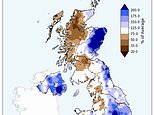
Record Rainfall Drenches Britain to Start 2026
Preliminary climate data confirms January 2026 ranked among the wettest winter months ever recorded across the United Kingdom, with nationwide precipitation levels exceeding historical averages by 17%. Meteorological analysis reveals persistent Atlantic weather systems drove the exceptional rainfall.
Regional Rainfall Disparities
Northern Ireland experienced its wettest January in 149 years, receiving 70% more rainfall than typical seasonal averages. England recorded 50% above-average precipitation overall, though southern counties bore the brunt with 74% excess rainfall compared to just 10% in northern regions.
Cornwall and County Down both registered their wettest January since record-keeping began. Seven other counties – including Dorset, Devon, and Hampshire – recorded their second-highest January rainfall totals since 1836.
Storm Systems Drive Extreme Weather
A succession of Atlantic low-pressure systems produced the sustained wet conditions. “The strong jet stream continuously directed moisture-laden weather fronts toward the UK,” explained Dr. Amy Doherty, a climate science manager. “With minimal dry intervals between storm systems, saturated ground conditions amplified the impact of subsequent rainfall.”
The most intense 24-hour precipitation occurred during Storm Chandra on January 26, when Katesbridge in County Down recorded 100.8mm of rainfall – nearly triple the location’s previous daily record.
Temperature Trends and Climate Context
Despite brief warming periods in late January, the month finished 0.5°C colder than average nationwide. This follows confirmation that 2025 marked the UK’s hottest year on record, with an average temperature of 10.09°C – 0.96°C above historical norms.
Climate specialists note these weather extremes align with broader environmental patterns. “Our observations clearly show human-induced climate change impacting UK weather systems,” stated Dr. Mark McCarthy, head of climate attribution. “While not every year will break records, the trend toward more extreme temperature and precipitation events matches scientific projections.”
