

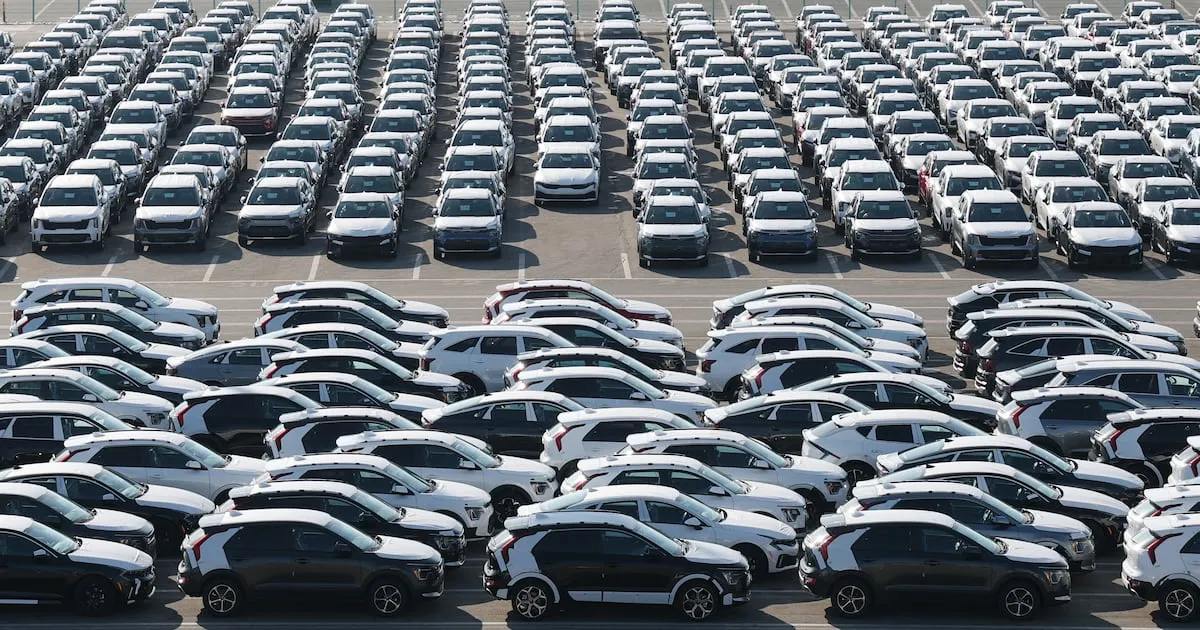
South Korean auto parts exports to the United States dropped sharply in early 2025, marking the first annual decline in five years amid escalating tariff pressures.
Record Drop Hits US Market Shipments
January 2025 exports to the US totaled 7.666 billion USD, reflecting a 6.7% decrease from the previous year. This represents the steepest fall since the COVID-19 pandemic in 2020, when shipments plunged 11.5% to 5.494 billion USD.
The downturn stems directly from US tariffs on imported auto parts, which reached 25% starting last May. Industry data from the Korea Auto Parts Industry Cooperative confirms the trend.
Broader Export Slump Accelerates
Total auto parts exports have contracted steadily: 22.963 billion USD in 2023 (down 1.5%), 22.533 billion USD in 2024 (down 1.8%), and a projected 21.2 billion USD in 2025 (down 5.9%). Shipments to Mexico also fell 10.4% year-over-year to 1.93 billion USD.
Major players like Hyundai Mobis face reduced production for global original equipment manufacturers (OEMs), including Hyundai and Kia models. China imposed 15% tariffs from November 1, yet Korean firms saw no offsetting gains.
Supply Chain Shifts Fail to Offset Losses
Parts destined for US assembly increasingly route through Mexico, but US tariffs still apply to the final volume. Despite this, overall profitability erodes.
A recent collaboration with the top 100 auto parts suppliers (80 first-tier, 20 second-tier, excluding Hyundai Mobis) shows January-March sales at 74.7726 billion KRW, up 6.7% year-over-year. However, operating profit shrank 6.6% to 2.8166 billion KRW.
Third-quarter operating profit margins narrowed from 4.3% to 3.8%, a 0.5 percentage point drop. Active direct exporters grew from 14 to 16 firms year-over-year.
Challenges for Non-Major Suppliers
Third- and fourth-tier collaborators, less favored in major deals, grapple with heightened competition, lower margins, and reduced profitability amid US pressures.
Industry Leaders Voice Concerns
An auto parts executive noted, “Rising unit prices and domestic sales boosted revenue, but US tariffs delivered the heaviest blow to profitability.” The executive added, “A 15% tariff hike seemed manageable this year, but expectations of a 25% reinstatement heighten anxieties.”
