

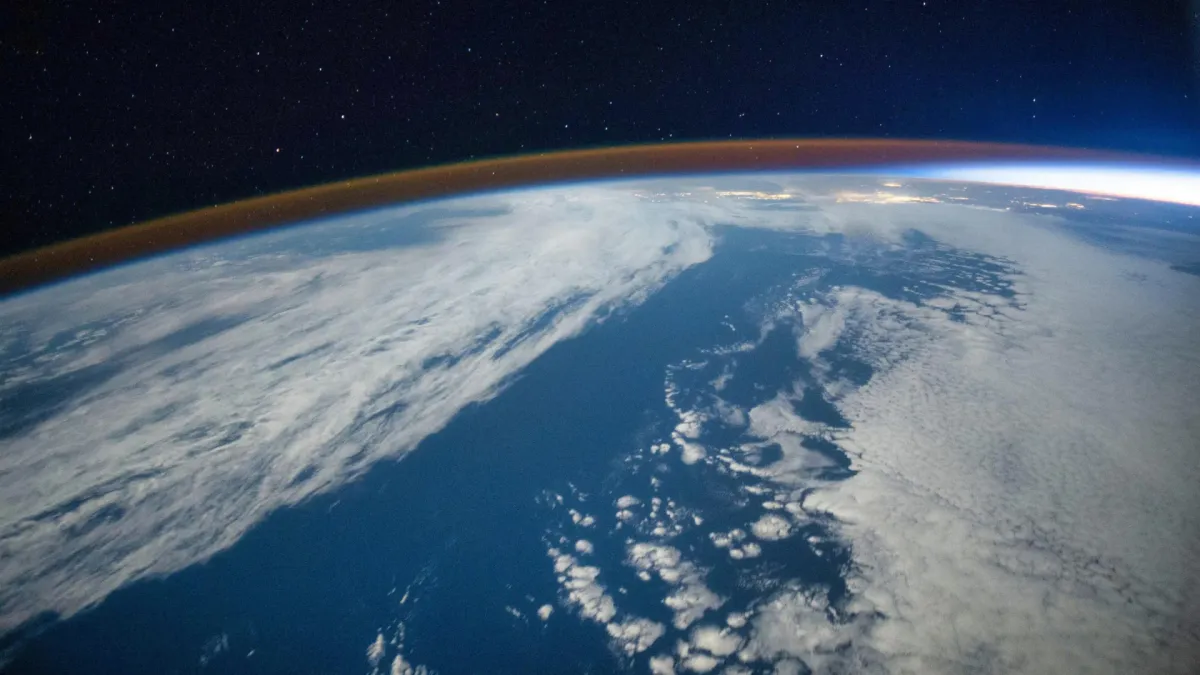
A new study uncovers an invisible chemical rain depositing trifluoroacetic acid (TFA), a persistent forever chemical, across the planet. This pollutant, generated from chemicals that replaced ozone-damaging CFCs, now contaminates water, land, and ice—even in remote areas like the Arctic.
Pollution Levels Continue to Climb
Researchers calculate that HCFCs, HFCs used in refrigeration, and certain anesthetic gases have led to approximately 335,500 tonnes of TFA depositing from the atmosphere onto Earth’s surface between 2000 and 2022. Despite phaseouts under the Montreal Protocol and Kigali Amendment, these F-gases linger in the air for decades, driving ongoing pollution.
Annual TFA production from these sources could peak anytime from 2025 to 2100, according to chemical transport models that simulate atmospheric circulation, transformation, and deposition.
How Refrigerants and Anesthetics Generate TFA
TFA forms when F-gases break down in the atmosphere. These include hydrochlorofluorocarbons (HCFCs) and hydrofluorocarbons (HFCs) in cooling systems, plus inhalation anesthetics. TFA, part of the PFAS family, resists breakdown and accumulates indefinitely in the environment.
The European Chemicals Agency deems TFA harmful to aquatic life. It appears in human blood and urine, with Germany’s Federal Office for Chemicals proposing classification as a potential reproductive toxin. While current levels fall below human health thresholds for some regulators, experts warn of irreversible buildup, urging treatment as a planetary boundary threat.
“CFC replacements are likely to be the dominant atmospheric source of TFA,” said Lucy Hart, PhD researcher at Lancaster University and lead author. “This really highlights the broader risks that need to be considered by regulation when substituting harmful chemicals such as ozone-depleting CFCs.”
Validation Through Real-World Data
Models align with measurements from Arctic ice cores and global rainwater samples. Data from monitoring networks fed emission details, weather patterns, and chemical interactions into simulations, confirming TFA removal via rain or direct deposition.
In the Arctic, nearly all TFA traces back to CFC replacements, despite distance from emission hotspots. “CFC replacements have long lifetimes and are able to be transported in the atmosphere from their point of emission to remote regions such as the Arctic where they can breakdown to form TFA,” Hart explained. “Studies have found increasing TFA levels in remote Arctic ice-cores and our results provide the first conclusive evidence that virtually all of these deposits can be explained by these gases.”
Emerging Concerns from New Refrigerants
Beyond polar areas, HFO-1234yf in vehicle air conditioners emerges as a growing TFA source at mid-latitudes. “HFOs are the latest class of synthetic refrigerants marketed as climate friendly alternatives to HFCs,” said Professor Ryan Hossaini of Lancaster University. “A number of HFOs are known to be TFA-forming and the growing use of these chemicals for car air conditioning in Europe and elsewhere adds uncertainty to future levels of TFA in our environment.”
“There is a need to address environmental TFA pollution because it is widespread, highly persistent, and levels are increasing,” Hossaini added.
Push for Monitoring and Action
“The rising levels of TFA from F-gases is striking. Although HFC use is gradually being phased down, this TFA source will remain with us for decades. There’s an urgent need to understand other TFA sources and to assess TFA’s environmental impacts,” Hossaini stated. “This requires a concerted international effort, including more extensive TFA monitoring.”
TFA originates beyond pesticides, from refrigerants, solvents, pharmaceuticals, and PFAS broadly, noted Professor Cris Halsall, Director of the Lancaster Environment Centre. Co-author Dr. Stefan Reimann, whose Swiss team tracks F-gases, observes consistent global increases: “In all regions where TFA measurements are available, a consistent picture of increasing atmospheric concentrations and deposition to Earth’s surface is emerging.”
The findings appear in Geophysical Research Letters under the title ‘Growth in production and environmental deposition of trifluoroacetic acid due to long-lived CFC replacements and anesthetics.’
