

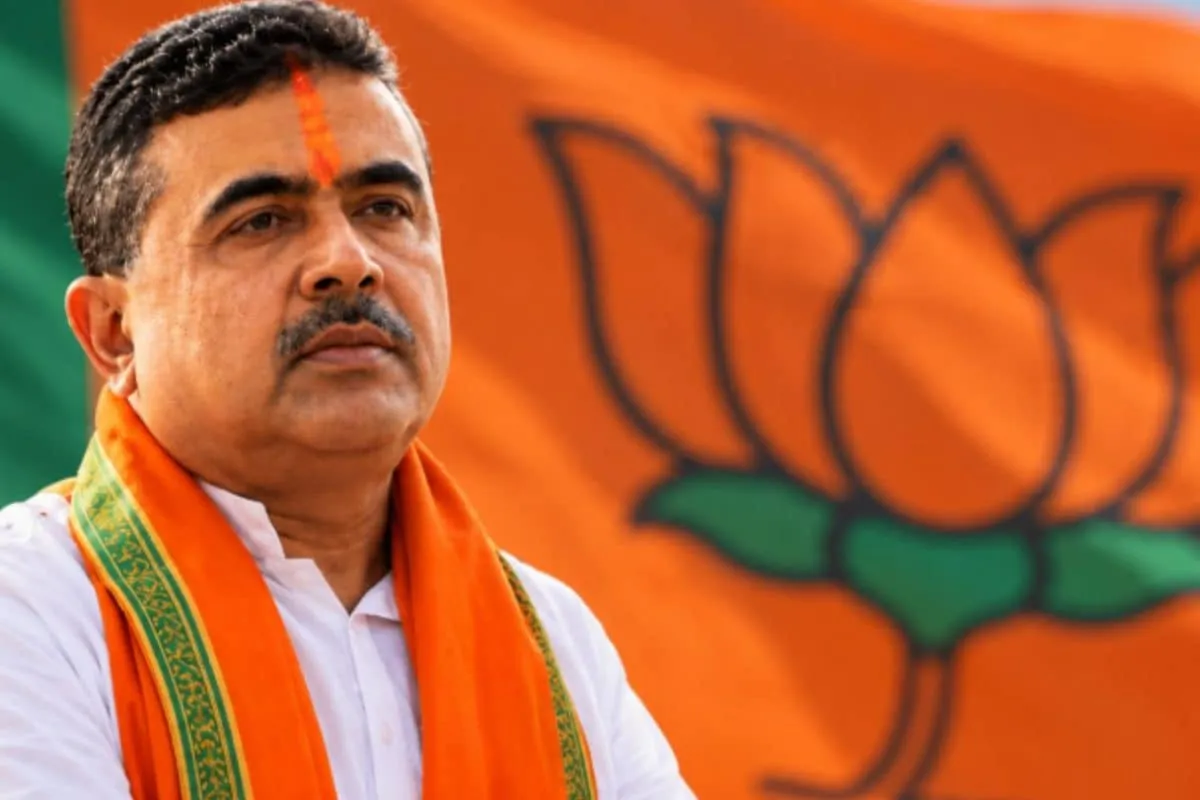
Suvendu Adhikari, once a key figure in Mamata Banerjee’s Trinamool Congress (TMC), took oath as West Bengal’s chief minister on Saturday. He led the Bharatiya Janata Party (BJP) to a landmark victory in the 2026 Assembly elections, securing 206 of 294 seats and ending TMC’s 15-year rule. TMC managed only 80 seats.
Adhikari’s standout achievement came from defeating Banerjee in Bhabanipur, her long-time stronghold, by over 15,000 votes. This marks the second straight Assembly election where he bested her personally, following a narrow 2021 win in Nandigram despite BJP’s overall loss that year.
Adhikari’s Roots and Rise in TMC
From a prominent political family in Purba Medinipur, Adhikari draws legacy from his father Sisir Adhikari, a Congress veteran and Union minister, and brothers Dibyendu and Soumendu, both active politicians. The Kanthi Adhikaris hold sway in the region, linked to Bengal’s freedom struggle—family members like Bipin and Kenaram faced British imprisonment and home burnings.
Adhikari started in student politics under the Left Front, joined Congress in the mid-1990s, then shifted to nascent TMC around 2000 with his father. Their influence bolstered TMC’s base in Contai and Purba Medinipur against CPI(M) dominance.
He won the Kanthi Dakshin Assembly seat in 2006. His profile soared during 2007 anti-land acquisition protests in Singur and Nandigram.
Nandigram: The Political Game-Changer
Nandigram’s 2007 protests against Left Front land grabs saw Adhikari organize ground resistance amid clashes with CPI(M) cadres. Observers credit this movement with eroding Left’s hold, enabling TMC’s 2011 rise.
Adhikari’s role elevated him as a master organizer, extending influence to Jangalmahal (Bankura, Purulia, Paschim Medinipur) and parts of Malda and Murshidabad. He captured Tamluk Lok Sabha seat from CPI(M)’s Lakshman Seth in 2009 and held it in 2014. In 2016, Banerjee made him transport minister with added duties, positioning him as her top deputy.
The Break from TMC and Shift to BJP
Tensions brewed as Abhishek Banerjee, Mamata’s nephew, rose in TMC ranks, challenging Adhikari’s No. 2 status. In December 2020, he resigned from the cabinet and TMC, joining BJP alongside Union Home Minister Amit Shah.
The rift fueled fierce rivalry—Adhikari targeted Abhishek with ‘tolabaj bhaipo hatao’ slogans, while Banerjee labeled the Adhikaris ‘Mir Jafars.’
Twice Defeating Mamata Banerjee
In 2021, Banerjee contested Nandigram against Adhikari, losing by 1,956 votes—a major career blow. BJP took 77 seats but couldn’t topple TMC. Adhikari then served as Leader of the Opposition, touring districts to rebuild BJP amid post-poll violence claims, stabilizing its network.
Efforts paid off in 2026. Adhikari beat Banerjee in Bhabanipur while steering BJP to power. Post-victory, he told media: “This was very important. Defeating Mamata Banerjee was crucial. This is Mamata Banerjee’s retirement from politics… This time, too, she lost by over 15,000 votes.” He called it a “victory for Hindutva.”
From Opposition to Chief Minister
As Leader of the Opposition post-2021, Adhikari became BJP’s Bengal face, likened to Himanta Biswa Sarma’s Assam role. His 2026 dual triumphs over Banerjee propelled him to the chief minister’s chair, capping a journey from Congress roots through TMC to BJP leadership.
