

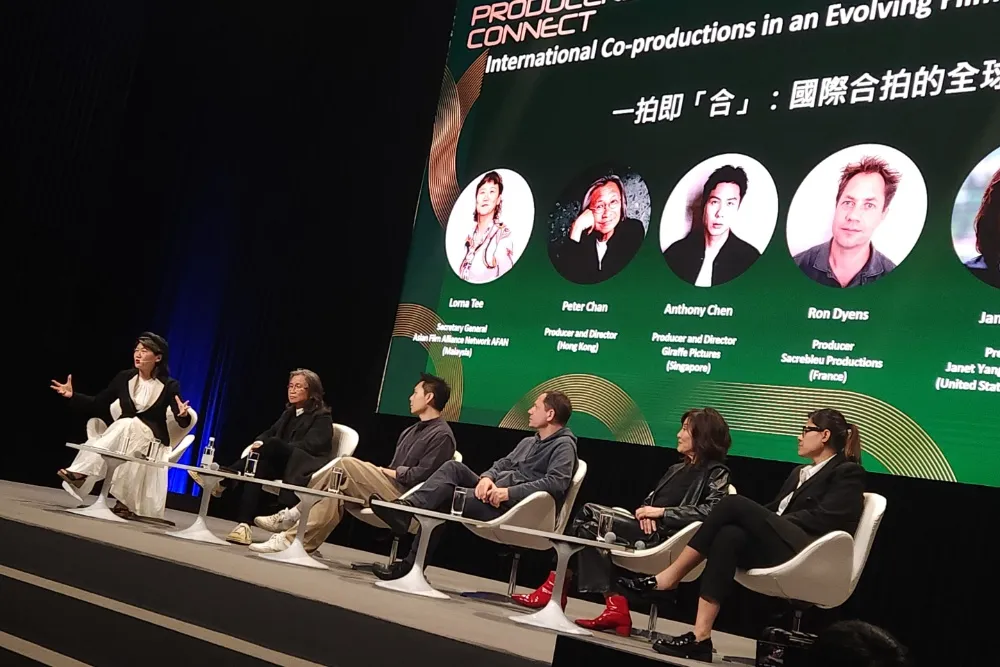
Renowned Asian director Peter Chan Ho-sun delivered a bold prediction on artificial intelligence during a co-production panel at the Hong Kong FilMart, warning that AI threatens commercial blockbusters rather than art-house films.
AI’s Threat to Commercial Cinema
Chan declared the industry faces its darkest period, reminiscent of Hollywood’s uncertainties in the late 1990s. “I think we’re at the worst times. Those days of the blockbusters are gone,” he stated. Factors like fragmented markets, short-form vertical dramas, AI advancements, and closing cinemas contribute to this challenge.
With a career spanning intimate dramas like Comrades: Almost a Love Story and epics such as Warlords and Dragon, Chan clarified AI’s selective impact. “I don’t think AI is an enemy to auteur film. But AI would be an enemy to mediocre blockbusters,” he explained. He forecasted, “Basically, AI can replace any blockbuster or commercial film in three years, I believe.”
Co-Productions as a Survival Strategy
The panel, moderated by Asian Film Alliance Network secretary general Lorna Tee, explored co-productions’ role in expanding markets. Chan noted Hong Kong cinema’s evolution from a regional supplier to relying on multi-territory films. “You need to put in elements from different countries so they feel that the film belongs to that country,” he said, highlighting films with multiple domestic markets.
Sharmin Yusof, CEO of Malaysia’s SKOP Productions, shared post-pandemic challenges. Her film Blood Brothers earned MYR78 million ($19.8 million), attracting about 4 million viewers—a market ceiling. “There’s only a certain ceiling that we can hit in Malaysia, so we have decided to expand into Indonesia, and also Thailand,” Yusof stated.
Oscar-winning producer Ron Dyens (Flow) praised animation’s co-production ease. “It’s easier for animation to create this type of worldwide stories. It’s easier to do co-production because you can split the work,” he said, contrasting it with live-action’s cultural and location constraints.
Singaporean filmmaker Anthony Chen observed rising multi-country involvements, from 9 to 12 nations, inflating budgets. He urged a “more prudent, ethical” approach without compromising creative control.
Streamers, Subtitles, and Marketing Shifts
Panelists debated streamers’ influence. Janet Yang, former president of the Academy of Motion Picture Arts and Sciences (2022-2025), credited them with normalizing subtitles for American audiences. “The fact that a non-English language film could win best picture as in Parasite, was mind-boggling,” she remarked, noting dissolved cross-cultural barriers.
Chan criticized streamers’ data-driven decisions. “Big data. That’s one of the dirtiest words I’ve ever heard for creative people,” he said, warning it could harm films through overly commercial campaigns.
Yusof emphasized authentic marketing’s resurgence, including road tours and on-ground activations. “People are interested to be more involved with the movie,” she noted, stressing sincerity and audience engagement.
Yang envisioned a future of personal branding. “YouTube is already the largest media company in the world,” she said. “It will become more and more incumbent upon artists to carve their own path and become their own ecosystem.”
